
DailyBot alternatives
8 products compared · Updated November 6, 2026
The short answer
The three strongest alternatives to DailyBot are Geekbot, Range, and Steady. Geekbot suits remote teams that want async standups and polls running inside Slack or Microsoft Teams. Range suits small to mid-sized teams that want check-ins, meeting agendas, and goal tracking together, with a free plan. Steady suits distributed product and engineering teams that want automatic status context across many tools instead of daily check-ins.
Your shortlist, at a glance
Read the comparisons ↓- GGeekbotNot publishedRemote or distributed teams already living in Slack or Microsoft Teams that want async standups and polls with no new tool to learn
- RRangeFree + custom EnterpriSmall to mid-sized teams that want check-ins, meeting agendas and OKR-style goal tracking in one tool, especially those already on Slack or Microsoft Teams.
- SStatus HeroFrom $25/mo (credits)Distributed product and engineering teams across time zones that want automatic status context instead of daily check-ins.
 LinearFree to custom quoteProduct and engineering teams that need to plan issues, roadmaps and PRDs and route customer feedback into tickets
- JJellyfishCustom quoteEngineering leaders at enterprise R&D teams who need to measure AI tool adoption, cost, and delivery impact for finance and the board.
- LLinearBNot publishedEngineering leaders at software teams who need DORA metrics, cycle time and AI ROI reporting for the board
- SSwarmiaNot publishedEngineering organizations of any size that want data on delivery and AI impact from their existing tools without changing their workflow.
 CodeClimateNot publishedEngineering VPs and directors who need to answer staffing and initiative-progress questions from their AI tools
About DailyBot and its alternatives
DailyBot is a team updates and AI reporting tool. According to its site, it surfaces progress, risks, and blockers from people, agents, and connected tools, and runs check-ins and recognition inside chat apps like Slack, Teams, and Discord. Its site also highlights agent reporting through a CLI and skill pack.
When comparing alternatives in this category, look at how each product is priced, since some publish plans and others only offer a quote or charge by usage. Check which chat platforms and code editors it supports, what integrations it offers and on which tier, how much history and export you get, and what support and contract terms come with the plan you need.
Explore the alternatives
- GNot published
1.Geekbot
Best for: Remote or distributed teams already living in Slack or Microsoft Teams that want async standups and polls with no new tool to learn
- Pricing
- Not published
- Category
- Other
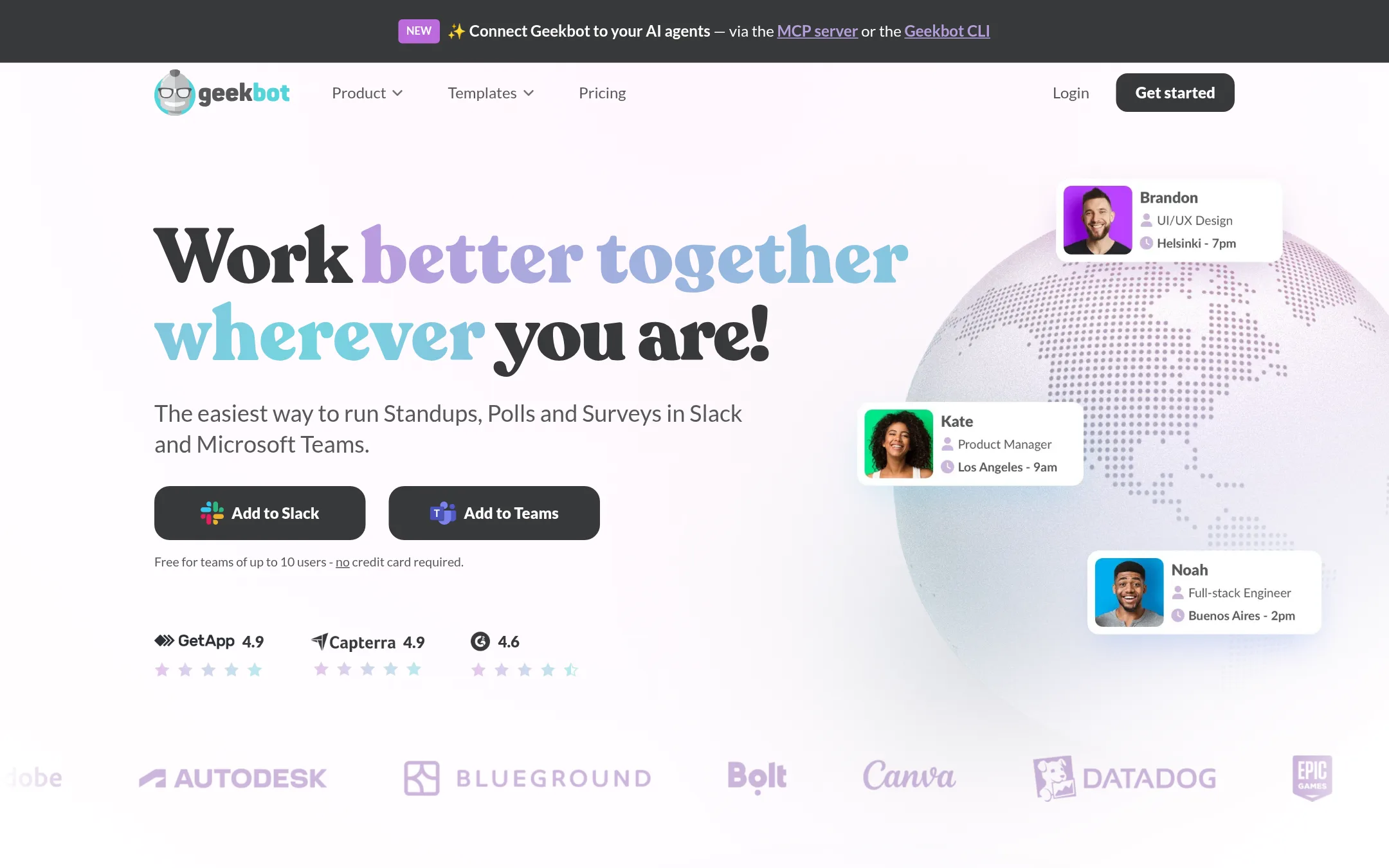
Geekbot runs asynchronous standups, polls and surveys inside Slack and Microsoft Teams. Teams that want standup and check-in habits without leaving their chat app, and without adding a separate dashboard, would pick it over DailyBot.
Where it is strong
- Runs standups, polls and surveys directly in Slack and Microsoft Teams
- Blockers are flagged as they come up, so the team can act on them
- Anonymous reporting is available for honest feedback
Where it falls short
- Its focus is on people's standups and polls, without DailyBot's agent reporting or AI-generated cross-tool insights
- Integrations are described as an Enterprise feature, so connecting other tools may require a higher plan
- Pricing:
- Pricing is not published on the site.
- RFree + custom Enterpri
2.Range
Best for: Small to mid-sized teams that want check-ins, meeting agendas and OKR-style goal tracking in one tool, especially those already on Slack or Microsoft Teams.
- Pricing
- Free + custom Enterpri
- Category
- Other
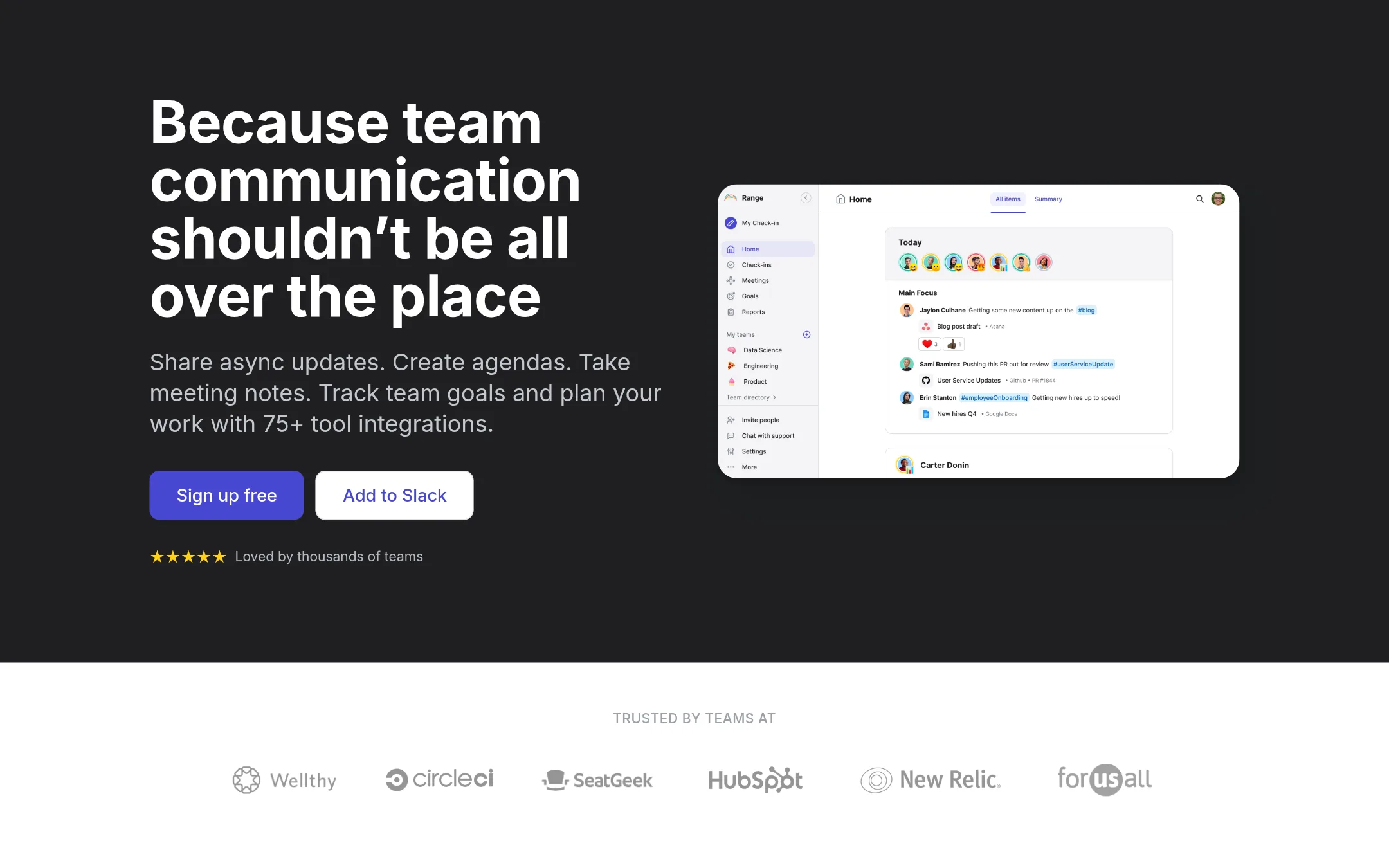
Range runs async check-ins, meeting agendas and notes, and team goals in one place, with 75+ tool integrations. Teams pick it over DailyBot when meetings and goal tracking matter as much as status updates, or when they want a free tier that covers small teams.
Where it is strong
- Free plan covers check-ins, meeting agendas and notes for small teams without a credit card
- Goals are attached to check-ins and meetings, so progress is visible next to the daily updates
- Integrates with Slack, Microsoft Teams and dozens of work tools such as Jira, GitHub and Asana
Where it falls short
- The free plan caps goals at 3 and limits check-in history to 30 days
- Enterprise features such as SSO for Okta and OneLogin, custom data export and a premium SLA sit behind custom pricing
- Pricing:
- Range has a free plan for small teams (up to 2 sub-teams and 3 goals), a Pro plan with unlimited goals and teams, and custom Enterprise pricing, and the site does not state per-seat prices.
- SFrom $25/mo (credits)
3.Status Hero
Best for: Distributed product and engineering teams across time zones that want automatic status context instead of daily check-ins.
- Pricing
- From $25/mo (credits)
- Category
- Other
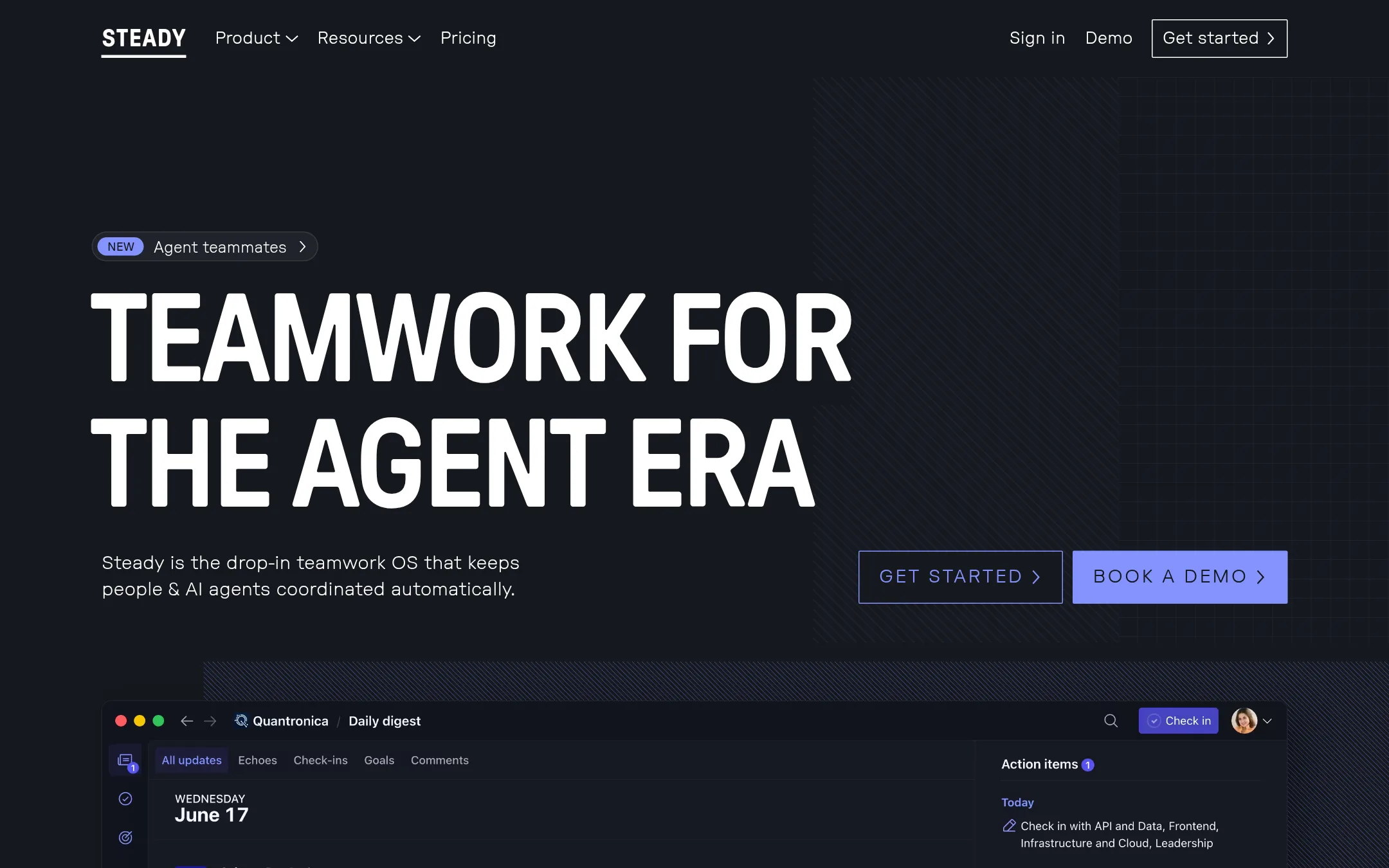
Steady is a teamwork layer that runs both coordination loops for a team. It pulls activity from tools like Slack, GitHub, Jira and Google Calendar, then sends each person and AI agent a short digest of what matters to them. Choose it over DailyBot when the main problem is people and agents losing track of each other across many tools, and you want the context distilled automatically rather than built from check-ins.
Where it is strong
- Connects activity from GitHub, Jira, Slack and Google Calendar without manual updates.
- Charges for usage rather than seats, and adds 100 free credits for each new user.
- Offers an API, CLI and MCP server so coding agents can work with the same team context.
Where it falls short
- Pricing depends on credit usage, so monthly cost is harder to predict than a flat per-seat plan.
- The site does not list a free tier for Steady, unlike DailyBot's Starter plan.
- Pricing:
- Steady charges by Coordination Credits, starting at 500 credits for $25 per month, with bonus credits on larger tiers and custom Enterprise pricing above 50,000 credits.
- Free to custom quote
4.Linear
Best for: Product and engineering teams that need to plan issues, roadmaps and PRDs and route customer feedback into tickets
- Pricing
- Free to custom quote
- Category
- Productivity & Project Management
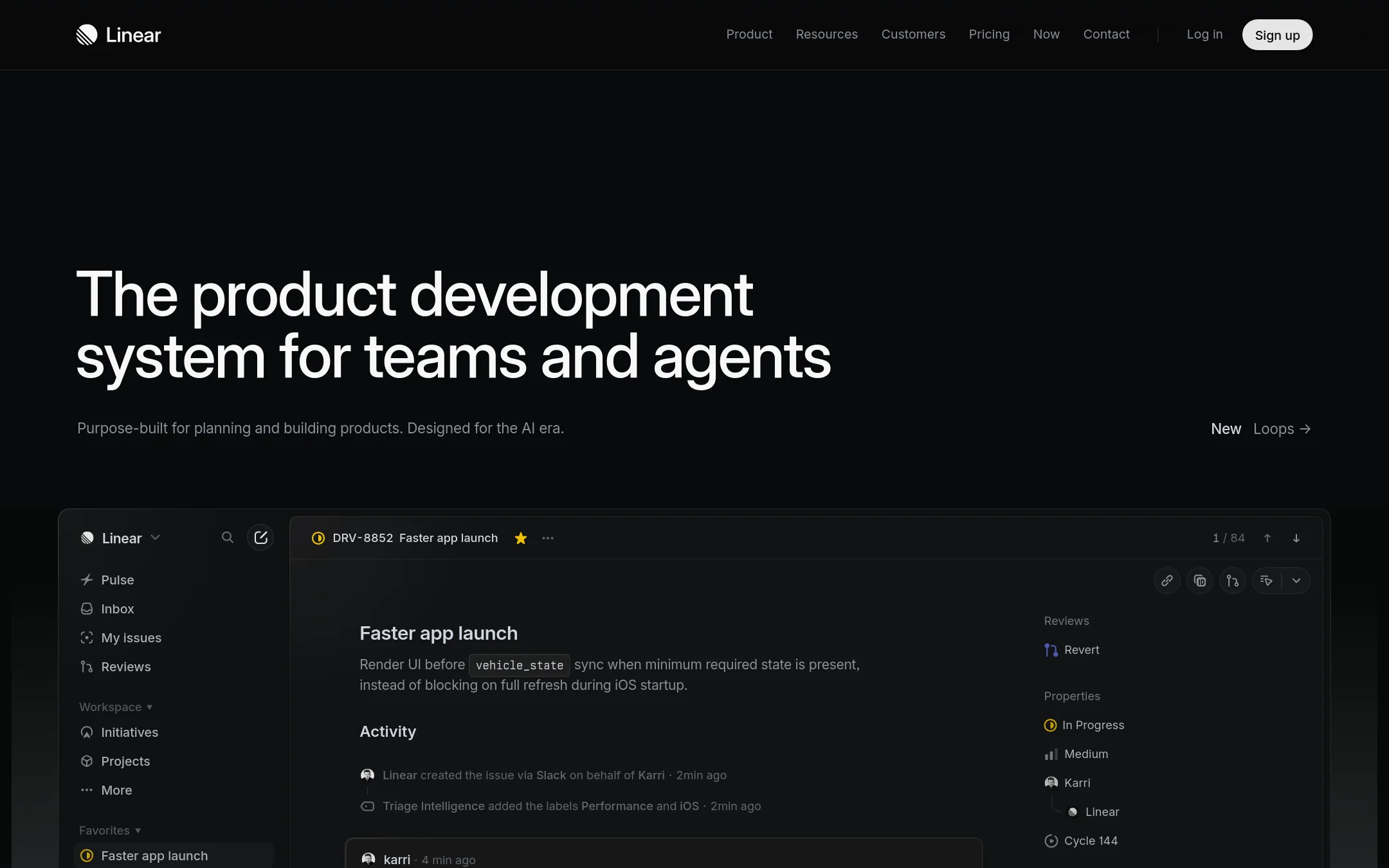
Linear is a product development system for planning and shipping software, built around issues, roadmaps and PRDs. Pick it over DailyBot when your main need is tracking and prioritizing engineering work rather than collecting team updates and check-ins.
Where it is strong
- Turns conversations and customer feedback into issues that are routed, labeled and prioritized
- Covers planning from idea to launch, including roadmaps and up-to-date PRDs
- Has a free tier with unlimited members, so a small team can start without paying
Where it falls short
- Its focus is product development, so it does not run async standups or team recognition the way DailyBot does
- The free tier caps you at 2 teams and 250 issues
- Pricing:
- Linear has a Free plan with unlimited members, 2 teams and 250 issues, a Basic tier with 5 teams and unlimited issues, a Business tier with private teams and Zendesk and Intercom integrations, and a custom-quoted Enterprise tier.
- Switching from DailyBot:
- Moving from DailyBot would mean rebuilding your check-in habits in Linear's issue and project structure, since the two tools cover different parts of the workflow.
- JCustom quote
5.Jellyfish
Best for: Engineering leaders at enterprise R&D teams who need to measure AI tool adoption, cost, and delivery impact for finance and the board.
- Pricing
- Custom quote
- Category
- Other
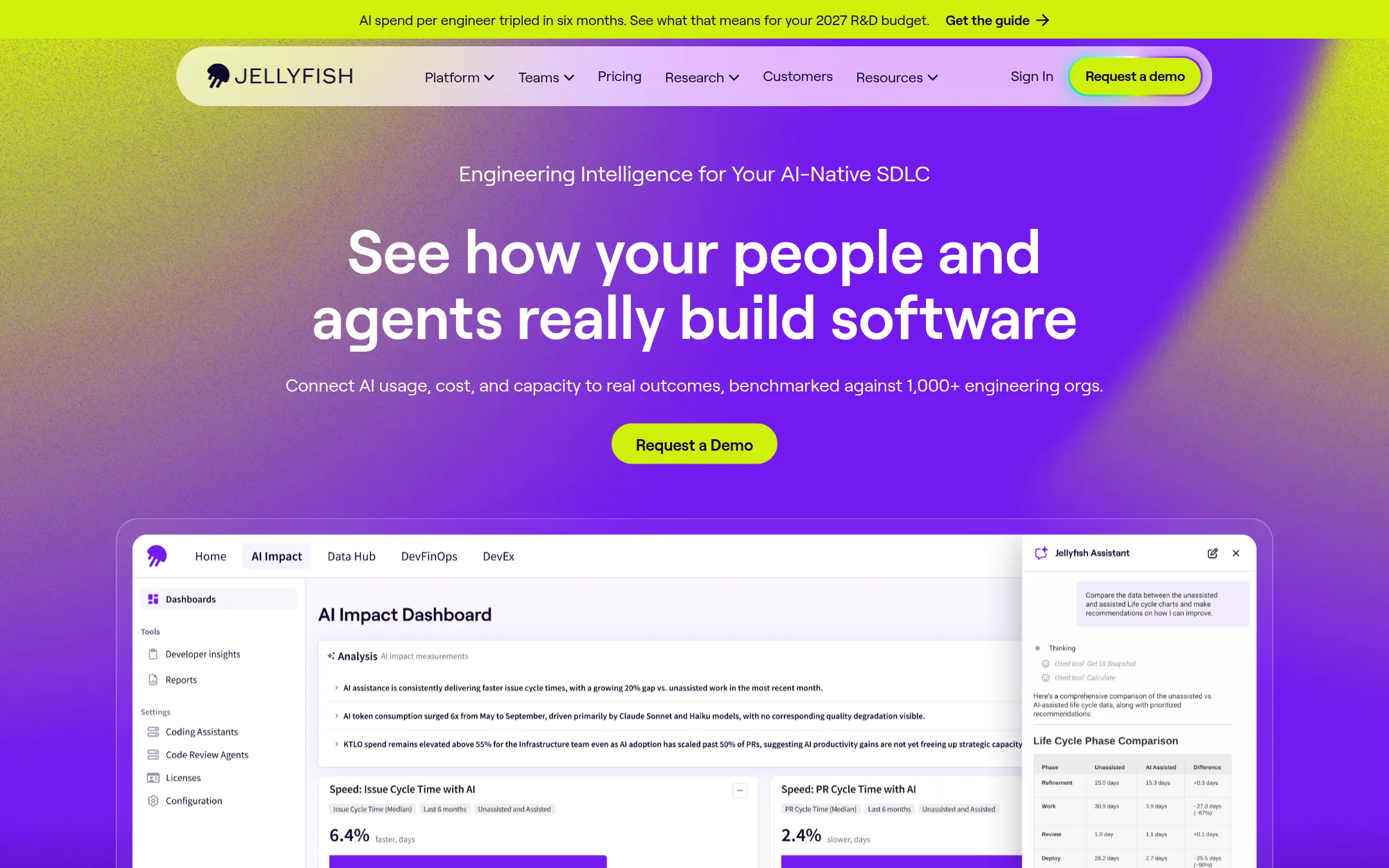
Jellyfish is an engineering intelligence platform that connects AI tool usage, token spend, and capacity to delivery outcomes, benchmarked against over 1,000 engineering organizations. Choose it instead of DailyBot when the question is how engineering work and AI spending affect output, rather than how a team stays updated through async check-ins.
Where it is strong
- Reconciles AI spend across vendors, teams and models and ties it to outcomes
- Benchmarks cycle time, DORA metrics and AI usage against more than 1,000 engineering organizations
- Holds SOC 1 Type II and SOC 2 Type II certifications, with role-based access controls
Where it falls short
- Built for engineering measurement, so it does not offer the async standup and kudos features DailyBot centers on
- Pricing depends on seats and modules, so it is hard to estimate cost without a sales conversation
- Pricing:
- Pricing is not published on the site. Jellyfish quotes depend on seat count and the modules selected, and the site offers a sales quote.
- LNot published
6.LinearB
Best for: Engineering leaders at software teams who need DORA metrics, cycle time and AI ROI reporting for the board
- Pricing
- Not published
- Category
- Other
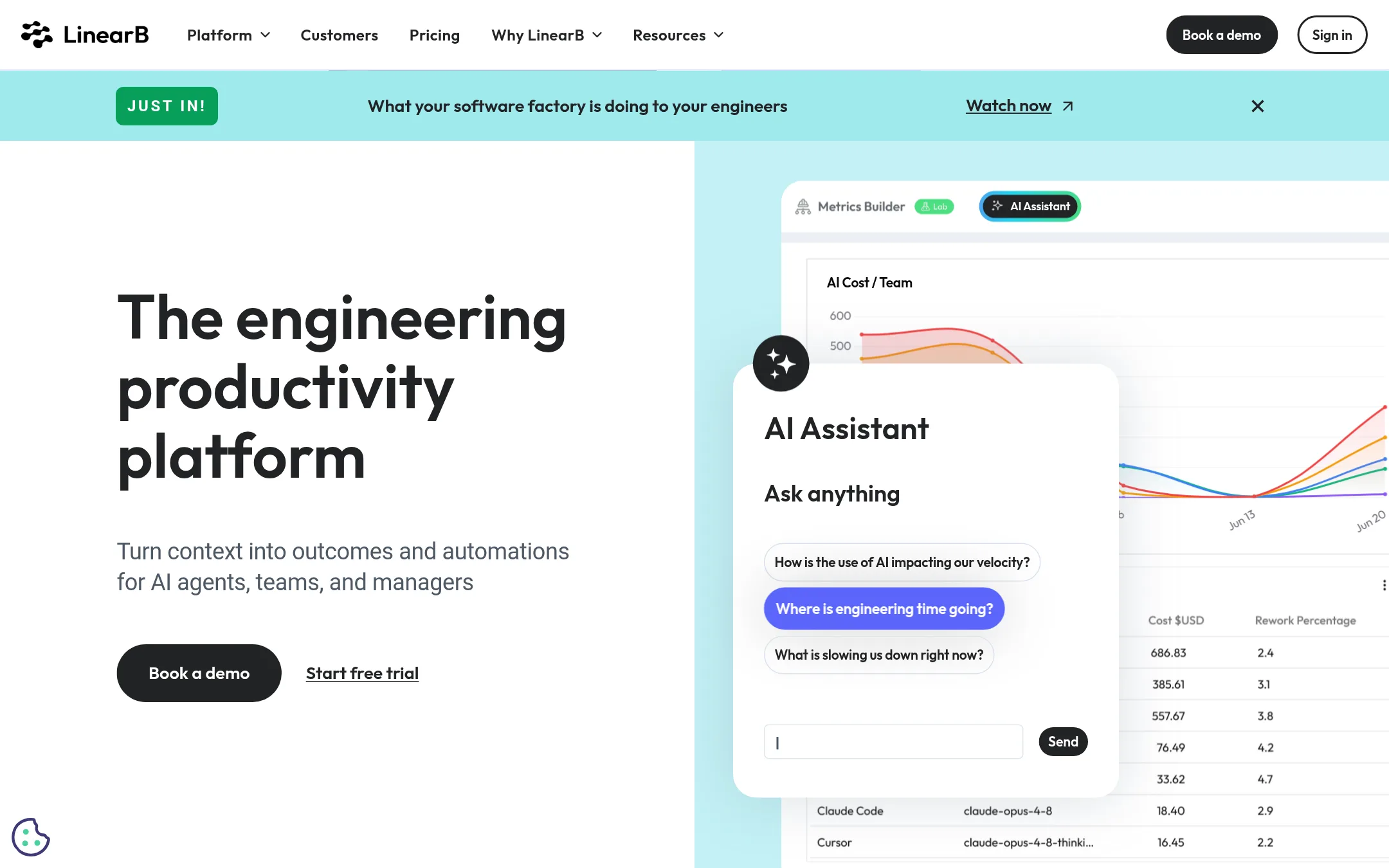
LinearB is an engineering productivity platform that collects data from commits, tickets, builds and AI tools, then reports on delivery metrics, AI adoption and cost, and PR workflows. Someone would choose it over DailyBot when the main problem is measuring engineering throughput and AI ROI rather than running async team check-ins in chat.
Where it is strong
- Pulls commits, tickets, builds and AI tool usage into one engineering context layer
- Shows AI cost per effective PR and which tools return the most per dollar
- Includes gitStream and workflow automation to route PRs by risk and reviewer knowledge
Where it falls short
- Built around engineering delivery, so it does not run daily standups or kudos in chat the way DailyBot does
- Pricing is not published, so cost comparison requires a sales conversation
- Pricing:
- Pricing is not published on the site.
- SNot published
7.Swarmia
Best for: Engineering organizations of any size that want data on delivery and AI impact from their existing tools without changing their workflow.
- Pricing
- Not published
- Category
- Other
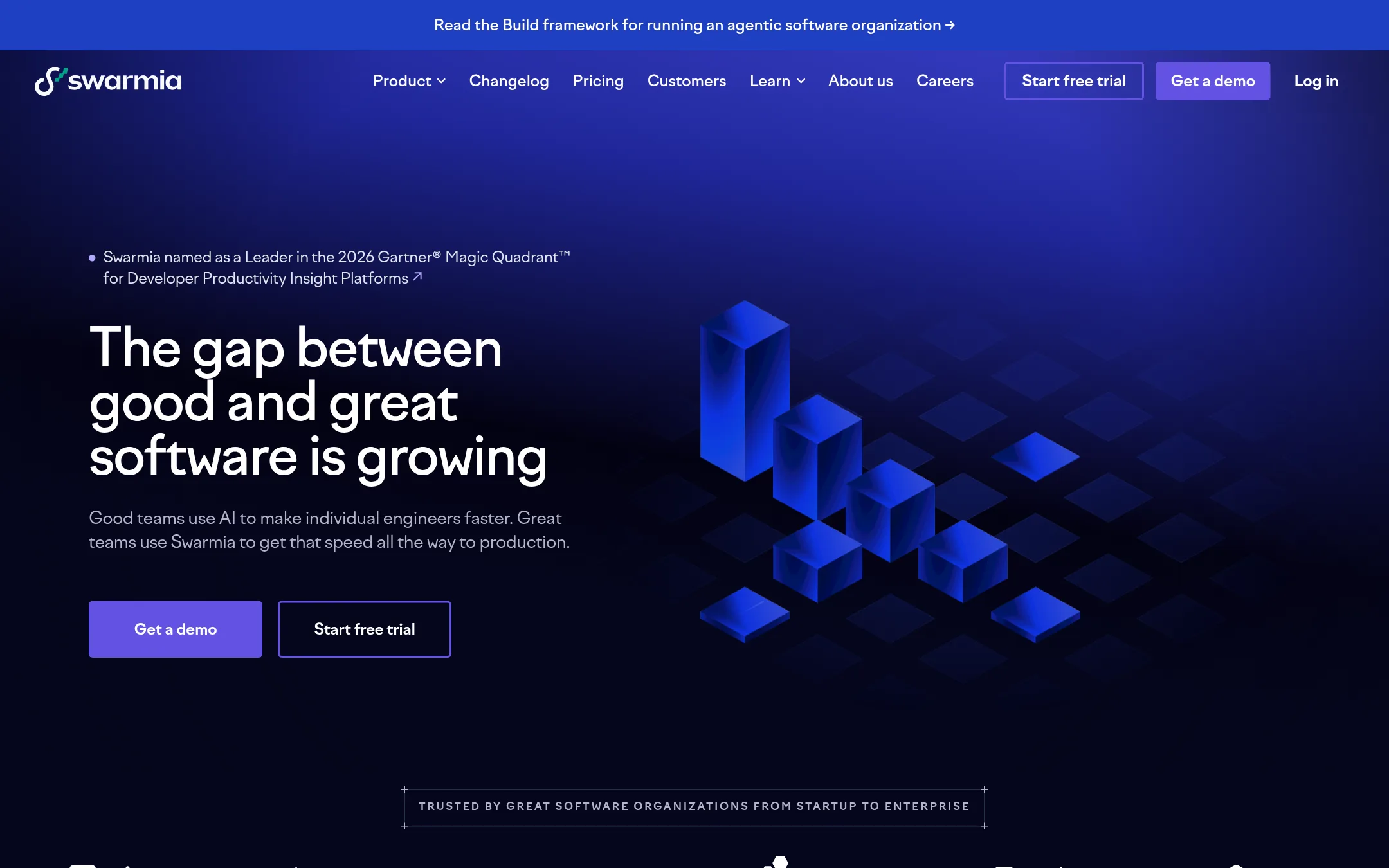
Swarmia is an engineering intelligence tool. It connects to your existing tools and shows delivery, productivity and AI adoption data without asking engineers to change how they work. A team would choose it over DailyBot if the main problem is understanding engineering output and flow, not collecting async status updates from people and agents in chat.
Where it is strong
- Connects to existing tools without requiring label changes or process changes.
- Ships strong default dashboards built on engineering best practices.
- Offers Swarmia AI and an MCP connection for querying data from tools like Claude or Cursor.
Where it falls short
- Its focus is engineering analytics, so it does not run async check-ins or kudos the way DailyBot does.
- Pricing is not published on the site, so you will need to request a quote to compare costs.
- Pricing:
- Pricing is not published on the site.
- Not published
8.CodeClimate
Best for: Engineering VPs and directors who need to answer staffing and initiative-progress questions from their AI tools
- Pricing
- Not published
- Category
- Developer Tools
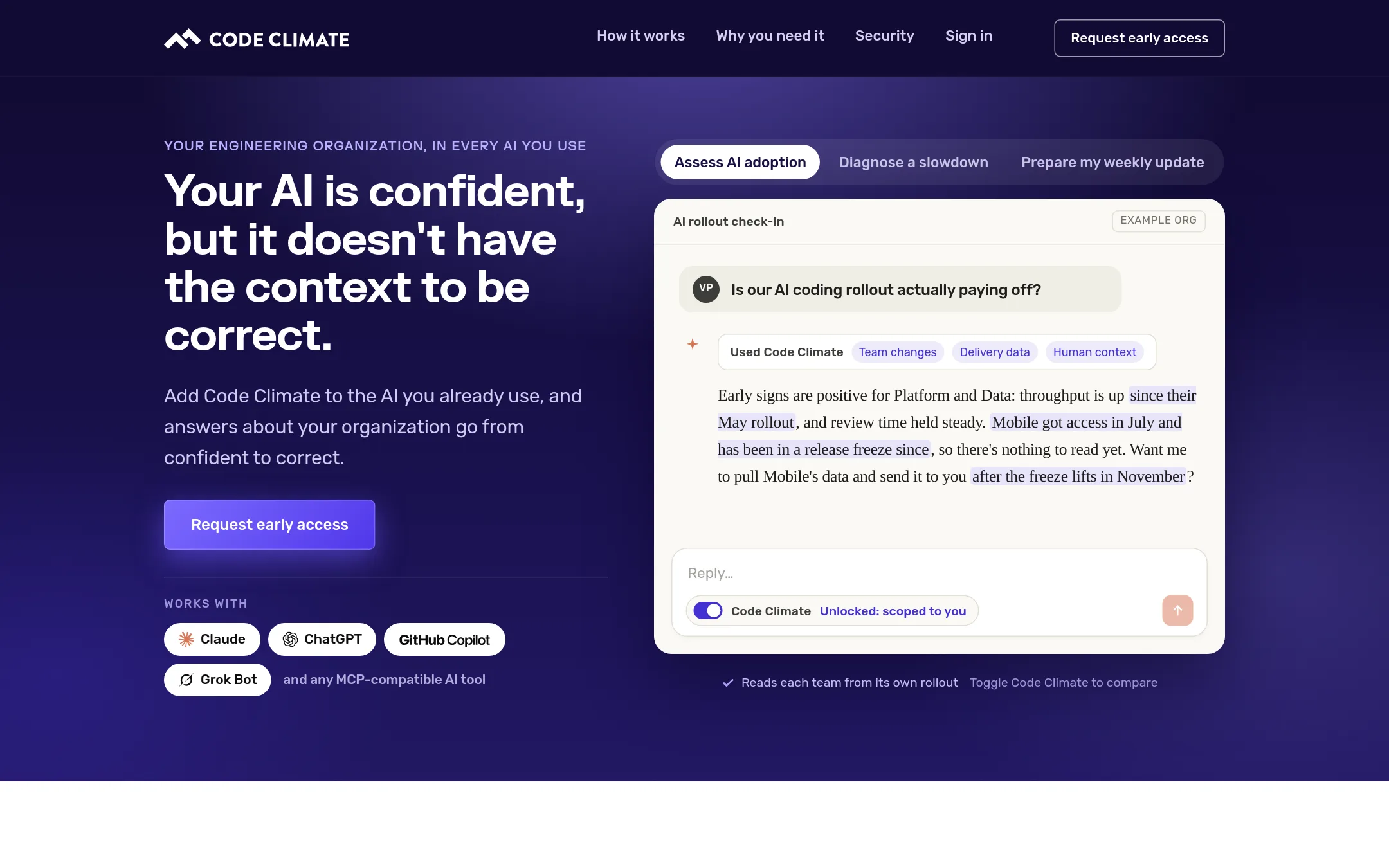
Code Climate connects the AI tools a leader already uses, such as Claude, ChatGPT and GitHub Copilot, to engineering organization data including teams, people, delivery status and recorded decisions. It suits a VP or director who wants to ask a question about staffing or initiative progress and get an answer grounded in the real context rather than a guess. Choose it over DailyBot when the problem is understanding engineering delivery and org structure, not running async standups or team check-ins.
Where it is strong
- Works inside Claude, ChatGPT and GitHub Copilot through MCP, so no new dashboard to learn
- Answers respect each leader's access to teams, reports and shared exhibits
- Carries recorded decisions and dates, such as a shutdown deadline, into the answer
Where it falls short
- Access is by request, with early access before any broader use
- Does not run standups, check-ins or kudos the way DailyBot does
- Pricing:
- Pricing is not published on the site.
See more comparisons in Communication & Collaboration alternatives.
FAQ
Questions about DailyBot alternatives
Which DailyBot alternative is best for small teams on a budget?
Range has a free plan for small teams, covering up to 2 sub-teams and 3 goals, with check-ins, meeting agendas, and notes. Its free plan limits check-in history to 30 days. Geekbot is another option for teams already on Slack or Microsoft Teams, though its pricing is not published on the site.
Which alternative runs standups directly inside Slack or Microsoft Teams?
Geekbot runs asynchronous standups, polls, and surveys inside Slack and Microsoft Teams, so teams do not need a separate dashboard. It flags blockers as they come up and offers anonymous reporting. Its site notes that integrations may require an Enterprise plan.
Can I compare alternatives by price before talking to sales?
Partly. Range lists a free plan and a Pro plan, but does not state per-seat prices, and Enterprise is custom. Steady publishes a starting price of $25 per month for 500 Coordination Credits, but its cost depends on credit usage. Several other alternatives, including Linear's Enterprise tier and the engineering analytics tools, do not publish full pricing, so a sales conversation is needed.
Which alternative helps if my main problem is engineering delivery rather than team check-ins?
LinearB, Jellyfish, and Swarmia focus on engineering delivery, cycle time, and AI tool impact, using data from existing tools without changing how engineers work. Linear covers planning and shipping software through issues and roadmaps. None of these run async standups or kudos the way DailyBot does, so they suit a different job.
Do any alternatives let coding agents work with team context?
Steady offers an API, CLI, and MCP server so coding agents can work with the same team context it gathers from tools like GitHub, Jira, and Slack. Swarmia offers an MCP connection for querying its data from tools like Claude or Cursor, and CodeClimate works inside Claude, ChatGPT, and GitHub Copilot through MCP. Both of these focus more on answering questions than on running check-ins.
Last updated November 6, 2026.