Increase alternatives
10 products compared · Updated October 15, 2026
The short answer
The three strongest alternatives to Increase are Stripe, Treasury Prime, and Modern Treasury. Stripe suits companies of any size wanting a global payment platform with flexible billing. Treasury Prime fits fintechs that want multiple bank options to avoid single-bank dependency. Modern Treasury is best for fintechs and platforms that need multi-rail payments with built-in compliance and a unified ledger.
Your shortlist, at a glance
Read the comparisons ↓ StripeNot publishedCompanies of any size that want a widely adopted payment platform with global reach and flexible billing tools.
 OpenUnitFree + 2.9% + 30¢Self-storage operators with one or many locations that want integrated management and payment processing.
 Treasury PrimeNot publishedFintechs that want to launch with multiple bank options and avoid single-bank dependency.
- SSynapseSee websiteSynapse platform for financial infrastructure needs.
 MarqetaNot publishedFintechs and enterprises launching card programs who want a partner to handle bank relationships, compliance, and operations.
 GalileoNot publishedFintechs and banks that want a single platform covering core banking, card issuing, and payments without building integrations across multiple vendors.
- BBond$49/mo, free tierFounders and operators who want an AI assistant inside Slack to track commitments and prep for meetings.
 Modern TreasuryUsage-basedFintechs and platforms that want to launch multi-rail payments quickly with built-in compliance and a unified ledger.
 ColumnNot publishedFintechs and banks that want a developer-first, nationally chartered bank with direct rail access and the ability to scale from seed to global institution.
 PlaidNot publishedFintechs and apps in Europe that need to link user bank accounts and access financial data across 12,000+ institutions.
About Increase and its alternatives
Increase is an API-first bank for ambitious technology companies. It provides enterprise-grade banking APIs for moving, storing, and lending money, with direct connections to US payment rails, card issuing, and flexible bank accounts. Increase is known for its transparency, reliability, and direct bank partnership, with a team from Stripe, Visa, and US government agencies.
When comparing alternatives, weigh pricing structure, regions covered, integrations, support, and contract terms. Some alternatives publish pricing, while others require sales conversations. Consider whether you need a full banking core, card issuing, or just payment processing. Check if the product supports your target regions and integrates with your existing stack. Evaluate the level of support and whether you can start with a free tier or sandbox.
Explore the alternatives
- Not published
1.Stripe
Best for: Companies of any size that want a widely adopted payment platform with global reach and flexible billing tools.
- Pricing
- Not published
- Category
- Finance & Accounting
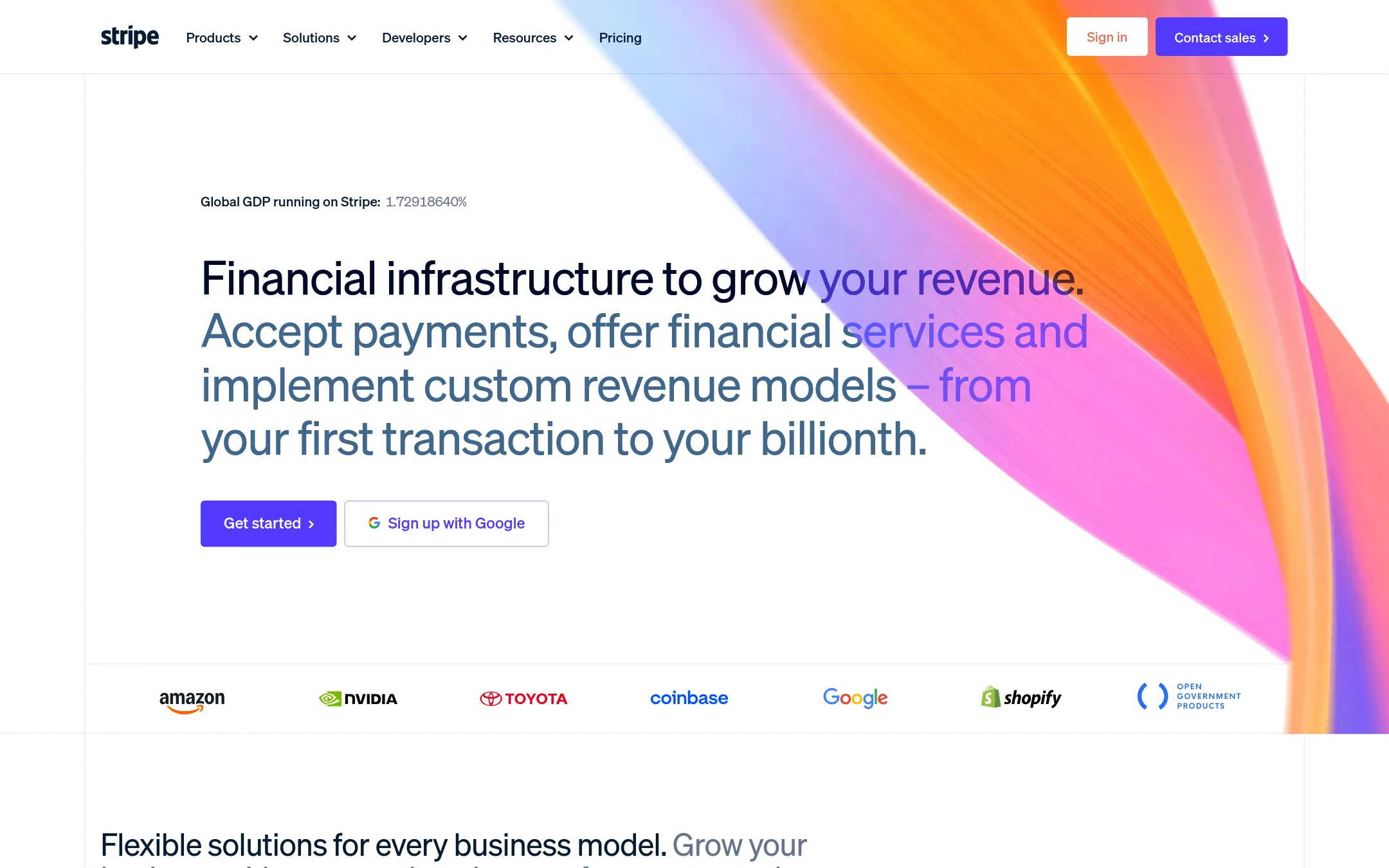
Stripe is a broad payments and financial infrastructure platform for accepting payments, managing subscriptions, and issuing cards. Choose it over Increase when you need a global, well-documented payment processor with extensive integrations and support for many business models, rather than a dedicated banking API.
Where it is strong
- Supports 135+ currencies and payment methods worldwide.
- Handles 1.9 trillion USD in volume with 99.999% historical uptime.
- Offers many products: payments, billing, cards, crypto, and platform tools.
Where it falls short
- Not a full banking API with direct network access like Increase.
- Pricing details are not shown on the homepage, so you must contact sales.
- Pricing:
- Pricing is not published on the site.
- Free + 2.9% + 30¢
2.OpenUnit
Best for: Self-storage operators with one or many locations that want integrated management and payment processing.
- Pricing
- Free + 2.9% + 30¢
- Category
- E-commerce
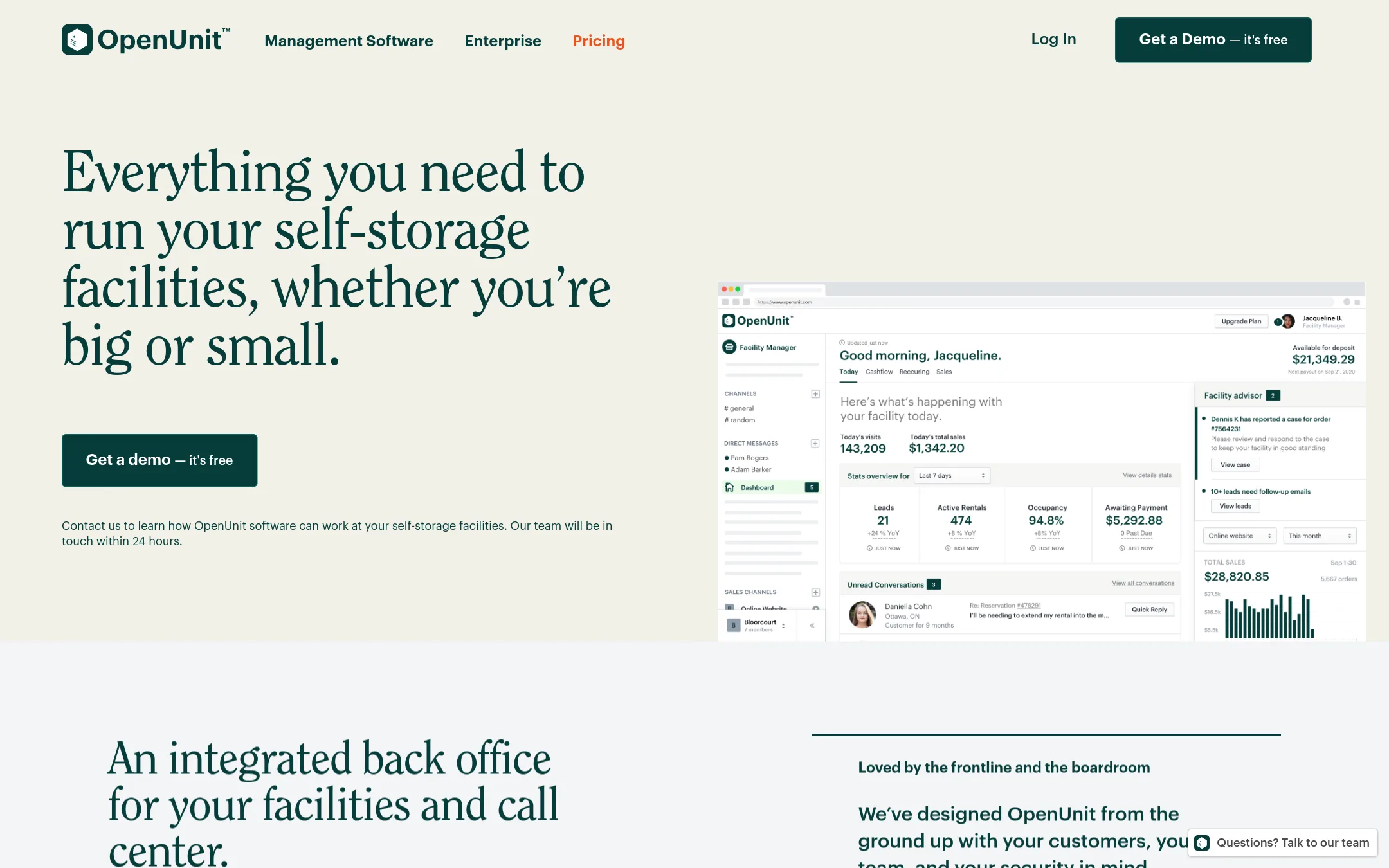
OpenUnit is a management platform for self-storage facilities, covering reservations, payments, CRM, and accounting. Choose it instead of Increase if you run a self-storage business and need a vertical-specific tool rather than a general-purpose banking API.
Where it is strong
- No monthly fee for the software when using OpenUnit Payments.
- Includes POS, CRM, accounting, and website tools in one account.
- PCI Level 1 compliant and supports ACH payments.
Where it falls short
- No support for third-party payment providers.
- Standard rates apply only to businesses processing under $1,000,000 per year.
- Pricing:
- Software is free. Credit card transactions cost 2.9% + 30¢, and in-person POS transactions cost 2.65% + 10¢.
- Not published
3.Treasury Prime
Best for: Fintechs that want to launch with multiple bank options and avoid single-bank dependency.
- Pricing
- Not published
- Category
- Finance & Accounting
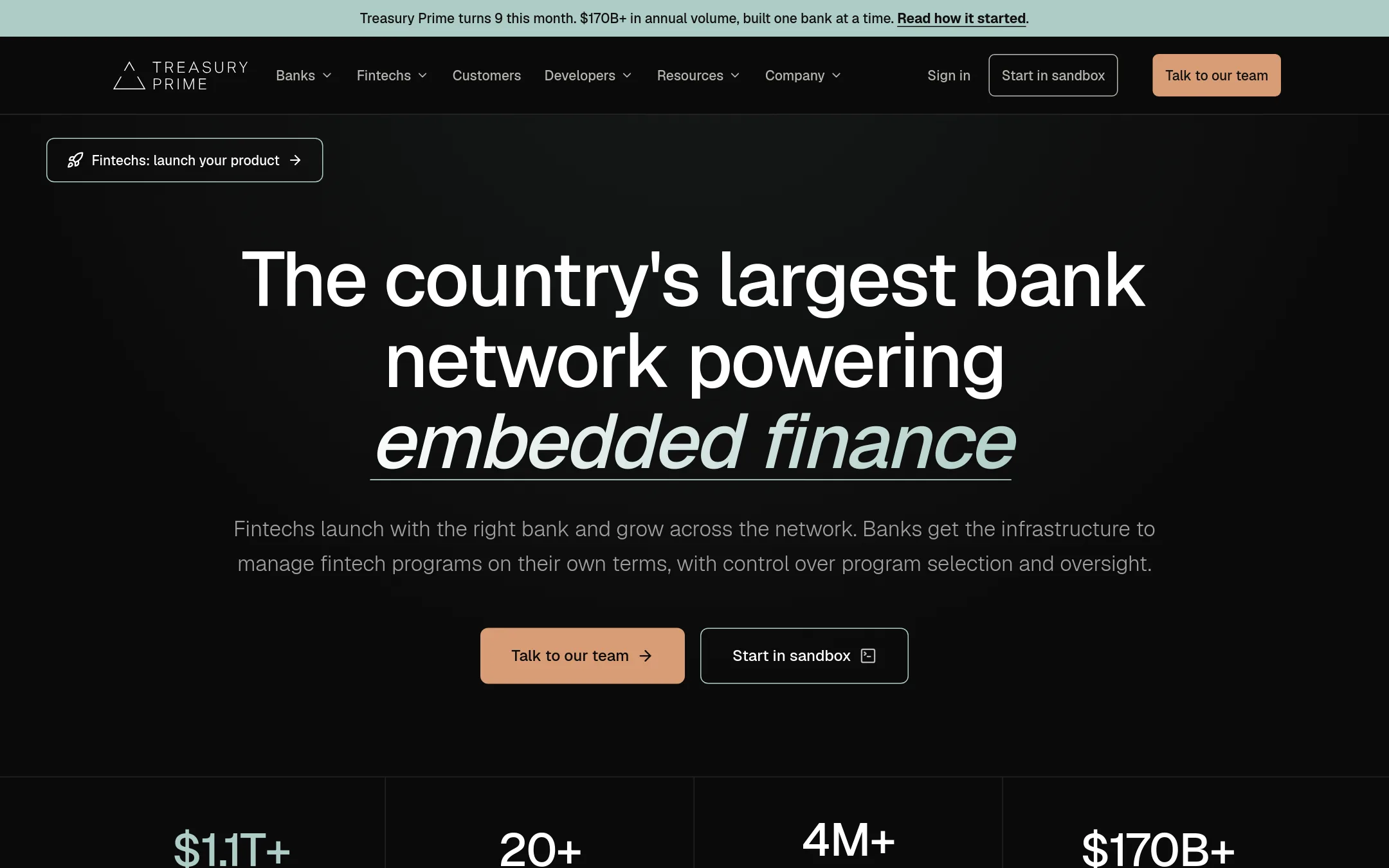
Treasury Prime is an embedded banking platform that connects fintechs to a network of 20+ banks through a single API. Choose it over Increase if you want to avoid being locked into one sponsor bank and need the flexibility to move between banks as risk appetites change.
Where it is strong
- Access to 20+ banks through one API and a single marketplace submission.
- Public sandbox and REST APIs let engineers evaluate before sales.
- Banks can vet and approve programs, keeping risk decisions with the bank.
Where it falls short
- Pricing is not transparent, likely requiring a sales conversation.
- Network approach may add complexity compared to Increase's direct bank partnership.
- Pricing:
- Pricing is not published on the site.
- SSee website
4.Synapse
Finance & Accounting
Synapse provides banking-as-a-service infrastructure with account, payment, and KYC tooling. Its platform uses layered bank partnerships that can add latency compared with direct Federal Reserve access. Increase stands out for teams requiring unfiltered RTP, FedNow, and wire settlement data along with flexible FBO and customer-titled account structures without forced compliance templates.
- Not published
5.Marqeta
Best for: Fintechs and enterprises launching card programs who want a partner to handle bank relationships, compliance, and operations.

- Pricing
- Not published
- Category
- Finance & Accounting
Marqeta is a card issuing and payment processing platform with open APIs for debit, credit, and prepaid programs. Choose it over Increase if you need a publicly traded, enterprise-grade issuer with global reach and program management support.
Where it is strong
- Supports debit, prepaid, and credit on one platform
- Certified to operate in 40+ countries
- Program management covers compliance, operations, and cardholder support
Where it falls short
- Pricing not transparent without contacting sales
- Focus is on card issuing, not full banking infrastructure like Increase
- Pricing:
- Pricing is not published on the site.
- Not published
6.Galileo
Best for: Fintechs and banks that want a single platform covering core banking, card issuing, and payments without building integrations across multiple vendors.
- Pricing
- Not published
- Category
- Finance & Accounting
Galileo is a cloud-native platform for core banking, card issuing, and payments. Choose it over Increase if you need a broader banking stack that includes core banking alongside card issuing and payment processing, rather than Increase's API-first bank focused on US payment rails and card issuing.
Where it is strong
- Covers core banking, card issuing, and payments in one platform
- Cloud-native architecture for scalability
- Part of SoFi's broader financial ecosystem
Where it falls short
- Pricing not transparent on the website
- Focus on full banking stack may be more than needed for simple payment API use cases
- Pricing:
- Pricing is not published on the site.
- B$49/mo, free tier
7.Bond
Best for: Founders and operators who want an AI assistant inside Slack to track commitments and prep for meetings.

- Pricing
- $49/mo, free tier
- Category
- Productivity & Project Management
Bond is an AI chief of staff that turns messages, docs, and tasks into a prioritized to-do list. Choose it over Increase if you need help managing follow-ups and meetings, not banking infrastructure.
Where it is strong
- Lives in Slack and iMessage, so no new app to learn
- Automatically pulls tasks and follow-ups from connected tools
- Enterprise-grade security with SOC 2 Type II and GDPR compliance
Where it falls short
- No banking or payment capabilities
- Free tier limited to 10,000 credits
- Pricing:
- Pricing starts at $49/mo for individuals, with a free tier offering 10,000 credits and custom enterprise pricing.
- Usage-based
8.Modern Treasury
Best for: Fintechs and platforms that want to launch multi-rail payments quickly with built-in compliance and a unified ledger.
- Pricing
- Usage-based
- Category
- Finance & Accounting
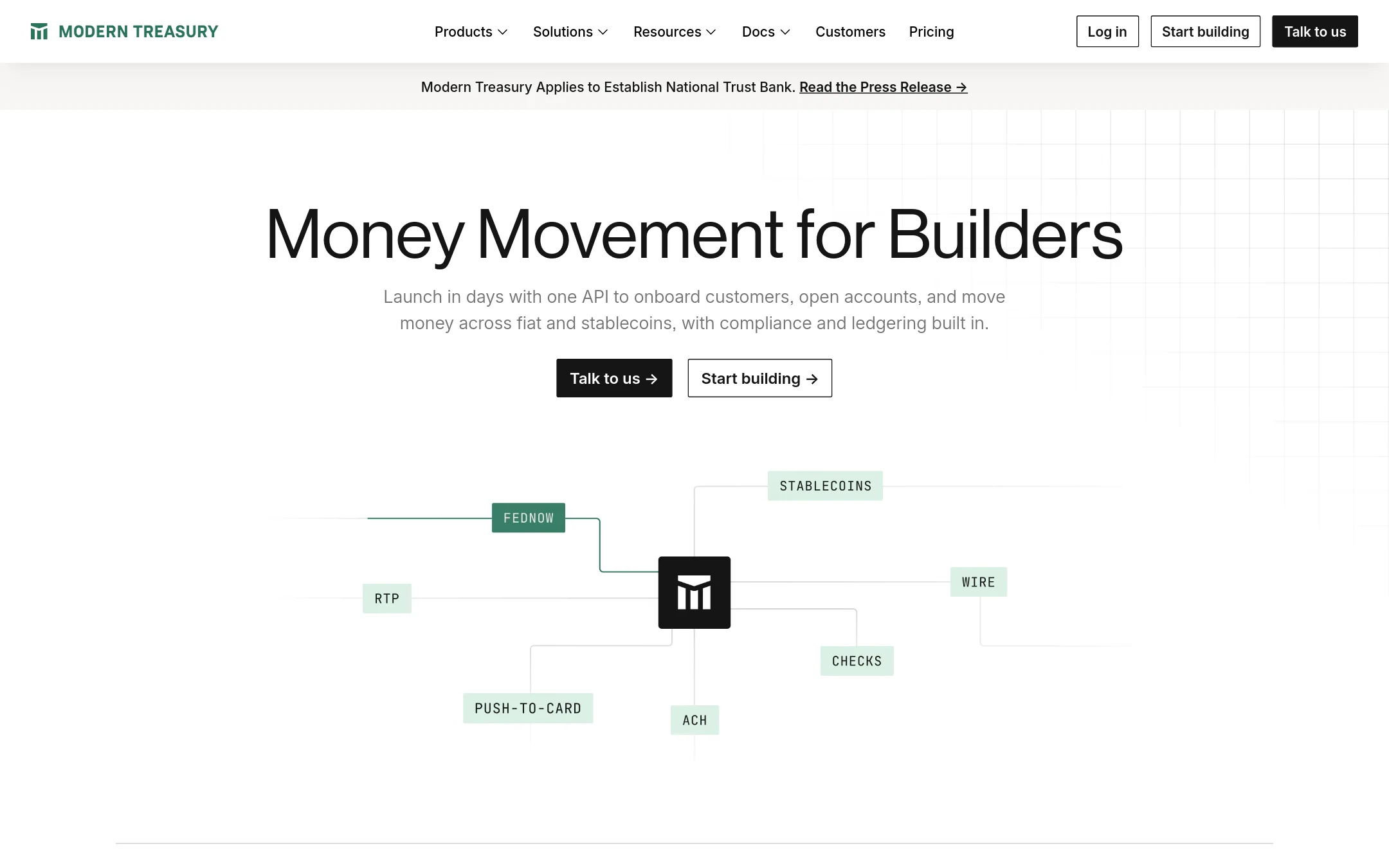
Modern Treasury is a payment operations platform that gives you one API for payments, accounts, and ledgering across ACH, wire, RTP, FedNow, and stablecoins. Choose it instead of Increase if you need built-in compliance, KYB/KYC, and a unified ledger without building your own banking core.
Where it is strong
- One API for payments, accounts, and ledgering
- Built-in KYB/KYC and transaction monitoring
- Supports ACH, wire, RTP, FedNow, push-to-card, checks, and stablecoins
Where it falls short
- Pricing is not transparent without a sales conversation
- No card issuing or loan programs like Increase offers
- Pricing:
- Pricing is usage-based and varies by payment method, volume, and account structure. Exact numbers are not published on the site.
- Switching from Increase:
- Moving from Increase means reworking your payment integration to Modern Treasury's API and ledger model, and adjusting to its compliance and account structure.
- Not published
9.Column
Best for: Fintechs and banks that want a developer-first, nationally chartered bank with direct rail access and the ability to scale from seed to global institution.
- Pricing
- Not published
- Category
- Finance & Accounting
Column is a nationally chartered bank built from scratch for developers, with direct connections to the Federal Reserve, TCH, and Swift. Choose it over Increase if you need a bank that is also the regulated entity itself, not just a technology layer on top of partner banks, and if you want to build card programs, lending, or global banking on a single platform.
Where it is strong
- Nationally chartered bank, not a middleware layer
- Direct connections to Federal Reserve, TCH, and Swift
- Built from scratch core and ledger for speed and control
Where it falls short
- Pricing is not public. Likely custom enterprise deals
- No mention of compliance modularity or tailored loan programs like Increase
- Pricing:
- Pricing is not published on the site.
- Not published
10.Plaid
Best for: Fintechs and apps in Europe that need to link user bank accounts and access financial data across 12,000+ institutions.
- Pricing
- Not published
- Category
- Finance & Accounting
Plaid is a financial data network that lets companies connect to users' bank accounts, pull balances and transactions, and initiate payments. Choose it over Increase when your product needs account linking and data access across many banks, rather than a full banking core with card issuing and ledger capabilities.
Where it is strong
- Access to 12,000+ financial institutions across 20 countries
- 99.99% uptime and 100M+ global users on the network
- Pay-as-you-go plan with no upfront commitments
Where it falls short
- Pricing is not transparent without contacting sales
- Does not offer banking accounts or card issuing like Increase
- Pricing:
- Pricing is not published on the site. Plans are Pay as You Go, Growth, and Custom, with product-specific fees.
See more comparisons in Finance & Accounting alternatives.
FAQ
Questions about Increase alternatives
What is the main difference between Increase and its alternatives?
Increase is a direct bank partner with API-first banking, offering bare-metal payments, card issuing, and compliance. Alternatives like Stripe focus on payment processing, Treasury Prime provides multi-bank access, and Modern Treasury offers payment operations with a ledger. Choose based on whether you need a full banking core or just specific financial services.
Do any alternatives have transparent pricing?
Most alternatives do not publish pricing, including Stripe, Treasury Prime, Modern Treasury, Marqeta, Galileo, Column, and Plaid. OpenUnit is an exception with free software and transaction fees. Bond has a free tier and paid plans starting at $49 per month. For others, you typically need to contact sales for a quote.
Which alternative is best for global payments?
Stripe is the strongest for global payments, supporting 135+ currencies and payment methods worldwide. It handles large volumes with high uptime. Other alternatives like Plaid focus on data access across institutions, while Increase and Column are more US-centric with direct rail connections.
Can I get card issuing with these alternatives?
Yes, several alternatives offer card issuing. Marqeta is a dedicated card issuing platform, Galileo includes card issuing in its banking stack, and Increase provides full stack card issuing. Stripe also offers card products. Treasury Prime and Modern Treasury focus more on payments and banking, not card issuing.
Are there alternatives with free tiers or sandboxes?
Bond has a free tier with 10,000 credits, and OpenUnit's software is free with transaction fees. Treasury Prime offers a public sandbox for engineers. Plaid has a pay-as-you-go plan with no upfront commitments. Others like Stripe and Modern Treasury may offer trial or demo options, but pricing details are not public.
Last updated October 15, 2026.