
Developer ToolsFreemium
Strapi
Open-Source TypeScript Headless CMS for Next.js, Astro, Tanstack Start, and Nuxt.js
Developer ToolsFree
Screenshots
About Strapi
Strapi is a popular open-source headless CMS focused on developer-friendly content modeling and REST/GraphQL APIs. It offers strong plugin extensibility and quick setup but lacks Webiny's native multi-tenancy, serverless infrastructure, and AI-programmable workflow generation. Strapi is often chosen for smaller projects or teams wanting a Node.js-based solution, while Webiny targets enterprise users needing built-in permissions, self-hosting at scale, and AI-assisted platform extension without extra configuration.
What Strapi does
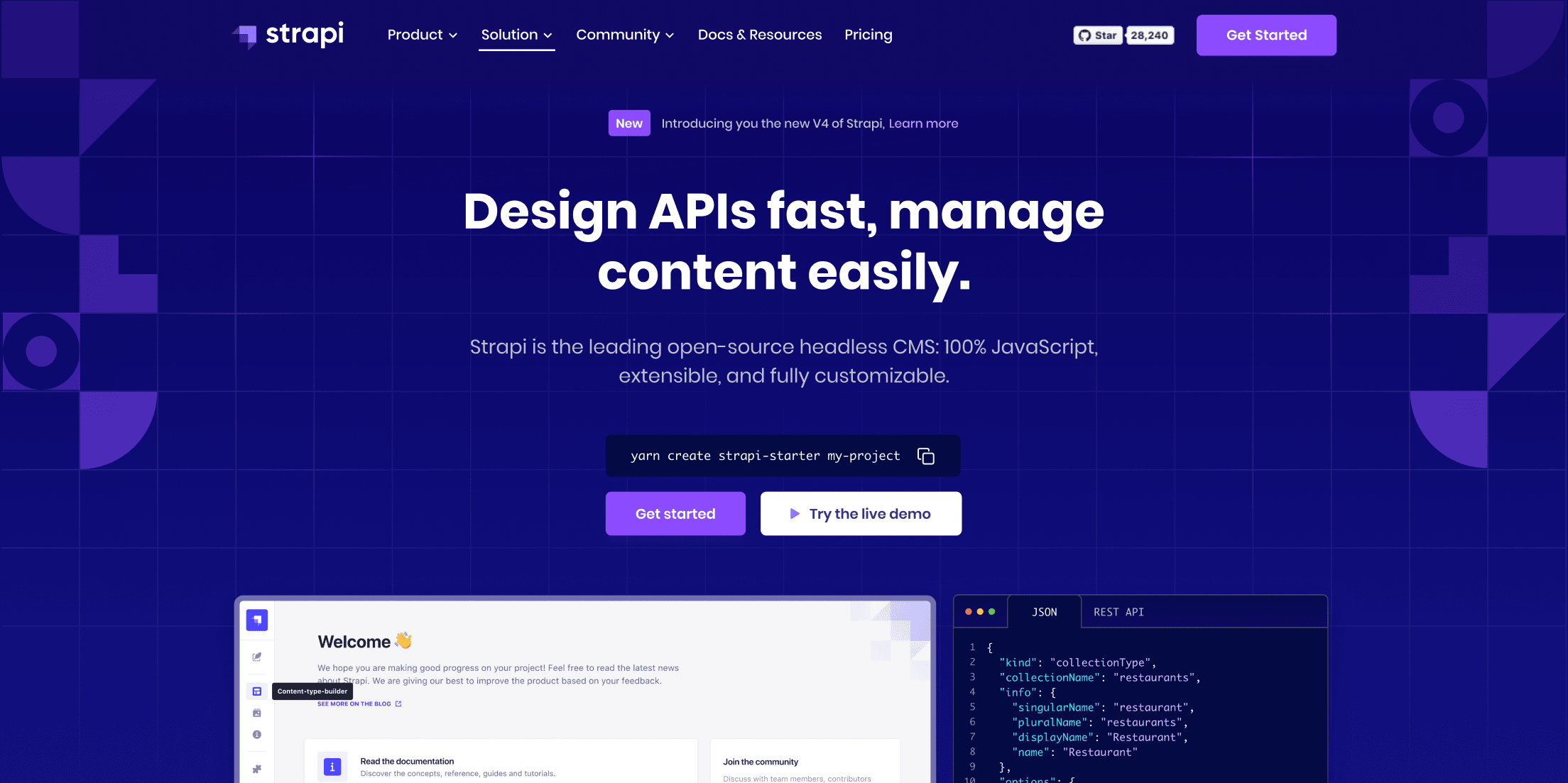
Strapi is the next-gen open-source headless CMS built with JavaScript/TypeScript that lets developers design REST and GraphQL content delivery APIs to connect any frontend while editors manage content, publishing, and translations. It supports deep customization, collaboration on code and content, robust security, and AI features for content modeling and translations. Available as self-hosted open-source (MIT), Strapi Cloud PaaS, or Enterprise Edition, it integrates with Next.js, Astro, Nuxt.js and other frameworks.
Key features
- Design REST and GraphQL Content Delivery APIs
- Content Management with editing, publishing and translation
- Customization to meet unique project requirements
- Strapi AI for automating content modeling and translations
- Self-hosted Enterprise Edition and Cloud PaaS hosting
- Marketplace of plugins and integrations
Compare Strapi with alternatives
For teams that need a self-hosted, multi-tenant CMS with governance and code-level customization, Webiny is the strongest alternative. Ghost suits independent publishers and newsletter creators who want built-in monetization. Sanity is best for teams building content-heavy applications or AI workflows that need structured content and real-time collaboration.
See Strapi alternativesSimilar products

Developer ToolsFreemium

Developer ToolsFreemium