
Salt Security alternatives
9 products compared · Updated November 11, 2026
The short answer
The three strongest alternatives to Salt Security are Snyk, Traceable AI and Cequence Security. Snyk suits development teams that ship AI-generated code and want security checks inside their IDE and CI/CD pipeline. Traceable AI suits AppSec and engineering teams that want API discovery, runtime protection and pre-release API testing in one platform. Cequence Security suits enterprises that need tightly limited tool access and runtime control over fraud and account takeover for agents and bots.
Your shortlist, at a glance
Read the comparisons ↓- NNoname SecuritySee websiteOther
- TTraceable AINot publishedEngineering and AppSec teams that want API discovery, runtime protection and pre-release API testing in one platform
- AAkamai Image ManagerSee websiteOther
- IImperva Data SecurityNot publishedEnterprises that need to secure sensitive data across on-premises and cloud systems and simplify compliance and audit reporting.
- CCequence SecurityNot publishedEnterprises whose agents and bots need tightly limited tool access and runtime control over fraud and account takeover
- PPalo Alto Networks Prisma CloudNot publishedEnterprises already standardized on Palo Alto Networks that want cloud security managed alongside their existing firewall and SOC tools
- EEscapeNot publishedEngineering and AppSec teams that want continuous pentesting on every merge or deploy and reports auditors can use
 CheckmarxCustom quoteEngineering teams that want SAST, dependency and secrets scanning built into the IDE and CI/CD pipeline
 SnykFrom $0 / monthDevelopment teams that ship AI-generated code and want security checks built into their IDE, CI/CD pipeline and AI coding assistants
About Salt Security and its alternatives
Salt Security says it protects organizations from breaches that come through their APIs. According to its site, it has secured APIs since 2016 and now secures the AI agents and MCP servers that call them. Its stated focus is discovering what agents can reach, governing the paths that put organizations at risk, and stopping abuse where actions happen. It also says it connects to more than 40 technologies across cloud, gateways, edge, code and the SOC.
When comparing alternatives in this category, weigh where each tool sits in the lifecycle, from code and pre-production testing to runtime traffic and agent behavior. Check the pricing structure, since many vendors in this list do not publish prices and some use credits or tailored quotes. Look at regional availability, the integrations that matter for your stack, the level of support you will get, and the contract terms.
Explore the alternatives
- NSee website
1.Noname Security
Other
A leading API security platform with deep discovery and posture management, often compared directly with Salt.
- TNot published
2.Traceable AI
Best for: Engineering and AppSec teams that want API discovery, runtime protection and pre-release API testing in one platform
- Pricing
- Not published
- Category
- Other
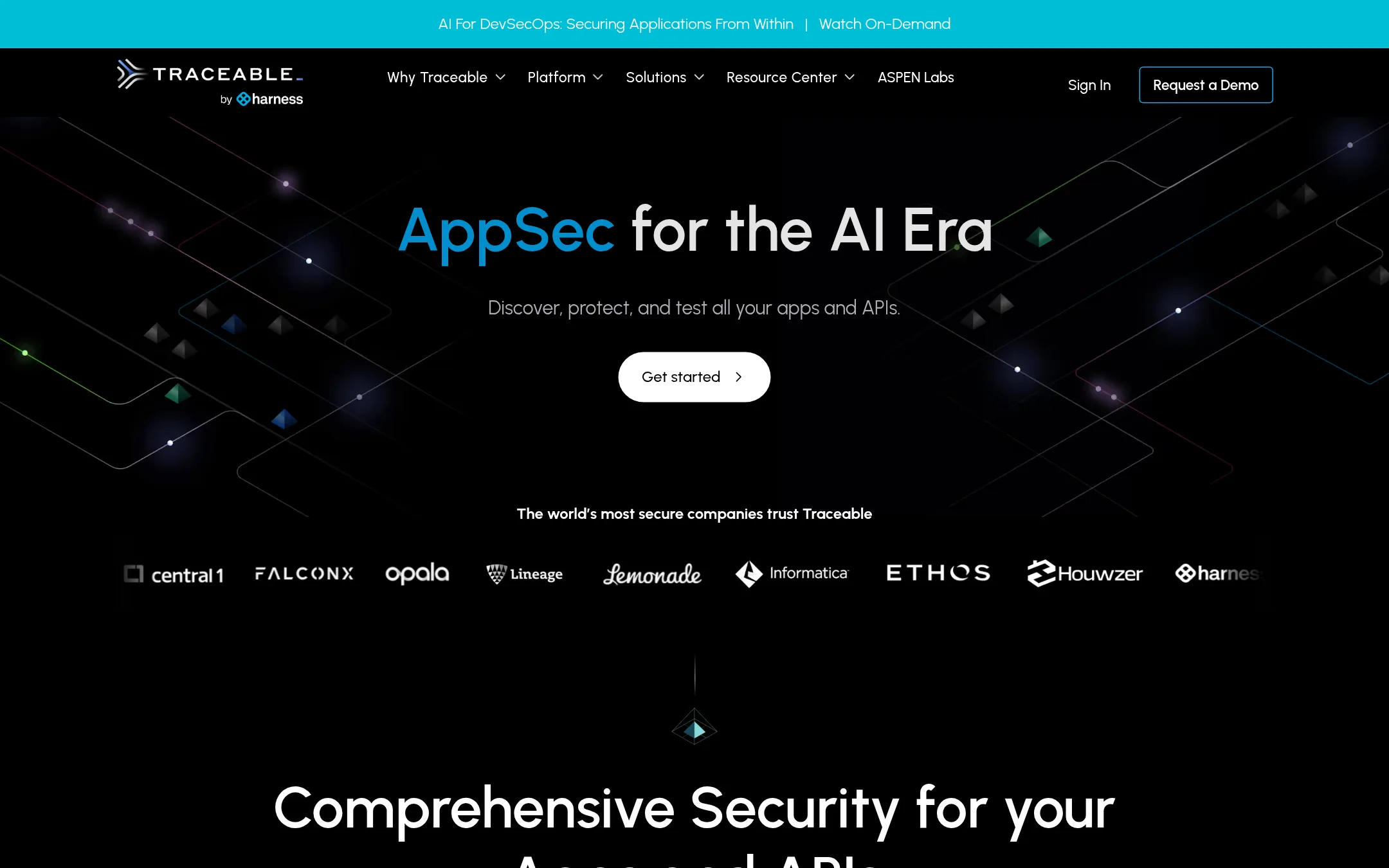
Traceable AI discovers and monitors apps, APIs and MCP tools, then adds runtime protection against OWASP API risks, bots and DDoS, plus security testing built into the development pipeline. Teams pick it over Salt Security when they want application security and API testing tied together under one platform, rather than a focus on securing the path an AI agent takes.
Where it is strong
- Discovers APIs and MCP tools and tracks their security posture
- Runs API security testing inside the development pipeline, built from real and replayed traffic
- Protects against OWASP Top 10 API risks, bots and DDoS in real time
Where it falls short
- The site does not publish pricing, so cost comparison requires a sales conversation
- The homepage does not describe a mapping of how risk moves across agents, tools and business systems the way Salt does
- Pricing:
- Pricing is not published on the site.
- ASee website
3.Akamai Image Manager
Other
Offers API protection as part of a broader edge security suite, a strong alternative for enterprises already using Akamai.
- INot published
4.Imperva Data Security
Best for: Enterprises that need to secure sensitive data across on-premises and cloud systems and simplify compliance and audit reporting.
- Pricing
- Not published
- Category
- Other
Imperva Data Security protects sensitive data across on-premises and cloud environments, with features for data governance, compliance and audit reporting. Teams pick it when the main problem is knowing where sensitive data lives and keeping it protected, rather than discovering and governing the AI agents and MCP servers that call APIs, which is Salt Security's focus.
Where it is strong
- Covers data governance, security and compliance in one platform.
- Works across on-premises and cloud environments.
- Offers audit reporting to simplify compliance work.
Where it falls short
- Its public material centers on data and application protection, not agentic AI path discovery.
- Pricing is not published, so cost comparison needs a direct quote.
- Pricing:
- Pricing is not published on the site.
- CNot published
5.Cequence Security
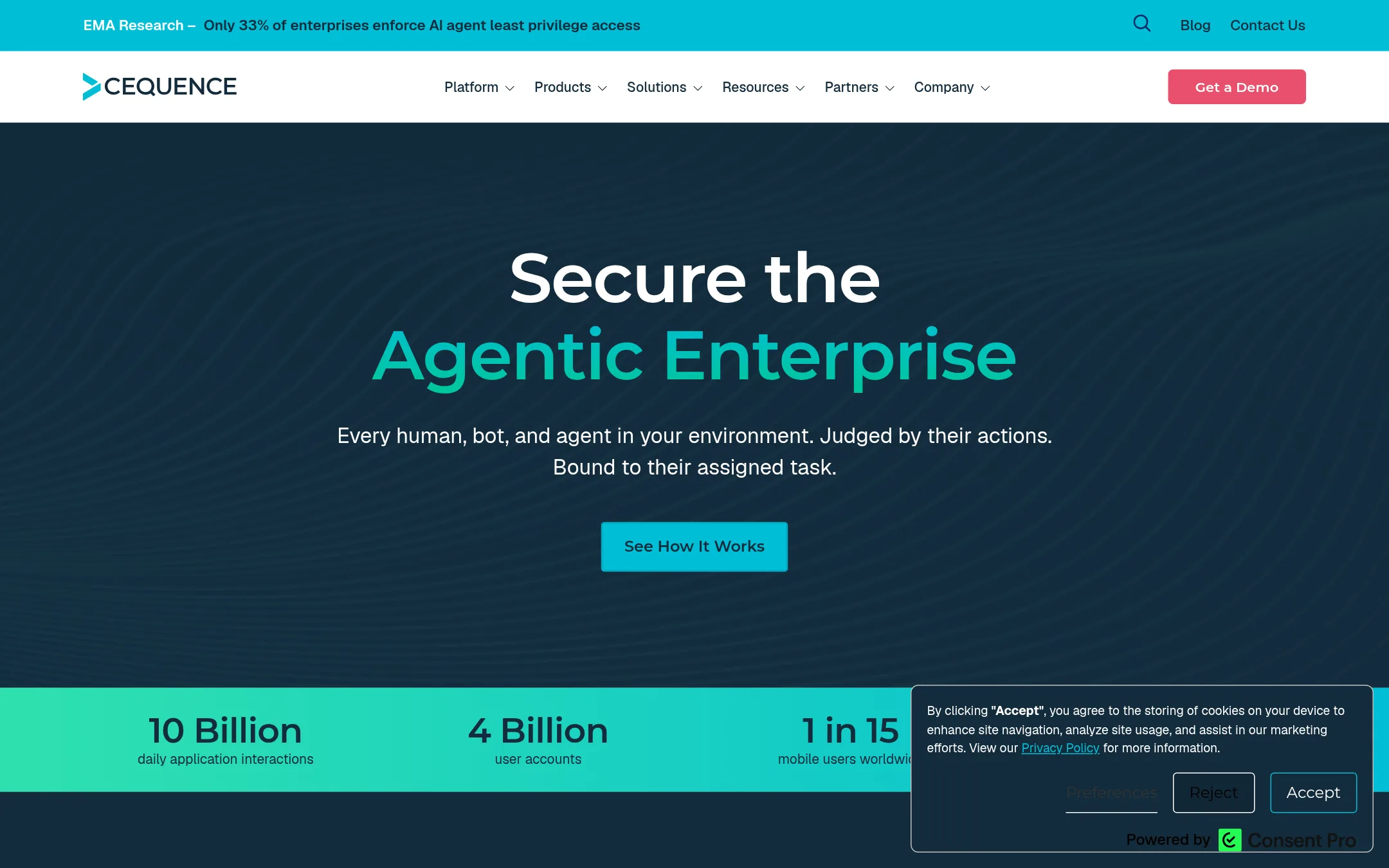
Best for: Enterprises whose agents and bots need tightly limited tool access and runtime control over fraud and account takeover
- Pricing
- Not published
- Category
- Other
Cequence Security governs how humans, bots and AI agents interact with your apps and APIs. It judges each agent by what it does, limits each agent to the tools it needs, and blocks fraud, abuse and account takeover at the application layer. Teams would pick it over Salt Security when their main concern is controlling what agents do in production and stopping automated abuse of customer-facing apps.
Where it is strong
- Scores agents by observed behavior, not only by their credentials
- Limits each agent to the specific tools it needs for its task
- Covers bot, fraud and account takeover defense for customer-facing apps
Where it falls short
- Its discovery of unknown MCP servers and agents is not described on the site the way Salt describes it
- Site material does not list the number of integrations or the deployment options available
- Pricing:
- Pricing is not published on the site.
- PNot published
6.Palo Alto Networks Prisma Cloud
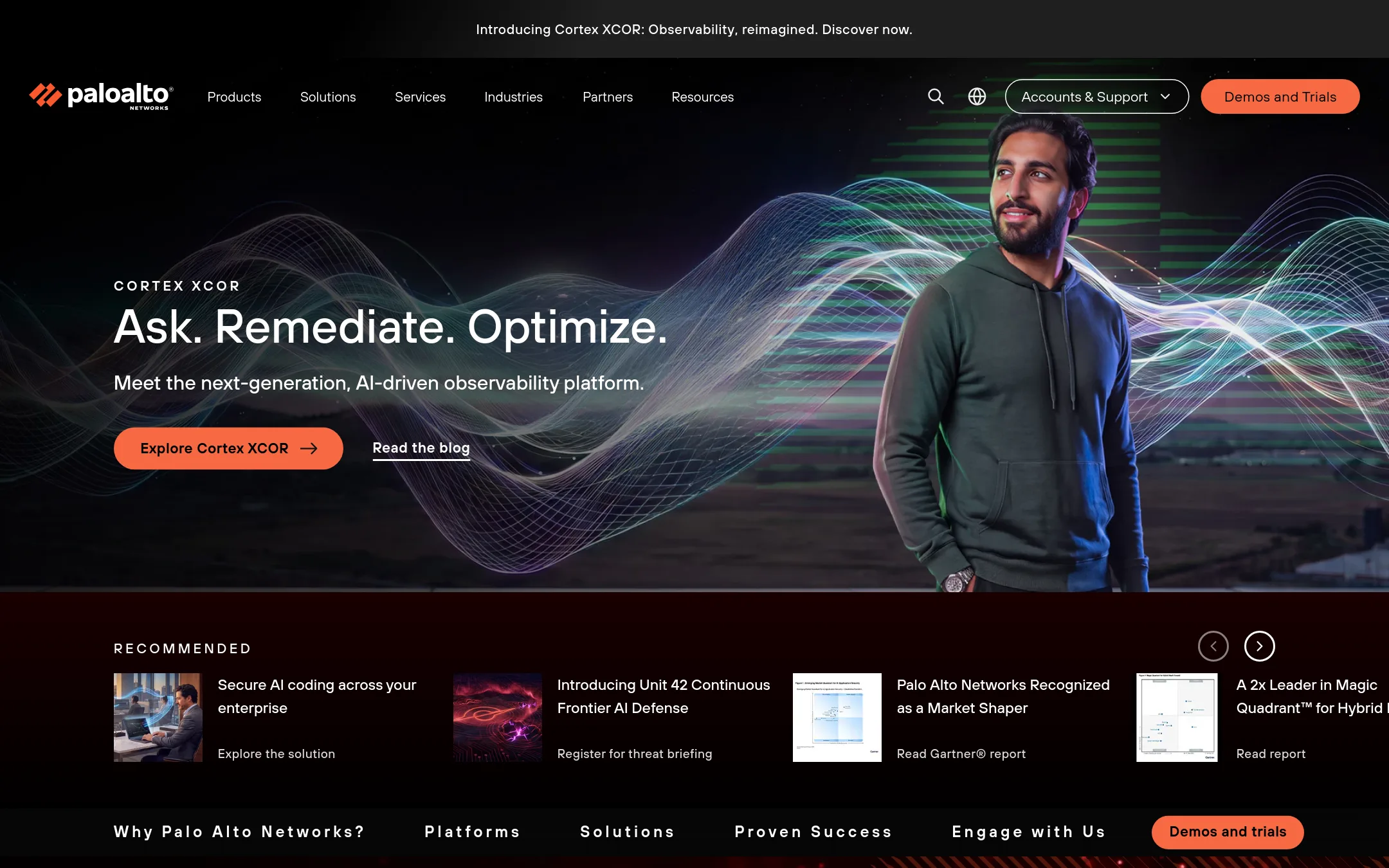
Best for: Enterprises already standardized on Palo Alto Networks that want cloud security managed alongside their existing firewall and SOC tools
- Pricing
- Not published
- Category
- Other
Prisma Cloud is Palo Alto Networks' cloud security product, covering cloud posture, runtime and application security. A team would pick it over Salt Security if they already run Palo Alto Networks tools and want cloud security under one vendor, rather than a focus on API and agentic path security.
Where it is strong
- Sits within a broad platform that also covers network, SOC and identity security
- Covers cloud posture, runtime and application security in one product family
- Backed by Palo Alto Networks' large threat intelligence and Unit 42 incident response services
Where it falls short
- The site does not describe API discovery or agentic AI path security the way Salt Security does
- Broad platform scope can mean more complexity for a team that only needs API security
- Pricing:
- Pricing is not published on the site.
- ENot published
7.Escape
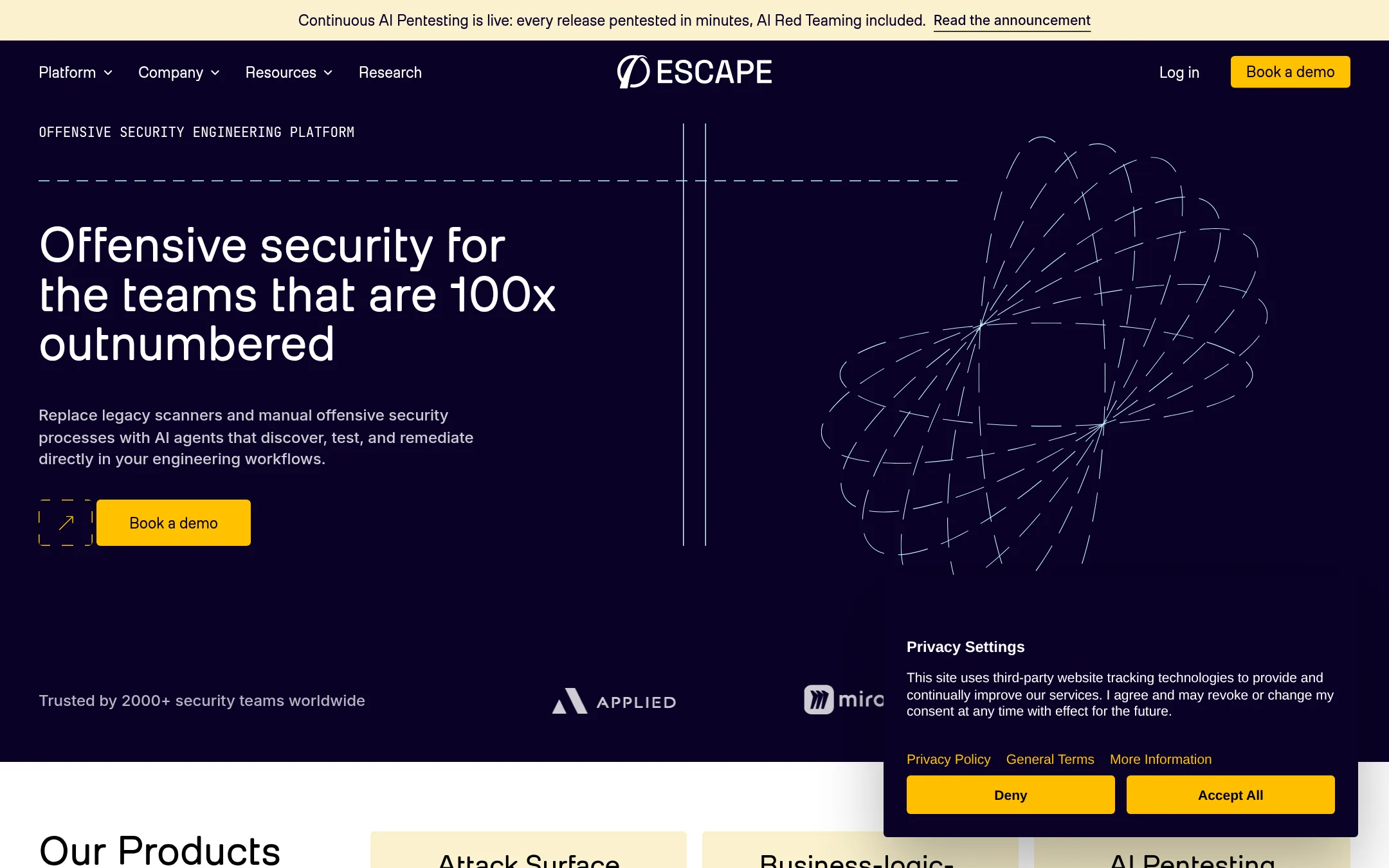
Best for: Engineering and AppSec teams that want continuous pentesting on every merge or deploy and reports auditors can use
- Pricing
- Not published
- Category
- Security & Privacy
Escape is an AI-driven offensive security platform that runs DAST-style testing, including business logic testing, against web apps and APIs, plus external network pentesting and attack surface management. Choose it instead of Salt Security when the goal is to find and prove exploitable flaws in your applications before attackers do, rather than to watch runtime API traffic and agent behavior.
Where it is strong
- Tests business logic, not just known signatures
- Runs pentests on merge, deploy or a schedule, with retests of open issues
- Covers external network exposure and attack surface as well as applications
Where it falls short
- Its focus is offensive testing, so it does not offer the runtime API and agent path visibility that Salt Security centers on
- The site does not publish details on integrations or deployment options to compare with Salt's 40+
- Pricing:
- Pricing is not published on the site.
- Custom quote
8.Checkmarx
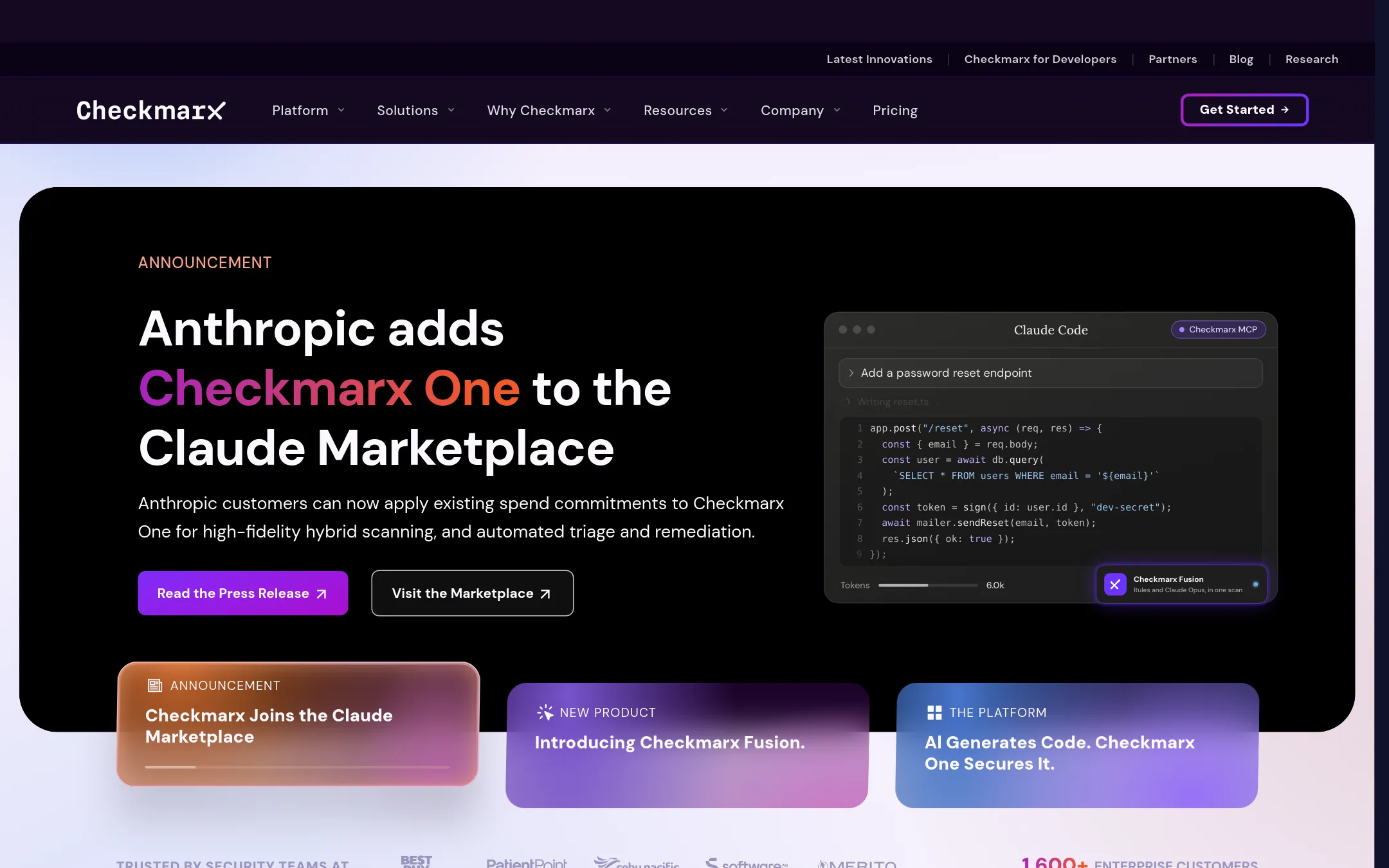
Best for: Engineering teams that want SAST, dependency and secrets scanning built into the IDE and CI/CD pipeline
- Pricing
- Custom quote
- Category
- Security & Privacy
Checkmarx is an application security platform that scans code, dependencies, containers and infrastructure, and now also inventories AI components and tests running apps. Pick it when your main worry is insecure code and software supply chain risk moving into production, rather than what your AI agents can reach at runtime. Salt Security focuses on the API and agent path after deployment, which is a different problem.
Where it is strong
- Covers code, open source, containers, IaC and secrets in one platform
- Pairs deterministic scanning with AI triage and proposed fixes for review
- Offers an AI inventory and MCP and agent scanning for AI components in the pipeline
Where it falls short
- Its focus is pre-production and code-level, so it does not match Salt's runtime view of agent actions across live systems
- Packages and add-ons are many and tailored, so the final cost and scope depend on a sales consultation
- Pricing:
- Pricing is not published on the site.
- From $0 / month
9.Snyk
Best for: Development teams that ship AI-generated code and want security checks built into their IDE, CI/CD pipeline and AI coding assistants

- Pricing
- From $0 / month
- Category
- Security & Privacy
Snyk is an AI-native platform that secures code, dependencies, containers and infrastructure as code, and now also governs AI coding agents and AI-native apps. Teams choose it over Salt Security when their main risk sits in the code and dependencies their developers ship, especially AI-generated code, rather than in live API traffic.
Where it is strong
- Integrates with IDEs, CLI, source code managers, CI/CD pipelines and AI coding assistants such as Claude Code, Cursor and Codex
- Has a free plan with SCA, SAST, IaC and container scanning for individuals and small teams
- Named a Leader in The Forrester Wave for Agentic Development Security Tools, Q4 2026
Where it falls short
- Its runtime API protection is narrower than Salt's, which focuses on discovering and governing the APIs that agents call
- Enterprise pricing is credit-based and not published, so costs at scale are hard to estimate in advance
- Pricing:
- Pricing is not published on the site for the Enterprise platform, which uses prepaid credits at a rate card of $1 per credit, while the Team plan starts at $25 per month and the Free plan costs $0 per month.
See more comparisons in Security & Privacy alternatives.
FAQ
Questions about Salt Security alternatives
What does Salt Security do?
According to its site, Salt Security protects organizations from breaches that come through their APIs and now covers the AI agents and MCP servers that call them. It focuses on discovering what agents can reach, governing risky paths, and stopping abuse at runtime. The site says it connects to more than 40 technologies.
Which alternative is best if my main risk is insecure code?
Snyk and Checkmarx both focus on code, dependencies, containers and infrastructure as code, and both integrate with CI/CD pipelines. Snyk offers a free plan and lists its Team plan at $25 per month, which makes it easier to start small. Checkmarx has no published pricing and is better suited to teams that want SAST, dependency and secrets scanning in one platform.
Which alternative helps most with agent and bot abuse in production?
Cequence Security governs how humans, bots and AI agents interact with apps and APIs. It scores agents by observed behavior, limits each agent to the tools it needs, and blocks fraud and account takeover. It fits enterprises whose agents or bots need tightly limited tool access.
Do most of these alternatives publish pricing?
No. Most entries say pricing is not published on the site, so you will need a direct quote to compare costs. Snyk is the exception among these, with a free plan and a Team plan starting at $25 per month, while its Enterprise platform uses prepaid credits priced at $1 per credit.
How should I decide between Salt Security and an alternative?
Start with where your risk sits. If it is runtime API traffic and agent actions, Salt Security and Traceable AI both target that area. If it is code and dependencies, Snyk or Checkmarx fit better. Confirm integrations with your existing gateways and SOC tools, and ask vendors for a direct quote and contract terms.
Last updated November 11, 2026.