Stack Auth alternatives
6 products compared · Updated November 21, 2026
The short answer
The three strongest alternatives to Stack Auth are Auth0, Clerk and WorkOS. Auth0 suits B2B SaaS companies that must close enterprise deals with SSO and SCIM and want a managed identity vendor. Clerk suits frontend-heavy startups on React or Next.js that want prebuilt sign-in screens without running infrastructure. WorkOS suits B2B software teams that need SSO, SCIM provisioning and audit logs to sell to enterprise customers.
Your shortlist, at a glance
Read the comparisons ↓ Auth0Free to 25k MAUB2B SaaS companies that must close enterprise deals with SSO and SCIM and want a managed identity vendor
 ClerkFrom $0 (Hobby), $25/mFrontend-heavy startups on React or Next.js that want prebuilt sign-in UI and do not need to self-host
 SupabaseFrom $25/mo + usageStartups building data-heavy apps that want Postgres, auth and file storage under one roof
- RRecordBookNot publishedSmall and medium businesses that want a simple app for tracking records and data, not a login system
- WWorkOS$125/connection + freeB2B software teams that need SSO, SCIM provisioning and audit logs to close enterprise deals
- KKindeFrom $0 + 0.7% feeB2B SaaS teams that want login, organizations and paid plans managed in one hosted service without self-hosting.
About Stack Auth and its alternatives
Stack Auth is a Hexclave product, and Hexclave describes itself on its site as the open-source platform for everything user, with modular building blocks for auth, payments, emails and analytics. Its pricing page lists a free tier with up to 10,000 auth users, a Team plan at $49 per month, a Growth plan at $299 per month, and a self-hosting option under open-source licenses.
When comparing alternatives in this category, look closely at how pricing scales with users, since some tools charge per monthly active user and others per enterprise SSO connection or per seat. Check which regions and deployment models are supported, especially if you need to self-host. Review which integrations come built in, what support and uptime commitments each vendor publishes, and what contract terms apply once you reach higher tiers.
Explore the alternatives
- Free to 25k MAU
1.Auth0
Best for: B2B SaaS companies that must close enterprise deals with SSO and SCIM and want a managed identity vendor
- Pricing
- Free to 25k MAU
- Category
- Security & Privacy
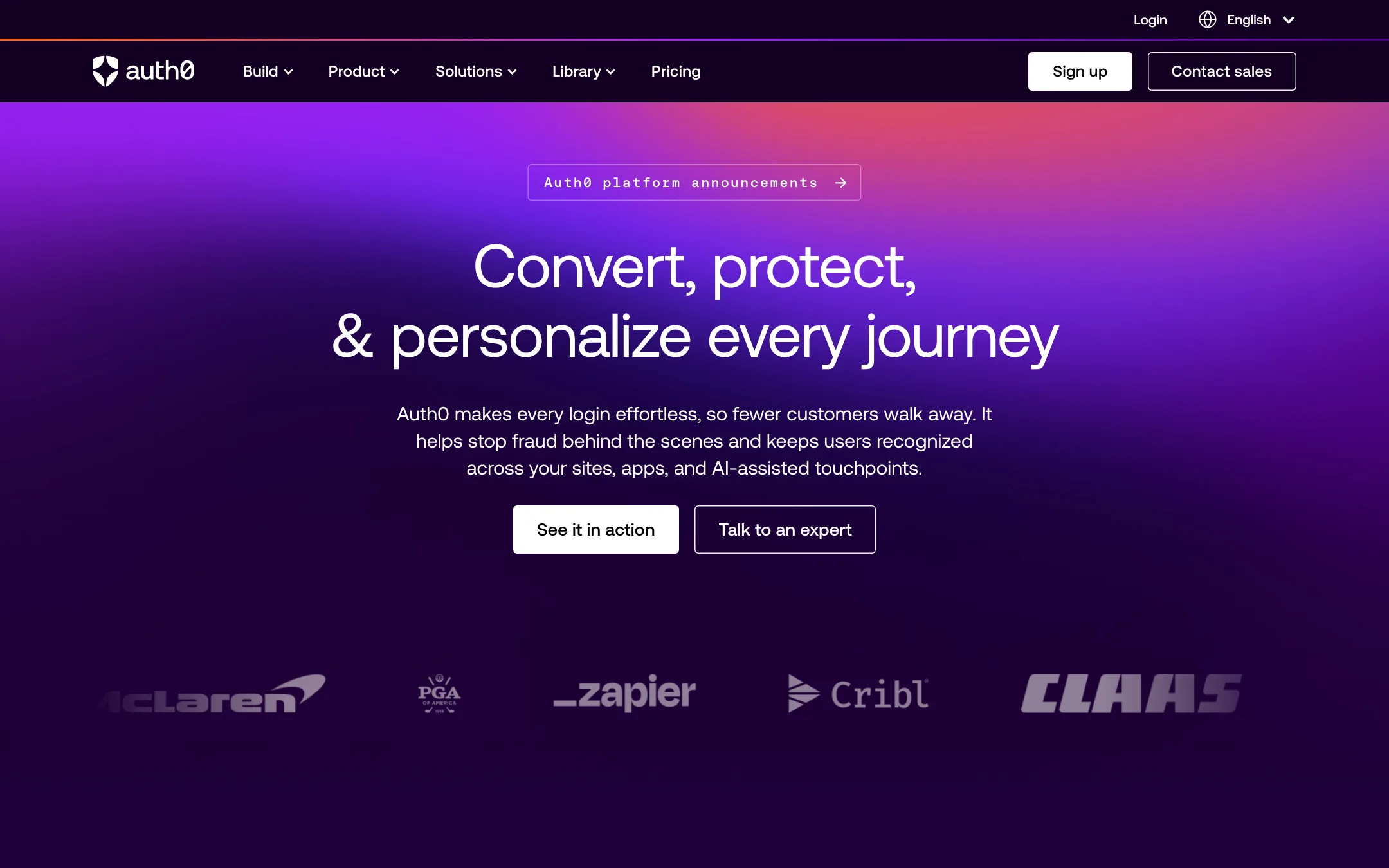
Auth0 is a hosted identity platform for logins, MFA, enterprise SSO, and machine-to-machine access, with AI agent identity features added recently. Teams pick it over Stack Auth when they want a managed service with enterprise connections, SCIM, compliance options such as HIPAA BAA, and a published 99.99% SLA. It is the choice for companies that need a vendor to own the identity layer rather than run it themselves.
Where it is strong
- Enterprise SSO, SCIM and self-service SSO are part of the platform
- Large feature set for MFA, bot detection and attack protection
- Published 99.99% SLA and HIPAA BAA on higher tiers
Where it falls short
- Advanced features such as enterprise connections and self-service SSO sit behind paid tiers
- Fully managed hosting, so self-hosting is only available through the Private Cloud add-on
- Pricing:
- The Free plan covers up to 25,000 monthly active users, Essentials is listed for up to 500 monthly active users, and Professional and Enterprise are sold on custom terms, with add-ons priced separately.
- Switching from Stack Auth:
- Moving from Stack Auth would mean migrating user accounts and redirecting login flows, and the pages reviewed do not describe a specific migration path.
- From $0 (Hobby), $25/m
2.Clerk
Best for: Frontend-heavy startups on React or Next.js that want prebuilt sign-in UI and do not need to self-host
- Pricing
- From $0 (Hobby), $25/m
- Category
- Security & Privacy
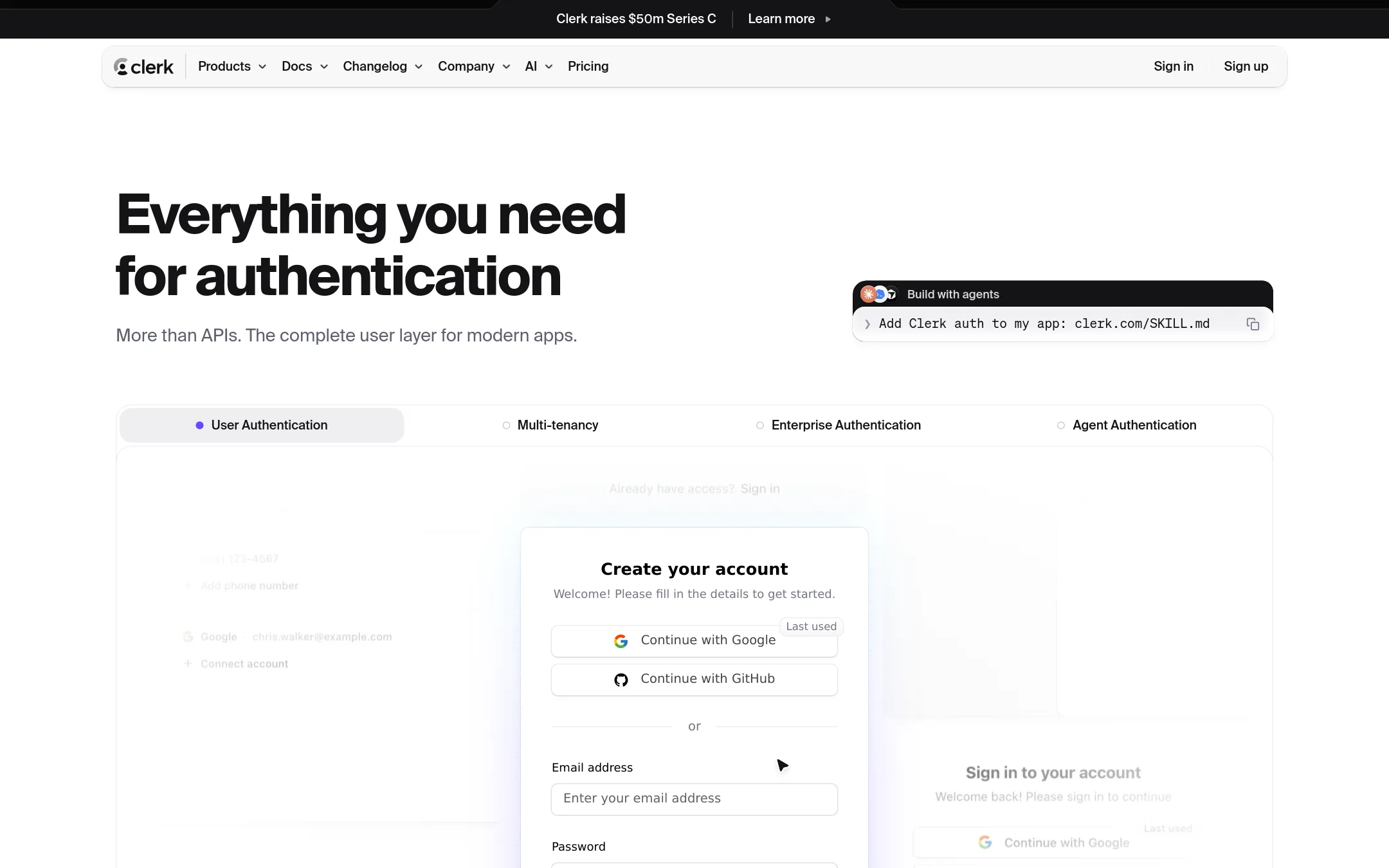
Clerk is a hosted auth and user management service built mainly for React, Next.js and Remix apps. Teams pick it over Stack Auth when they want prebuilt sign-in screens, social login, passkeys and MFA working quickly without running any infrastructure themselves.
Where it is strong
- Prebuilt sign-in and profile components for React, Next.js and Remix
- Covers social login, passkeys, MFA, magic links and SMS codes
- Free Hobby tier with unlimited applications
Where it falls short
- Hosted only on the public pricing page, so no self-hosting option is listed
- Costs rise with monthly retained users and per-seat dashboard fees, and some features like removing Clerk branding sit on paid plans
- Pricing:
- Pricing is not published as a single figure on the page shown, but the Hobby plan is free up to 50,000 monthly retained users per app, the Pro plan starts at $25/mo billed monthly ($20/mo billed annually), and the Business plan starts at $300/mo ($250/mo bille
- From $25/mo + usage
3.Supabase
Best for: Startups building data-heavy apps that want Postgres, auth and file storage under one roof
- Pricing
- From $25/mo + usage
- Category
- Developer Tools
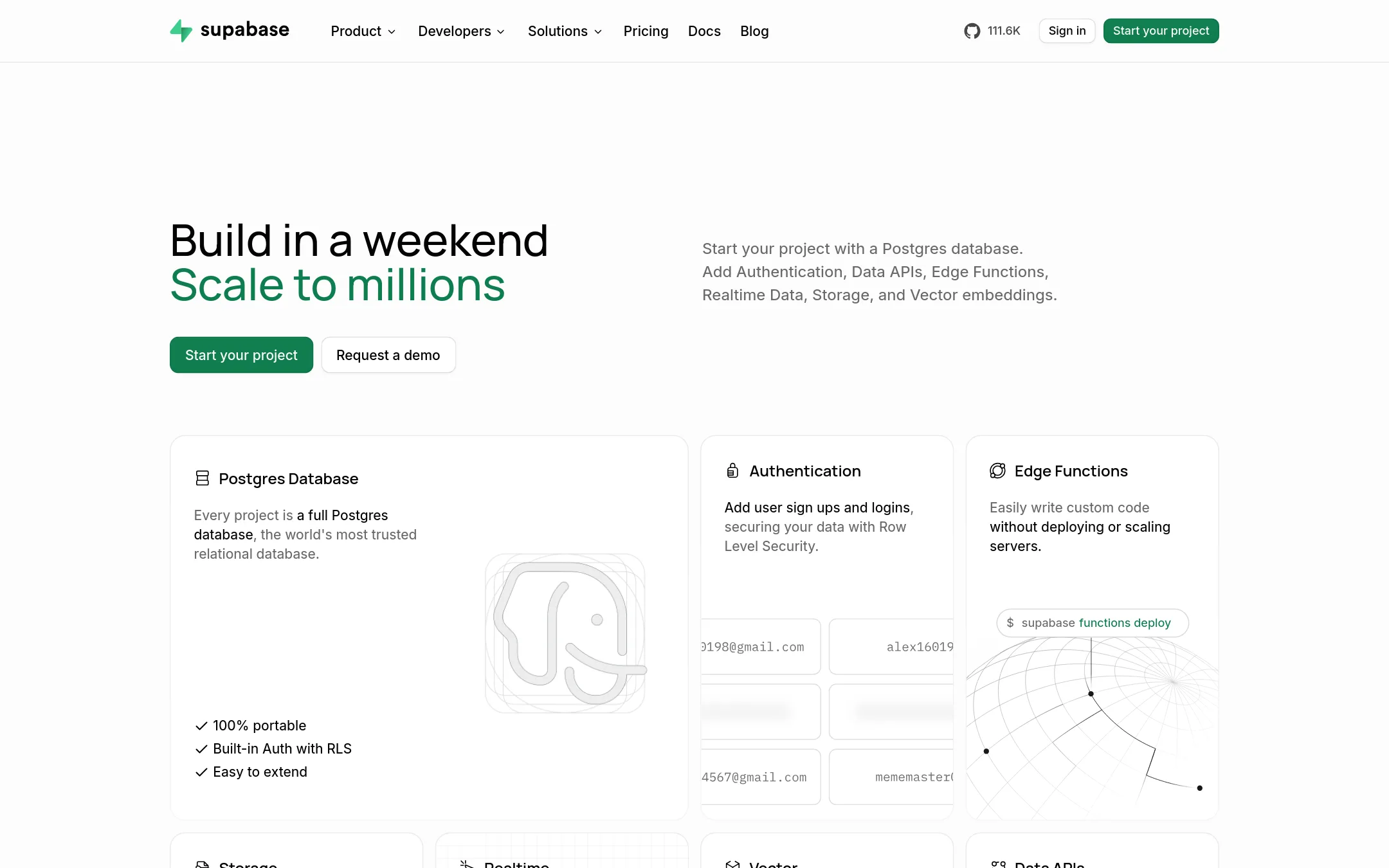
Supabase is a hosted Postgres platform that bundles authentication, auto-generated APIs, storage, realtime and edge functions into one project. Teams pick it over Stack Auth when they want a full database backend and not only user management, with auth tied to Row Level Security in the same system.
Where it is strong
- Every project is a full Postgres database you can move elsewhere.
- Authentication works directly with Row Level Security on your tables.
- A free tier covers 50,000 monthly active users with two active projects.
Where it falls short
- Free projects pause after one week of inactivity.
- SSO for the dashboard, SOC 2 and HIPAA sit on the $599 Team plan or as paid add-ons.
- Pricing:
- Pricing is not published as a single figure. The Pro plan starts at $25 per month with the first project included, and includes 100,000 monthly active users, with additional users at $0.00325 each.
- RNot published
4.RecordBook
Best for: Small and medium businesses that want a simple app for tracking records and data, not a login system
- Pricing
- Not published
- Category
- Productivity & Project Management
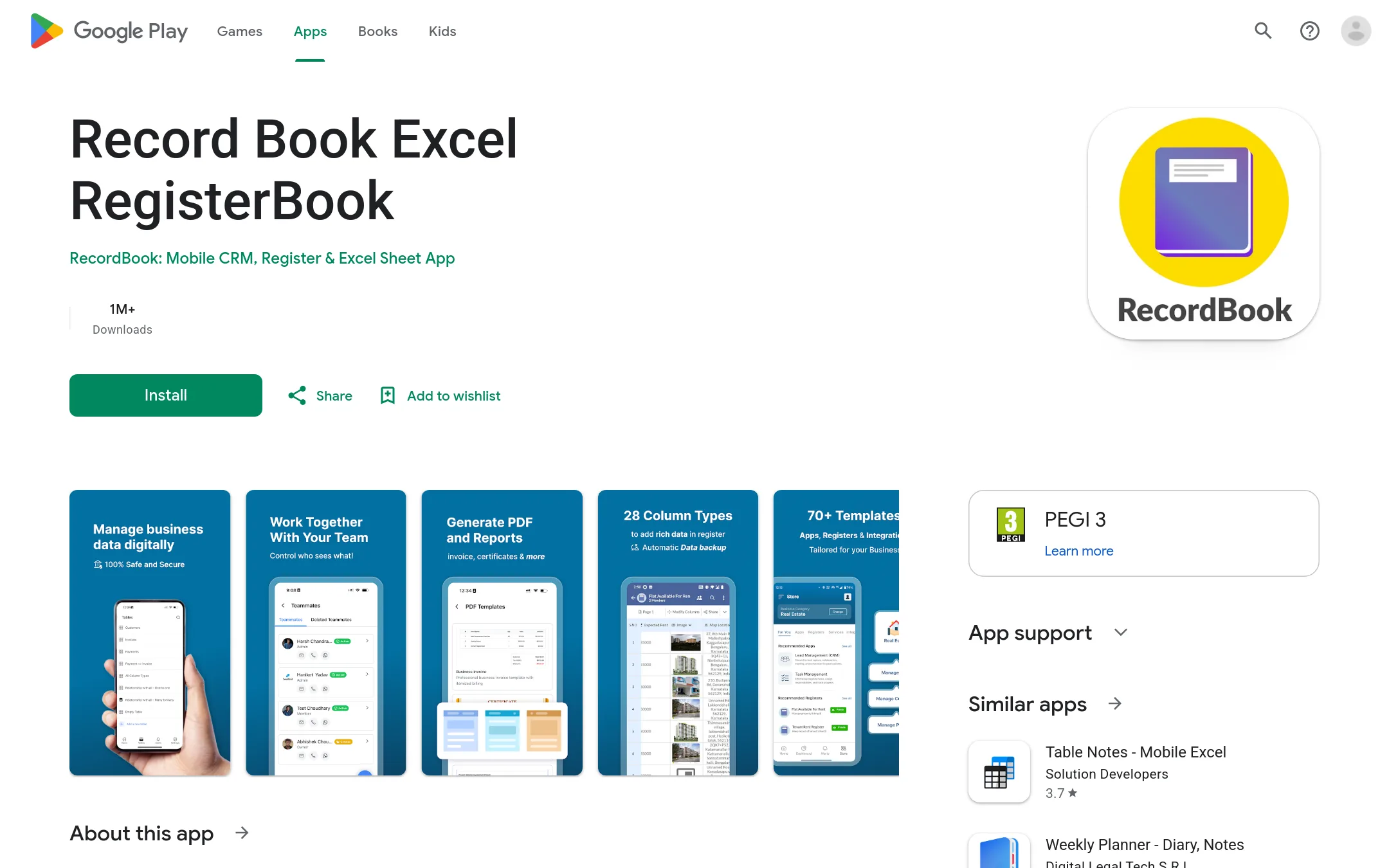
RecordBook is a Google Play app from the Foodmonk team, described as an Airtable-style tool for small and medium businesses. The homepage text we have is mostly page styling code, so its exact features are not confirmed here. Choose it over Stack Auth only if you need a record-keeping or spreadsheet-style app for operations, not user login or authentication.
Where it is strong
- Available as a mobile app on Google Play
- Aimed at small and medium businesses
- Positioned as a lightweight, Airtable-style tool
Where it falls short
- Does not handle user authentication, so it cannot replace Stack Auth
- Our source text does not confirm its features or integrations
- Pricing:
- Pricing is not published on the site.
- W$125/connection + free
5.WorkOS
Best for: B2B software teams that need SSO, SCIM provisioning and audit logs to close enterprise deals
- Pricing
- $125/connection + free
- Category
- Other
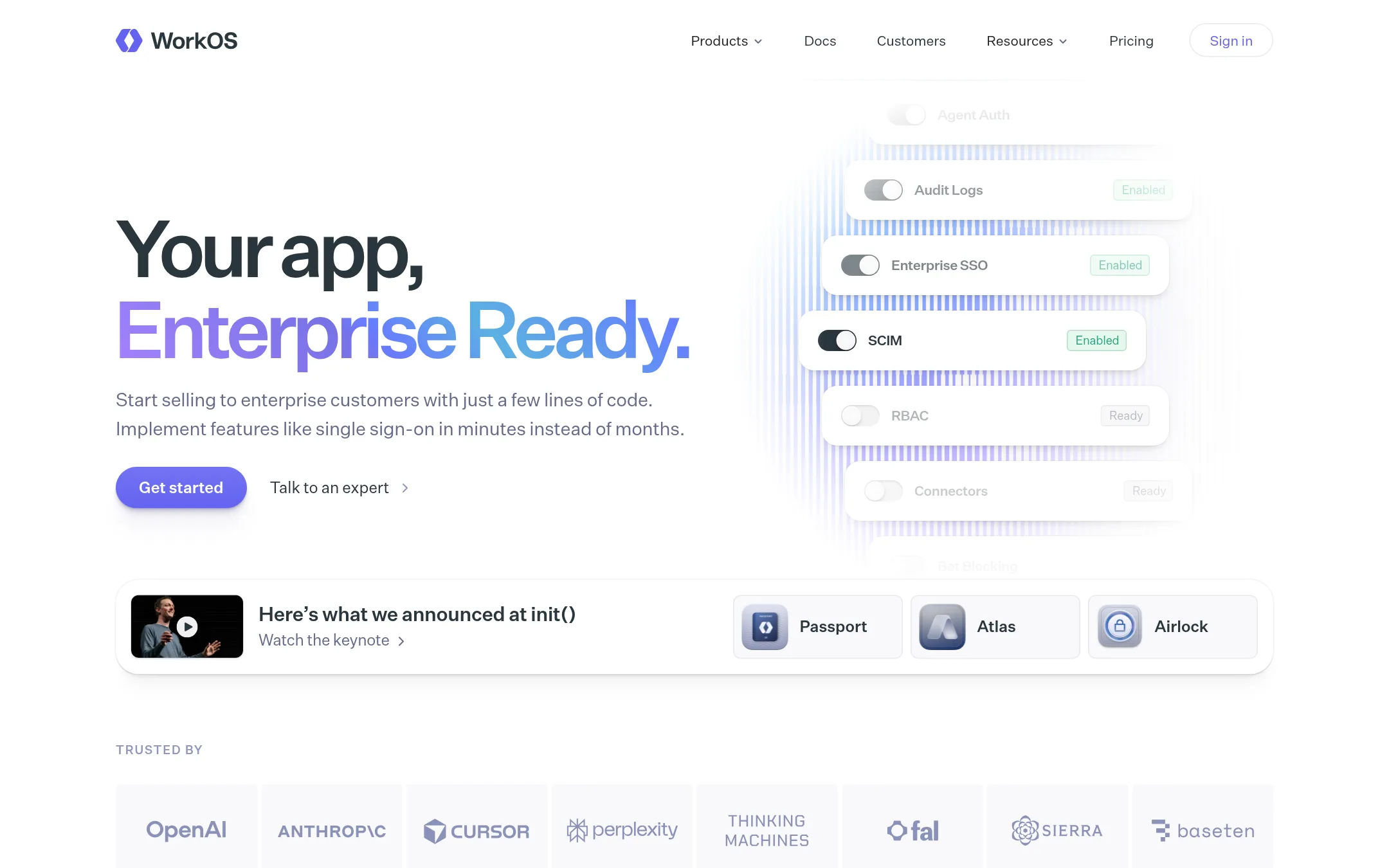
WorkOS is a set of APIs that adds enterprise features to an app, mainly single sign-on with any SAML or OIDC identity provider, directory sync for SCIM and HRIS sources, audit logs, and a hosted Admin Portal that lets a customer's IT team set up their own SSO. Teams pick it over Stack Auth when they need to sell to enterprise customers who expect SSO, SCIM provisioning, and self-serve IT onboarding.
Where it is strong
- Single integration covers any SAML or OIDC identity provider.
- The Admin Portal lets a customer's IT admin complete SSO setup without your team.
- Directory Sync handles user provisioning and de-provisioning from providers such as Okta and Entra ID.
Where it falls short
- Costs rise with each enterprise SSO connection, which matters if you sign many customers.
- Hosted service only in the pricing shown, so there is no self-hosting option like Hexclave's open-source stack.
- Pricing:
- Pricing is set per feature: AuthKit user management is free up to 1 million users, then $2,500 per additional million, and each SSO connection costs $125 for the first 15, with volume discounts beyond that.
- KFrom $0 + 0.7% fee
6.Kinde
Best for: B2B SaaS teams that want login, organizations and paid plans managed in one hosted service without self-hosting.
- Pricing
- From $0 + 0.7% fee
- Category
- Other
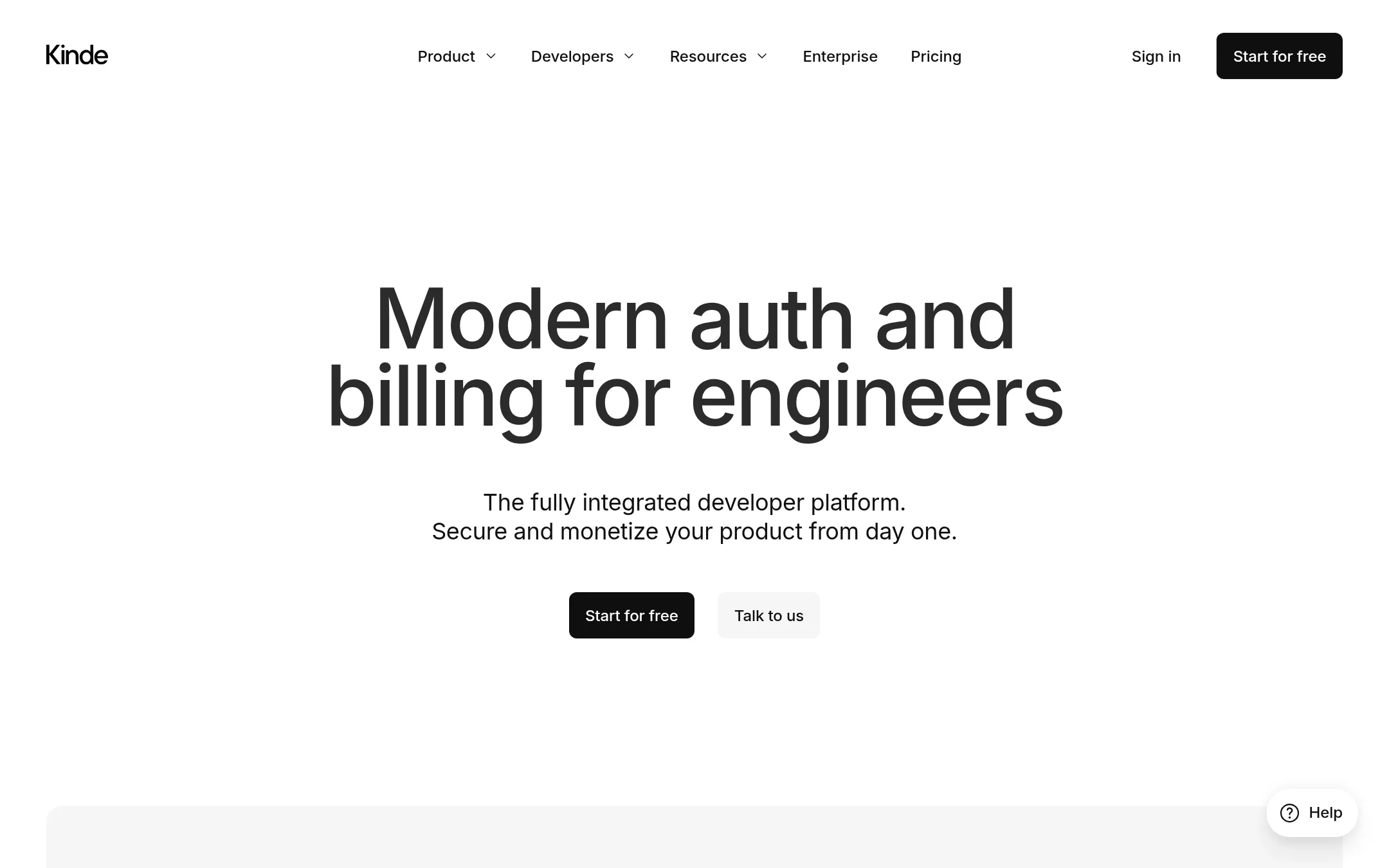
Kinde is a hosted developer platform covering authentication, access management and billing for SaaS products. Teams pick it over Stack Auth when they want subscriptions, usage-based billing and customer portals built into the same tool as login, instead of wiring a separate payments provider.
Where it is strong
- Billing, subscriptions and entitlements sit alongside authentication in one platform.
- The Free plan covers up to 10,500 monthly active users with MFA, social login and organizations included.
- Plans include SOC 2 attestation on Pro and above, and ISO 27001 reports on Scale.
Where it falls short
- Charges a transaction fee on payments you collect from customers, which Stack Auth's open-source self-hosting does not add.
- Advanced features such as SCIM directory sync and free enterprise SSO sit on the higher-priced tiers.
- Pricing:
- Kinde's Free plan includes 10,500 monthly active users, while the Pro plan costs $25 per month, Plus $75 per month and Scale $250 per month, with a platform fee of 0.7% on customer payments for Free and Pro, 0.6% for Plus and 0.5% for Scale.
See more comparisons in Security & Privacy alternatives.
FAQ
Questions about Stack Auth alternatives
Which alternative is best for enterprise SSO and SCIM?
WorkOS and Auth0 are the two strongest choices here. WorkOS offers single sign-on with any SAML or OIDC provider, directory sync and a hosted Admin Portal, while Auth0 includes enterprise SSO, SCIM and a published 99.99% SLA on higher tiers. Both charge more as you add enterprise connections or move up the plan ladder.
Which tool works best for a React or Next.js startup that wants prebuilt sign-in screens?
Clerk is built mainly for React, Next.js and Remix apps and provides prebuilt sign-in and profile components. It covers social login, passkeys, MFA and magic links, and its Hobby tier is free for up to 50,000 monthly retained users per app. It is a hosted service, so self-hosting is not an option.
Can I run one of these alternatives on my own infrastructure?
Most of the alternatives listed here are hosted services. Auth0 offers self-hosting only through its Private Cloud add-on, and Clerk and WorkOS are not listed with a self-hosting option on their pricing pages. Stack Auth itself is open-source and can be self-hosted, which is a key difference to weigh if you want to keep your keys in-house.
Which option is good for a startup that also needs a database?
Supabase is a hosted Postgres platform that bundles authentication with auto-generated APIs, storage, realtime and edge functions. Its Pro plan starts at $25 per month and includes 100,000 monthly active users. Choose it if you want authentication tied to Row Level Security in a full database backend rather than only user management.
Are there any hidden costs to watch for with these tools?
Costs vary by vendor. Clerk charges more as monthly retained users and dashboard seats grow, WorkOS charges for each enterprise SSO connection beyond the included set, and Kinde adds a platform fee of 0.5% to 0.7% on payments collected from customers. Check the pricing page for each product against your expected user count and feature needs before committing.
Last updated November 21, 2026.