
Stacksync alternatives
12 products compared · Updated November 11, 2026
The short answer
The three strongest alternatives to Stacksync are Workato, Boomi and Celigo, which all suit large enterprises that need governed integration across many systems, including EDI and AI agents. Whalesync suits marketing and ops teams that manage a CMS or CRM from Airtable, Notion or Google Sheets. Fivetran suits data teams that need to load many sources into a warehouse, though it moves data one way.
Your shortlist, at a glance
Read the comparisons ↓ FivetranUsage-based, free tierData teams that need to load many SaaS and database sources into a warehouse or lake with managed connectors
 CeligoNot publishedOperations-heavy companies, such as retailers and logistics teams, that need EDI, app integrations and governed workflows on one platform
- MMuleSoftSee websiteEnterprise integration and API platform
WorkatoNot publishedLarge enterprises that need governed AI agents and workflow automation across hundreds of business applications
 ZapierFree tier, task-basedStartups and small teams that need quick app-to-app automations without engineering help
 BoomiNot publishedLarge enterprises in manufacturing, retail and CPG that need EDI, API management and governed AI agents alongside application integration
 MatillionNot publishedData teams running analytics pipelines into Snowflake, Databricks, BigQuery or Redshift who want drag-and-drop pipeline building with AI assistance
 HerokuFrom $25/mo per dynoDevelopers and small engineering teams that need to ship and scale a web app or API without running infrastructure
 AirbyteUsage or capacity baseData teams that need to load many SaaS and database sources into a warehouse, and want the option to self-host the open-source engine
 MakeNot publishedTeams across departments that want to build AI agents and automations visually, connecting many SaaS apps without a developer
 WhalesyncFrom $16/moMarketing and ops teams that manage a CMS or CRM from Airtable, Notion or Google Sheets
 Airtable AutomationsNot publishedMarketing and operations teams already running their workflows in Airtable bases who want AI and automations on that data without writing code
About Stacksync and its alternatives
Stacksync is a real-time, two-way data sync platform. According to its site, it is known for keeping CRMs, ERPs, databases and warehouses in step at millisecond latency, with SOC 2, ISO 27001 and HIPAA coverage, and for adding AI Genies and an internal app platform on top.
When comparing alternatives in this category, weigh the pricing structure first, since some vendors charge per record, per task, per run or per credit, and others quote only on contract. Check which regions the product processes data in, which connectors cover your systems, how support is delivered and at what hours, and what the contract terms and minimum commitments require.
Explore the alternatives
- Usage-based, free tier
1.Fivetran
Best for: Data teams that need to load many SaaS and database sources into a warehouse or lake with managed connectors
- Pricing
- Usage-based, free tier
- Category
- Analytics & Data
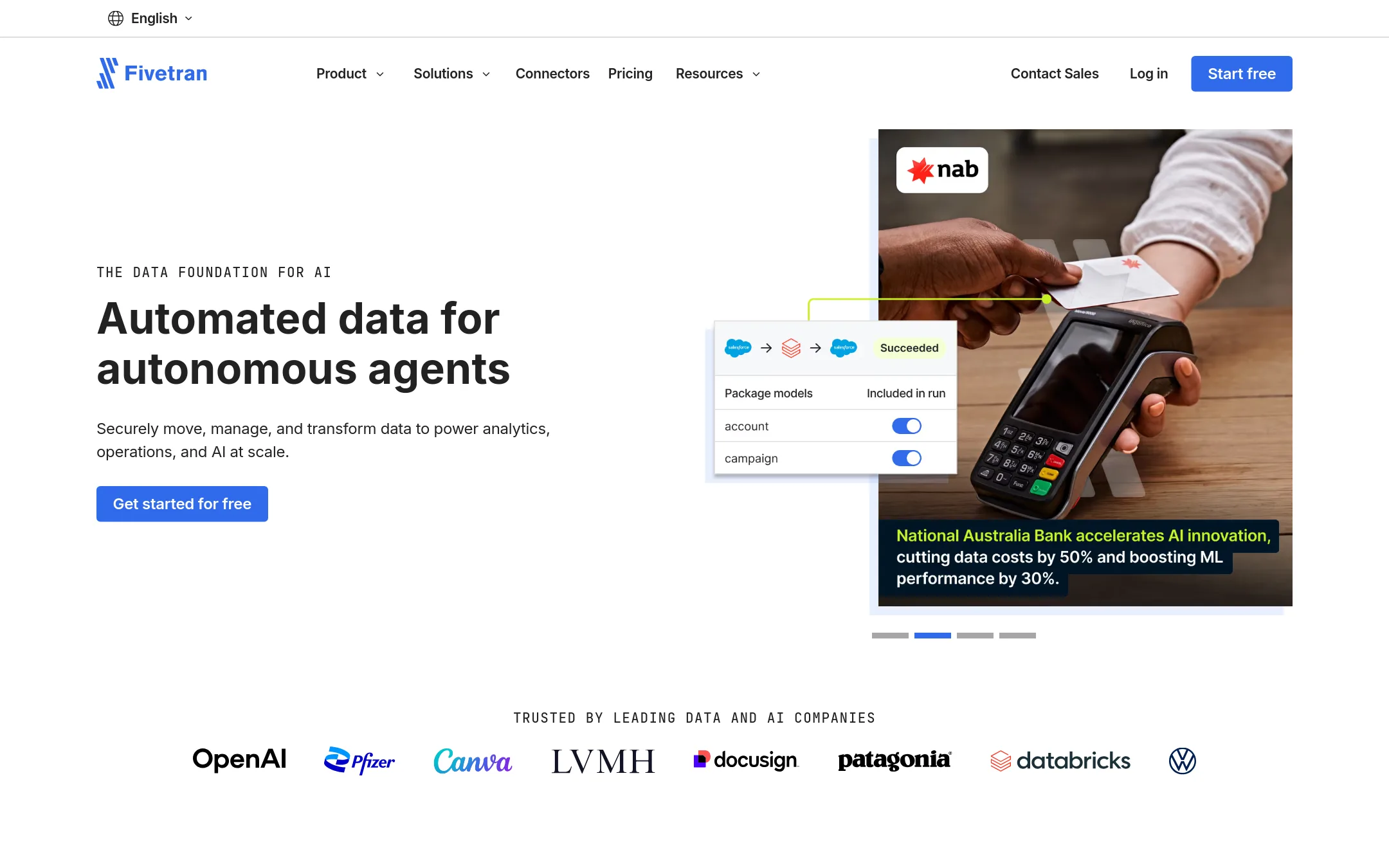
Fivetran moves data from SaaS apps, databases and ERPs into a warehouse or lake, and it does this one way. It is built for analytics and AI pipelines that need fresh, consistent data in a central store. Someone would pick it over Stacksync when the goal is loading a warehouse rather than keeping operational systems like CRM and ERP in two-way sync.
Where it is strong
- 750+ fully managed connectors listed on the site
- Free plan with 500,000 monthly active rows for connections
- Enterprise options include hybrid deployment and customer-managed keys
Where it falls short
- Movement is one-way into the warehouse or lake, so it does not keep operational systems in two-way sync like Stacksync
- Costs are based on usage per connection, so budgeting takes more work than a flat plan
- Pricing:
- Pricing is not published as a single figure on the site. It is usage-based, with a free plan covering 500,000 monthly active rows for connections, and an annual contract saves up to 22%.
- Switching from Stacksync:
- Moving from Stacksync to Fivetran would mean rebuilding two-way syncs as one-way warehouse pipelines, so write-back to CRM or ERP would need to be handled another way.
- Not published
2.Celigo
Best for: Operations-heavy companies, such as retailers and logistics teams, that need EDI, app integrations and governed workflows on one platform
- Pricing
- Not published
- Category
- E-commerce
Celigo is an iPaaS that runs application integrations, API management, EDI and B2B trading partner connections, and AI agents on one governed platform. Pick it over Stacksync when your work centers on EDI and trading partners or on prebuilt flows for business teams rather than real-time two-way database sync.
Where it is strong
- Covers integrations, EDI, API management and AI agents on one platform
- Prebuilt connectors, templates and integration apps shorten the build
- Role-based access, auditability and SSO are part of the platform
Where it falls short
- The site does not publish list prices, so budgeting needs a sales conversation
- Its core strength is app and EDI integration, not the real-time two-way database sync that Stacksync is built around
- Pricing:
- Pricing is not published on the site.
- MSee website
3.MuleSoft
Developer Tools
Enterprise integration platform for connecting applications, data and devices through APIs and workflows, serving the same large-enterprise integration need.
- Not published
4.Workato
Best for: Large enterprises that need governed AI agents and workflow automation across hundreds of business applications
- Pricing
- Not published
- Category
- AI & Machine Learning
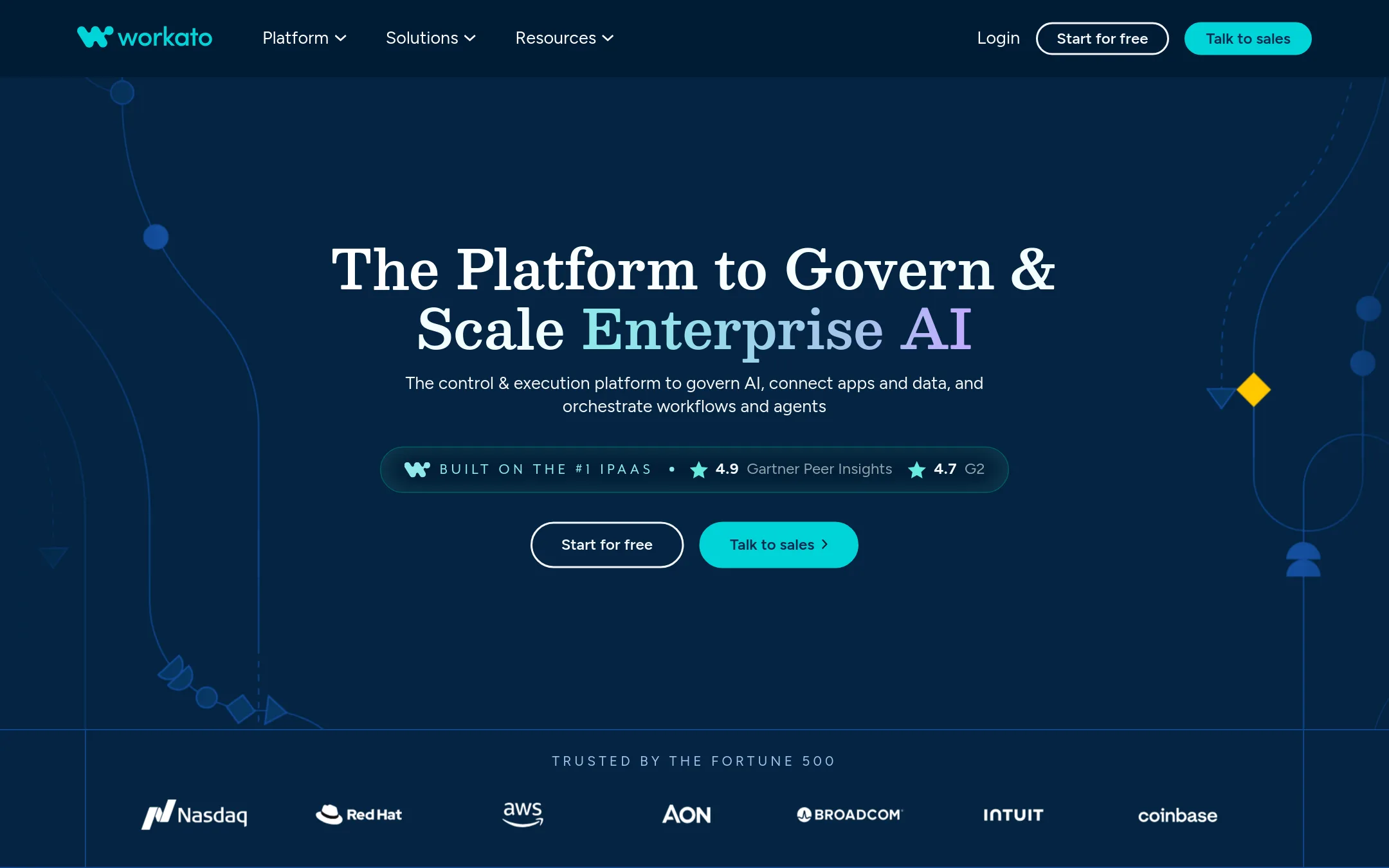
Workato is an enterprise iPaaS that connects apps, data and workflows, and now adds AI agent orchestration and MCP governance on top. Teams pick it over Stacksync when the job is broad automation across many systems and AI agents rather than real-time two-way record sync between a few databases and CRMs.
Where it is strong
- Connects to 17,000+ apps, APIs, databases, files and MCP servers according to the homepage.
- Includes governance for models, agents, workflows and APIs through identity, policy, approvals and audit controls.
- Offers on-premise connectivity through OPAs and add-ons such as on-premises agents and private link.
Where it falls short
- Pricing is quote-based and depends on the edition and contract terms, so budgeting takes a sales conversation.
- The broader automation scope means more to learn than a focused sync tool if you only need record synchronization.
- Pricing:
- Pricing is not published on the site. Workato lists editions named Standard, Business MCP, Enterprise MCP and Workato ONE, with included workbots, concurrency and on-premise connections, but no dollar figures appear in the pricing text.
- Free tier, task-based
5.Zapier
Best for: Startups and small teams that need quick app-to-app automations without engineering help
- Pricing
- Free tier, task-based
- Category
- Productivity & Project Management
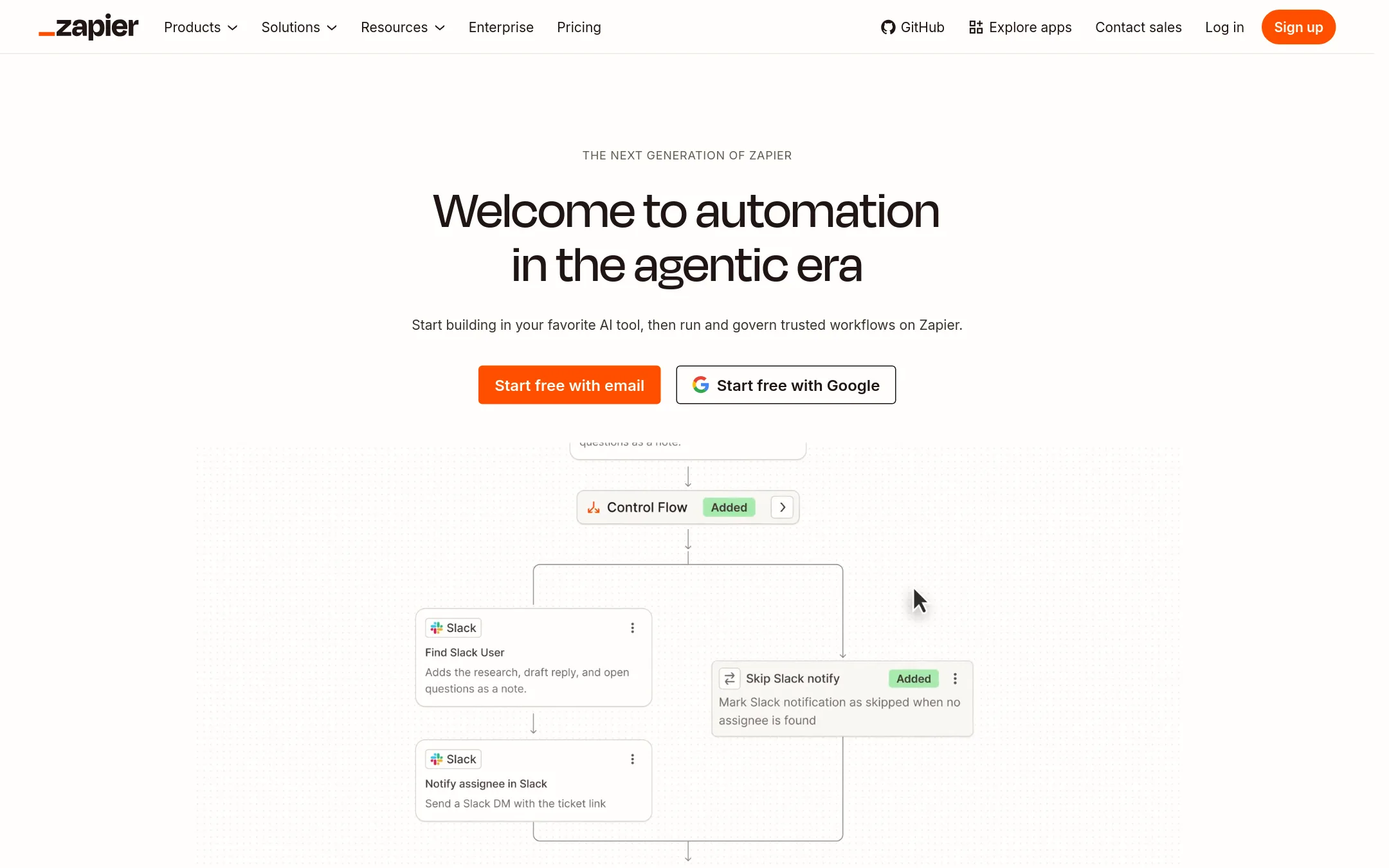
Zapier connects thousands of apps with no-code workflows and AI steps, so a small team can wire tools together in an afternoon. Pick it over Stacksync when the job is ordinary app-to-app automation rather than real-time two-way sync of large record volumes between a database and business systems.
Where it is strong
- Connects to 9,000+ apps, according to the site
- Free plan with unlimited Zaps, Tables and Forms, capped at 100 tasks a month
- Adds AI steps and an embedded agent to existing workflows
Where it falls short
- Not built for real-time two-way sync of large record volumes between a database and enterprise systems
- Polling intervals on lower tiers are slower, at 15 minutes on the two-step tier
- Pricing:
- Zapier has a free plan with 100 tasks per month, and paid plans are task-based with a Team plan for 25 users and a custom Enterprise plan, but exact paid-plan prices are not stated in the supplied text.
- Switching from Stacksync:
- Moving from Stacksync would mean rebuilding sync logic as Zaps and mapping each synced table or field to a workflow step, which the supplied facts do not detail further.
- Not published
6.Boomi
Best for: Large enterprises in manufacturing, retail and CPG that need EDI, API management and governed AI agents alongside application integration
- Pricing
- Not published
- Category
- E-commerce
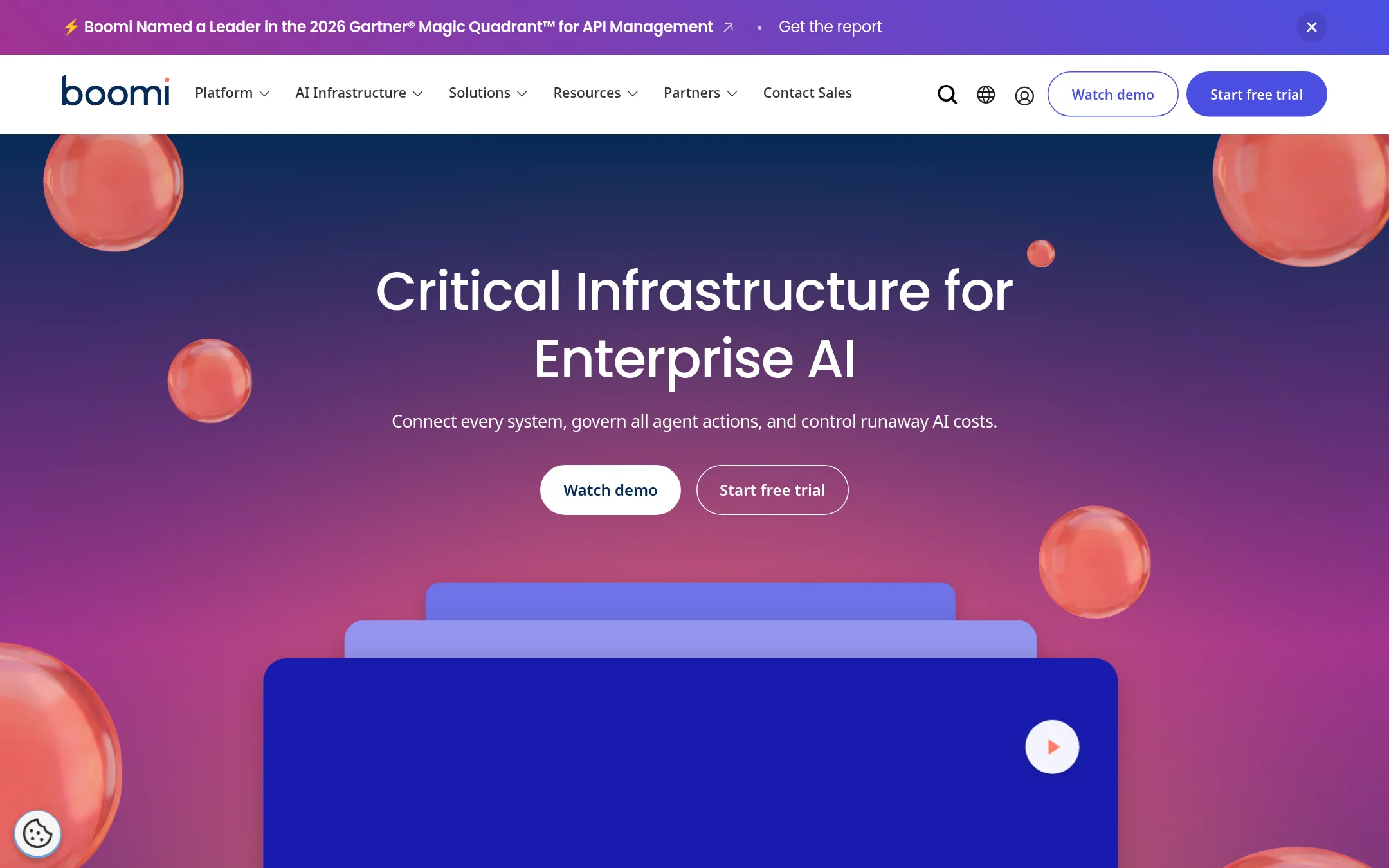
Boomi is an enterprise integration platform that connects applications, APIs, data and AI agents on one platform, with iPaaS, B2B/EDI management, managed file transfer and data integration among its products. Teams pick it over Stacksync when they need broad EDI, API management and agent governance in one vendor, not just two-way database and CRM sync.
Where it is strong
- Covers iPaaS, API management, EDI and managed file transfer in one platform
- Includes an agent control plane and governed MCP access to 1000+ enterprise applications
- Offers pre-built application connectors and Boomi for SAP solutions
Where it falls short
- Pricing is not published, so budgeting requires a sales conversation
- Its focus is broad enterprise integration rather than real-time two-way sync between databases and CRMs
- Pricing:
- Pricing is not published on the site.
- Not published
7.Matillion
Best for: Data teams running analytics pipelines into Snowflake, Databricks, BigQuery or Redshift who want drag-and-drop pipeline building with AI assistance
- Pricing
- Not published
- Category
- Analytics & Data
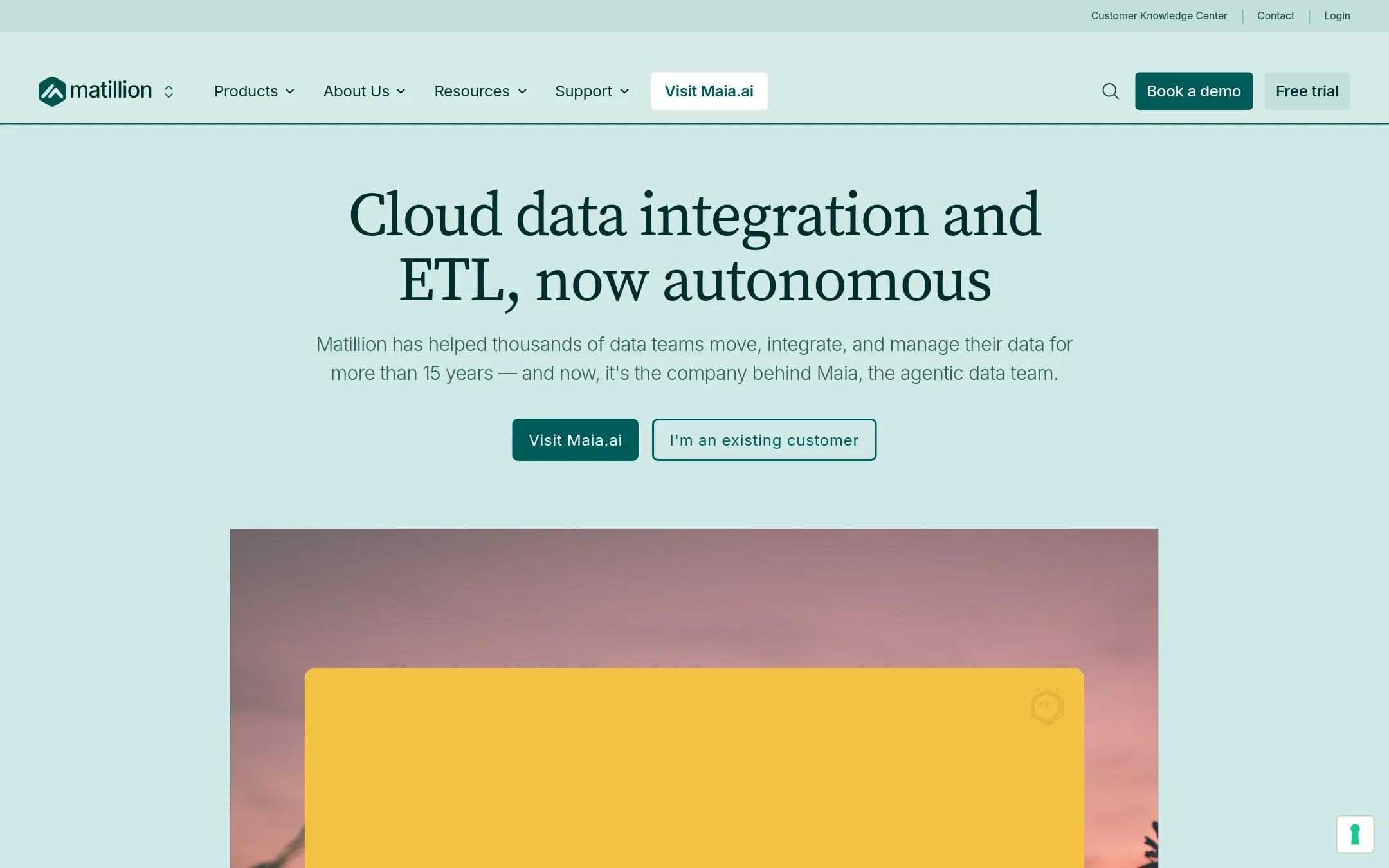
Matillion is a cloud ELT platform for building data pipelines on warehouses like Snowflake, Databricks, BigQuery and Redshift, with AI agents (Maia) that build and fix pipelines. Choose it instead of Stacksync when the job is moving and transforming data into a warehouse for analytics, rather than keeping operational systems like CRMs and ERPs in two-way real-time sync.
Where it is strong
- Built around ELT into cloud warehouses such as Snowflake, Databricks, BigQuery and Redshift
- Over 150 connectors through Maia Foundation, with orchestration and governance included
- Maia agents plan, build, test and fix pipelines, and you review each plan before it runs
Where it falls short
- Focused on warehouse analytics pipelines rather than real-time two-way sync between operational apps
- Pricing is credit-based and the site does not publish concrete figures in the supplied text
- Pricing:
- Pricing is not published on the site.
- Switching from Stacksync:
- Moving from Stacksync to Matillion would mean rebuilding two-way operational syncs as one-way warehouse pipelines, since Matillion's core model is ELT rather than bidirectional app-to-app sync.
- From $25/mo per dyno
8.Heroku
Best for: Developers and small engineering teams that need to ship and scale a web app or API without running infrastructure
- Pricing
- From $25/mo per dyno
- Category
- Developer Tools
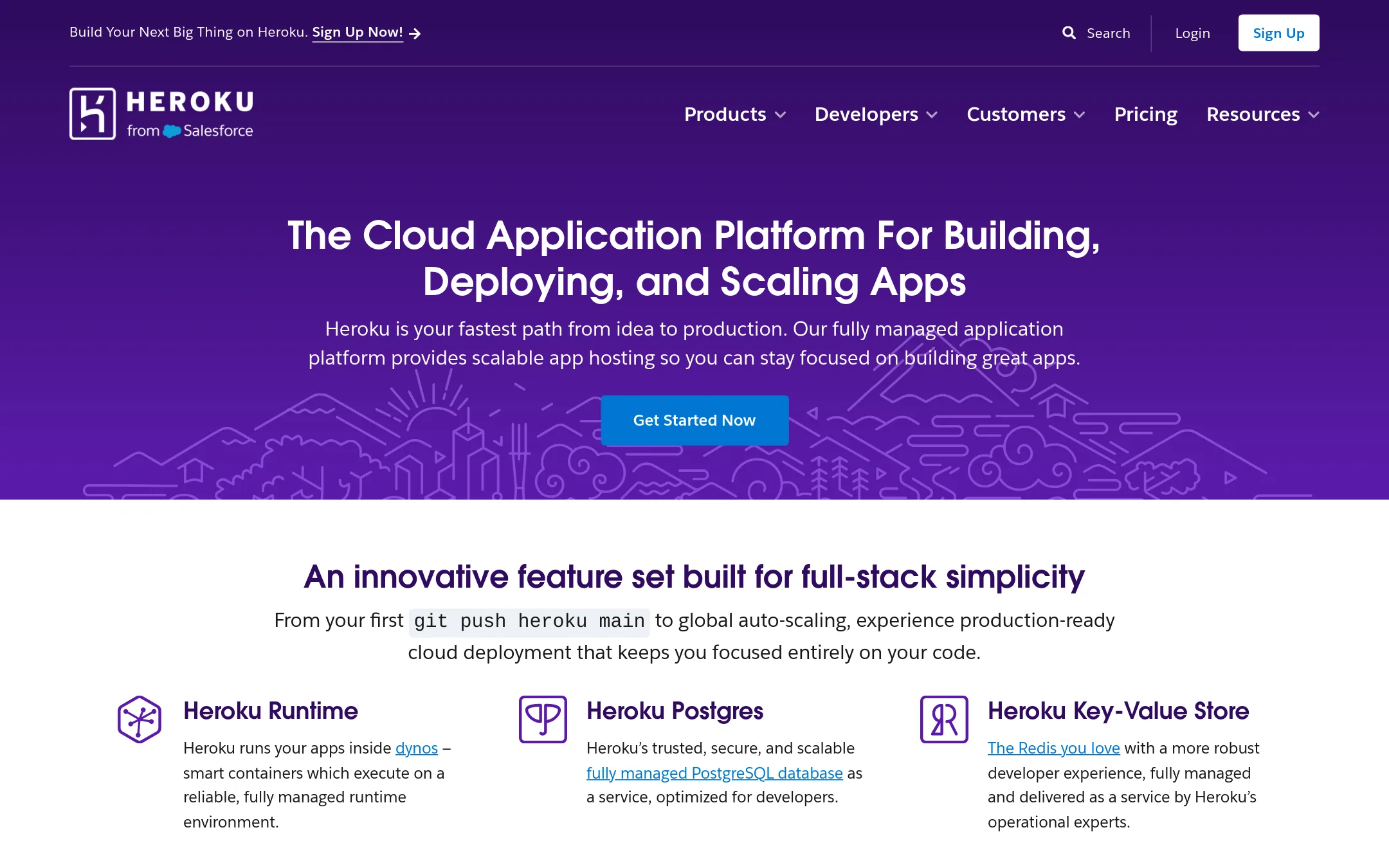
Heroku is a managed platform for deploying and scaling web apps, APIs and background workers without managing servers. Pick it over Stacksync when the problem is hosting your own application code rather than keeping business systems in sync.
Where it is strong
- Deploy with a git push and get auto-scaling, rollbacks and review apps
- Large ecosystem of add-ons and buildpacks for common languages and services
- Heroku Postgres and Key-Value Store are fully managed alongside the app runtime
Where it falls short
- Does not sync records between CRMs, ERPs and databases the way Stacksync does
- Advanced compliance and network isolation sit in the Private Spaces and Shield tiers, which cost more
- Pricing:
- Dynos start at $25 per month for Standard-1X, and the Eco tier sleeps after 30 minutes of inactivity. Heroku's Data Services and AI pricing are listed on separate pricing pages.
- Switching from Stacksync:
- Moving from Stacksync to Heroku means rebuilding sync logic in your own application code, since Heroku does not provide two-way system connectors.
- Usage or capacity base
9.Airbyte
Best for: Data teams that need to load many SaaS and database sources into a warehouse, and want the option to self-host the open-source engine
- Pricing
- Usage or capacity base
- Category
- Analytics & Data
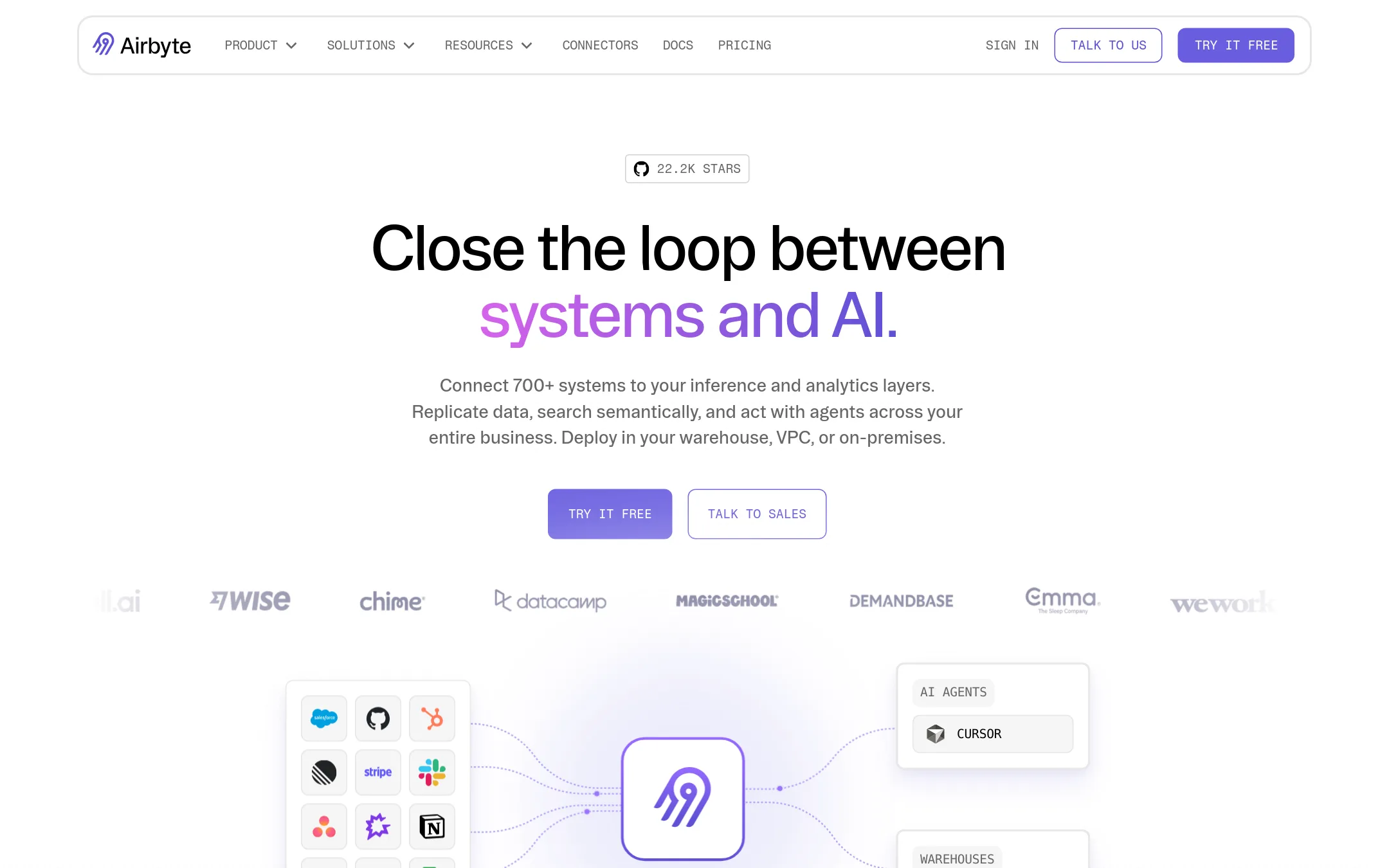
Airbyte is an open-source data integration platform for moving data from 700+ sources into warehouses and databases, with an MCP and context layer for AI agents. A team would pick it over Stacksync when the job is one-way ingestion into a warehouse for analytics, not real-time two-way sync between operational systems.
Where it is strong
- Over 700 source and destination connectors
- Core engine is open source and free to self-host
- Hybrid option keeps data inside your own cloud or VPC
Where it falls short
- Built mainly for one-way replication into analytics, not two-way sync with operational apps
- Cloud pricing depends on credits or capacity units, which takes some work to forecast
- Pricing:
- Pricing is not published on the site as a single figure, since Airbyte uses credits on Standard and Plus and capacity-based Data Workers on Pro and Enterprise Flex, and the pricing text shows no concrete dollar amounts.
- Switching from Stacksync:
- Moving from Stacksync to Airbyte means rebuilding two-way write-back flows as one-way pipelines, so teams relying on bidirectional CRM and ERP updates would need a different design.
- Not published
10.Make
Best for: Teams across departments that want to build AI agents and automations visually, connecting many SaaS apps without a developer
- Pricing
- Not published
- Category
- Productivity & Project Management
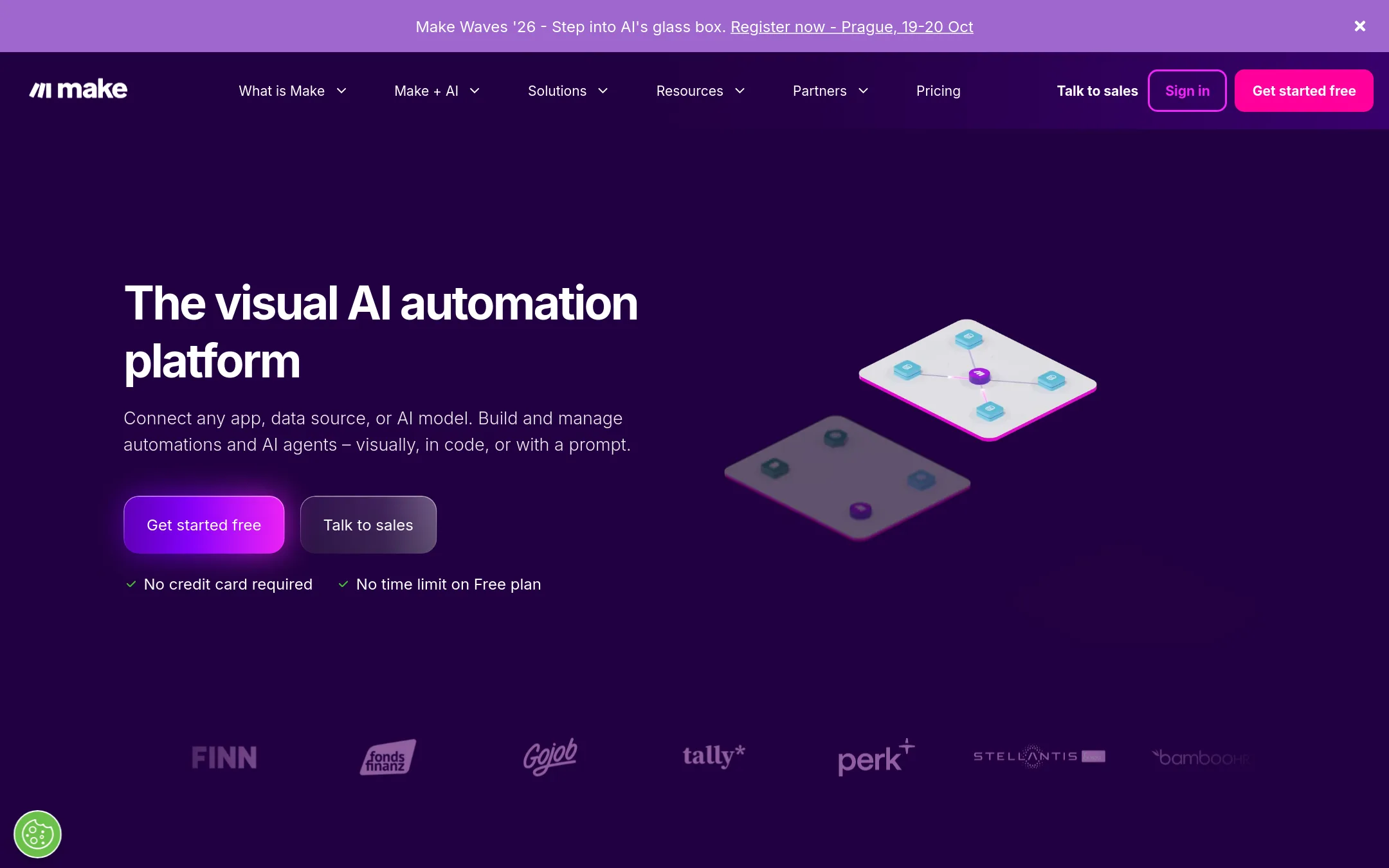
Make is a visual workflow builder that connects over 3,500 apps and AI models through drag-and-drop, prompts, or chat. Teams pick it over Stacksync when they need general automation across many tools and not real-time two-way record sync between databases and enterprise systems.
Where it is strong
- Connects to 3,500+ apps out of the box, with custom integrations for anything with an API
- Anyone can build by prompting or drag-and-drop, and developers can add JavaScript or Python
- Holds GDPR and SOC 2 Type II and SOC 3 certifications, with SSO and role-based access
Where it falls short
- Its core model is scenario-based automation, not continuous two-way sync of records between CRMs, ERPs and databases as Stacksync is
- Billing is credit-based per action, so costs depend on how complex each workflow is
- Pricing:
- Pricing is not published on the site.
- From $16/mo
11.Whalesync
Best for: Marketing and ops teams that manage a CMS or CRM from Airtable, Notion or Google Sheets
- Pricing
- From $16/mo
- Category
- Productivity & Project Management
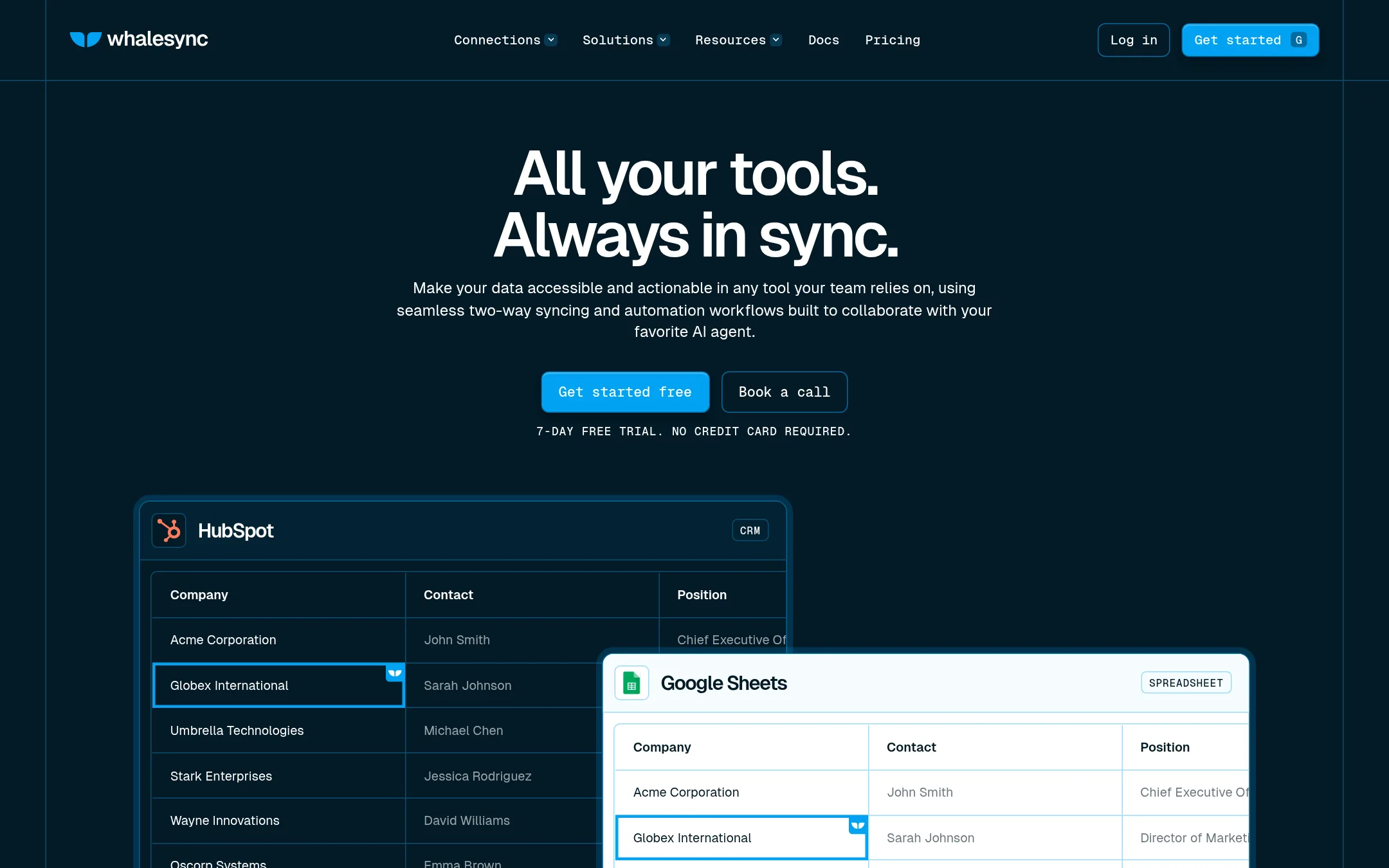
Whalesync keeps spreadsheets, CMSs, CRMs and databases in sync in both directions, with a simple field-mapping setup. Choose it over Stacksync when the apps involved are mostly no-code tools like Airtable, Notion, Webflow or Google Sheets, and you want to get running in minutes rather than run a large enterprise integration project.
Where it is strong
- Setup is a few steps: pick apps, map fields, turn it on.
- True two-way sync in real time, with unlimited updates per record.
- Free 7-day trial with no credit card required.
Where it falls short
- Enterprise-scale tooling such as multi-region processing and deep audit is not part of the offering the way it is with Stacksync.
- The connector list is weighted toward no-code and CMS tools, so large ERP and EDI workloads are less of a fit.
- Pricing:
- Pricing is not published on the site for a country-specific rate, but the default plans are Starter at $16 per month, Plus at $32 per month and Pro at $160 per month, with a 7-day free trial and no card required.
- Not published
12.Airtable Automations
Best for: Marketing and operations teams already running their workflows in Airtable bases who want AI and automations on that data without writing code
- Pricing
- Not published
- Category
- Productivity & Project Management
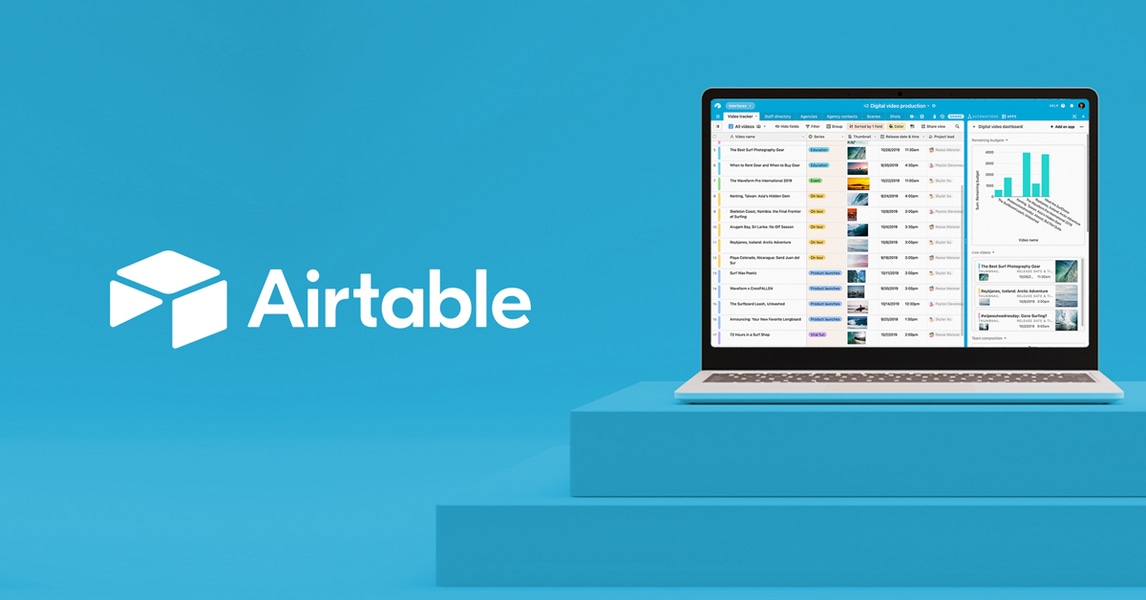
Airtable Automations is a no-code automation layer inside Airtable's spreadsheet-style database. It suits teams whose operational data already lives in Airtable and who want to trigger actions and AI steps on those records. Someone would pick it over Stacksync when the work is built around Airtable bases rather than syncing live data between CRMs, ERPs and warehouses.
Where it is strong
- No-code automations and AI steps run directly on Airtable records
- Enterprise controls include SSO-style provisioning, RBAC, audit logs and e-discovery
- Compliance coverage includes SOC 2, ISO and HIPAA, with EU and Australian data residency
Where it falls short
- It is built around Airtable as the system of record, not for two-way sync with external CRMs, ERPs and warehouses
- Stacksync's real-time sync across 1,000+ connectors is not part of this product
- Pricing:
- Pricing is not published in the supplied text beyond plan names, so check the Airtable pricing page for current plan costs and automation limits.
See more comparisons in Productivity & Project Management alternatives.
FAQ
Questions about Stacksync alternatives
Which alternative is best for real-time two-way sync between a database and a CRM?
Whalesync is the closest fit for small teams, since it keeps Airtable, Notion, Google Sheets and CMS tools in real-time two-way sync with a simple field-mapping setup. For larger enterprise volumes between databases and business systems, Workato and Boomi cover broader integration needs, though neither is described on its site as a pure record-sync tool.
Which alternatives are for loading data into a warehouse rather than keeping operational systems in sync?
Fivetran, Airbyte and Matillion all move data into warehouses or lakes for analytics. Fivetran and Airbyte load from many SaaS and database sources, while Matillion builds transformation pipelines on Snowflake, Databricks, BigQuery and Redshift. None of them keeps operational systems in two-way sync the way Stacksync does.
Which alternative is strongest for EDI and trading partner integration?
Celigo and Boomi both list EDI and B2B trading partner connections among their products, alongside application integration and API management. Stacksync's site also covers EDI 850, 856 and 810 workflows in its CPG and logistics examples, so compare the EDI coverage for your specific trading partners.
Which alternative is cheapest to start with?
Zapier offers a free plan with 100 tasks per month and is built for quick app-to-app automations without engineering help. Whalesync lists a Starter plan at $16 per month and a 7-day free trial with no card required. Stacksync's own Starter plan is $1,000 per month billed annually, so the entry cost is much higher for a different class of work.
Which alternatives publish clear pricing?
Whalesync and Heroku publish concrete starting prices on their sites, with Whalesync's Starter at $16 per month and Heroku's Standard-1X dyno at $25 per month. Fivetran and Airbyte list free tiers and usage-based or credit-based pricing without a single flat figure. Workato, Boomi, Celigo, Make and Matillion do not publish list prices and require a sales conversation for quotes.
Last updated November 11, 2026.