
Unify alternatives
5 products compared · Updated November 8, 2026
The short answer
The three strongest alternatives to Unify are OpenRouter, LiteLLM and Helicone. OpenRouter suits developers who want one API key for 600+ models from many providers with pay-as-you-go billing. LiteLLM suits platform teams that want a self-hosted, open-source gateway that governs model access and budgets across the organisation. Helicone suits engineering teams that want request logging, cost tracking and provider fallbacks for LLM features they already run.
Your shortlist, at a glance
Read the comparisons ↓- OOpenRouter5.5% fee on creditsDevelopers and teams who want one API key for many models from many providers, with pay-as-you-go billing
- PPortkeyNot publishedAI engineering teams running LLM apps in production that want routing, fallbacks, caching and cost tracking across several model providers
 LiteLLMFree (OSS) + custom quPlatform teams that need one governed gateway to 100+ model providers, self-hosted in their own cloud
- MMartianNot publishedResearch-minded AI teams that want to understand and interpret large language models before trusting them with more autonomy
- HHeliconeNot publishedEngineering teams shipping LLM features who need request logging, cost tracking and provider fallbacks without retraining a model
About Unify and its alternatives
Unify is an AI platform built around models that keep learning. According to its site, every user interaction trains the model driving an agent, so quality rises and latency and cost fall over time, and the customer owns that improvement loop. Its homepage also lists backers including Y Combinator and Microsoft M12.
When comparing alternatives in this category, weigh the pricing structure first, since some products publish rates and others sell on quotes. Check which model providers and regions a product covers, which integrations it supports, and what support and contract terms come with enterprise tiers. Also decide whether you need a product that routes and observes model calls or one that changes the model itself.
Explore the alternatives
- O5.5% fee on credits
1.OpenRouter
Best for: Developers and teams who want one API key for many models from many providers, with pay-as-you-go billing
- Pricing
- 5.5% fee on credits
- Category
- Other
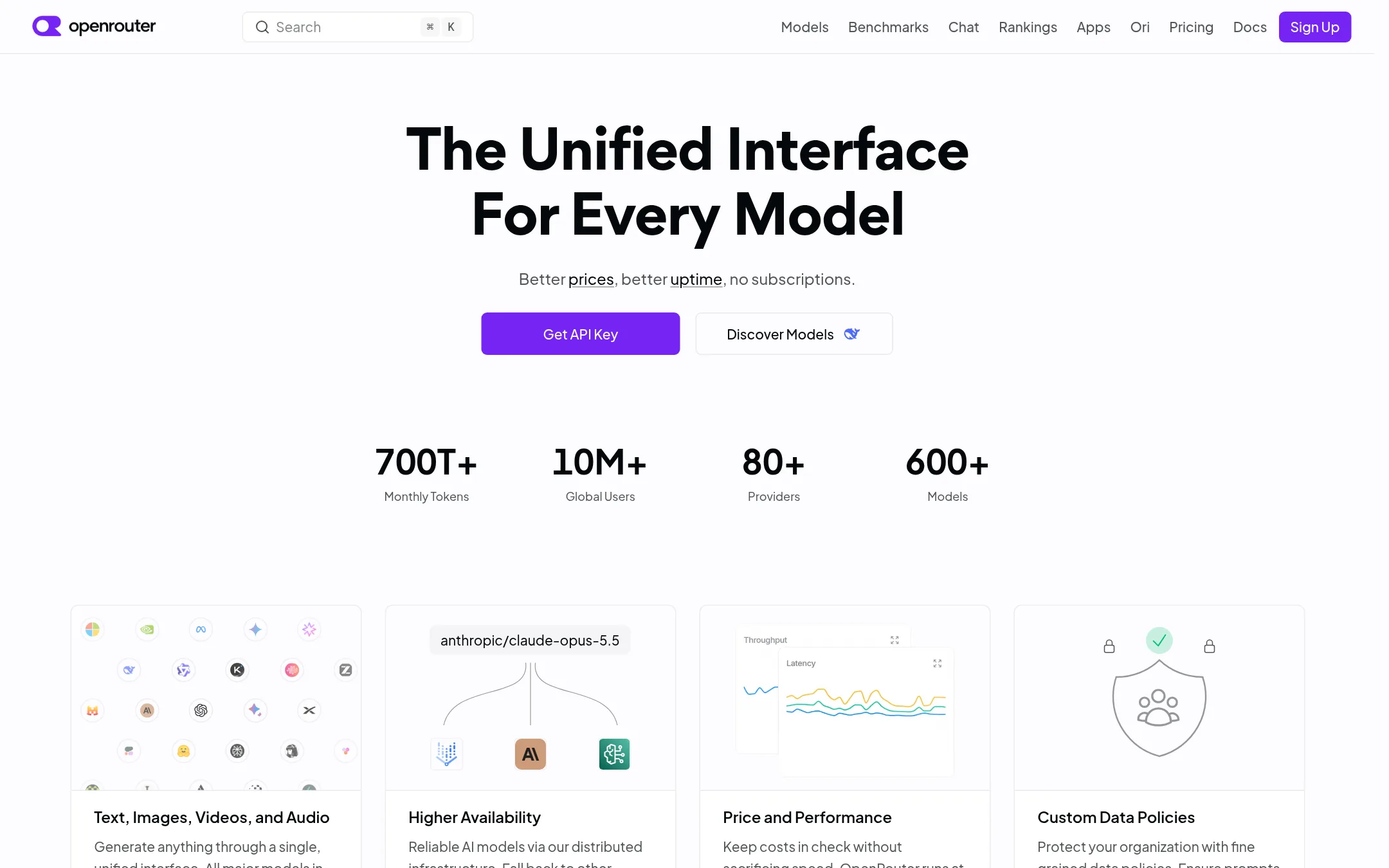
OpenRouter gives you one OpenAI-compatible API that reaches 600+ models from 80+ providers, so you can switch models or route by price and uptime without rewriting code. Choose it over Unify when your goal is access to many third-party models and cheap routing, not a model that learns from your own users. It also suits teams that want to pay per token without a subscription.
Where it is strong
- One OpenAI-compatible API covers 600+ models from 80+ providers.
- Free tier includes 25+ models with no subscription required.
- Auto-routing and budget controls help manage spend across models.
Where it falls short
- The free tier is capped at 50 requests a day.
- OpenRouter routes to third-party models rather than training a model on your own interactions, which is what Unify focuses on.
- Pricing:
- Standard charges a 5.5% fee on credit purchases, Business charges 8%, Enterprise is custom, and the free tier offers 25+ free models with 50 requests a day.
- Switching from Unify:
- Moving from Unify to OpenRouter means pointing your API calls at OpenRouter's OpenAI-compatible endpoint and choosing models from its catalog, but the supplied facts do not say how Unify-specific setups or learned models would carry over.
- PNot published
2.Portkey
Best for: AI engineering teams running LLM apps in production that want routing, fallbacks, caching and cost tracking across several model providers
- Pricing
- Not published
- Category
- Other
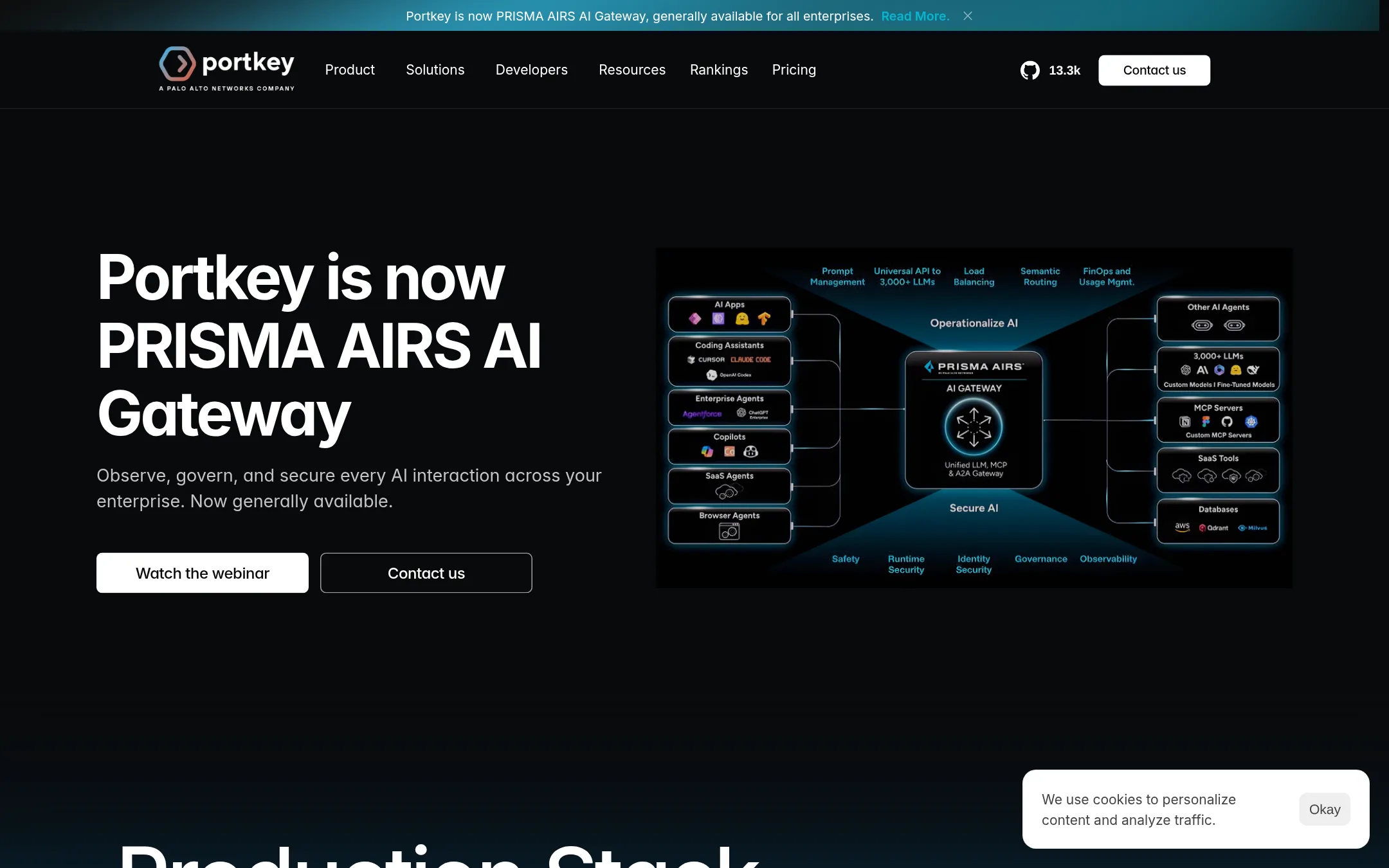
Portkey is an AI gateway and production stack for LLM apps. It covers routing across model providers, fallbacks, caching, observability, guardrails and prompt management in one place. Someone would pick it over Unify when they already have models and need reliability, visibility and governance around them, not a model that learns from user interactions.
Where it is strong
- Gateway covers routing, load balancing, retries and fallbacks across providers
- Observability includes logs, traces, feedback and alerts
- An open source version can be self-hosted
Where it falls short
- Does not train or adapt the underlying model from user interactions the way Unify does
- Enterprise deployment options such as private cloud and VPC hosting are sold on custom terms
- Pricing:
- Pricing is not published on the site.
- Free (OSS) + custom qu
3.LiteLLM
Best for: Platform teams that need one governed gateway to 100+ model providers, self-hosted in their own cloud
- Pricing
- Free (OSS) + custom qu
- Category
- AI & Machine Learning
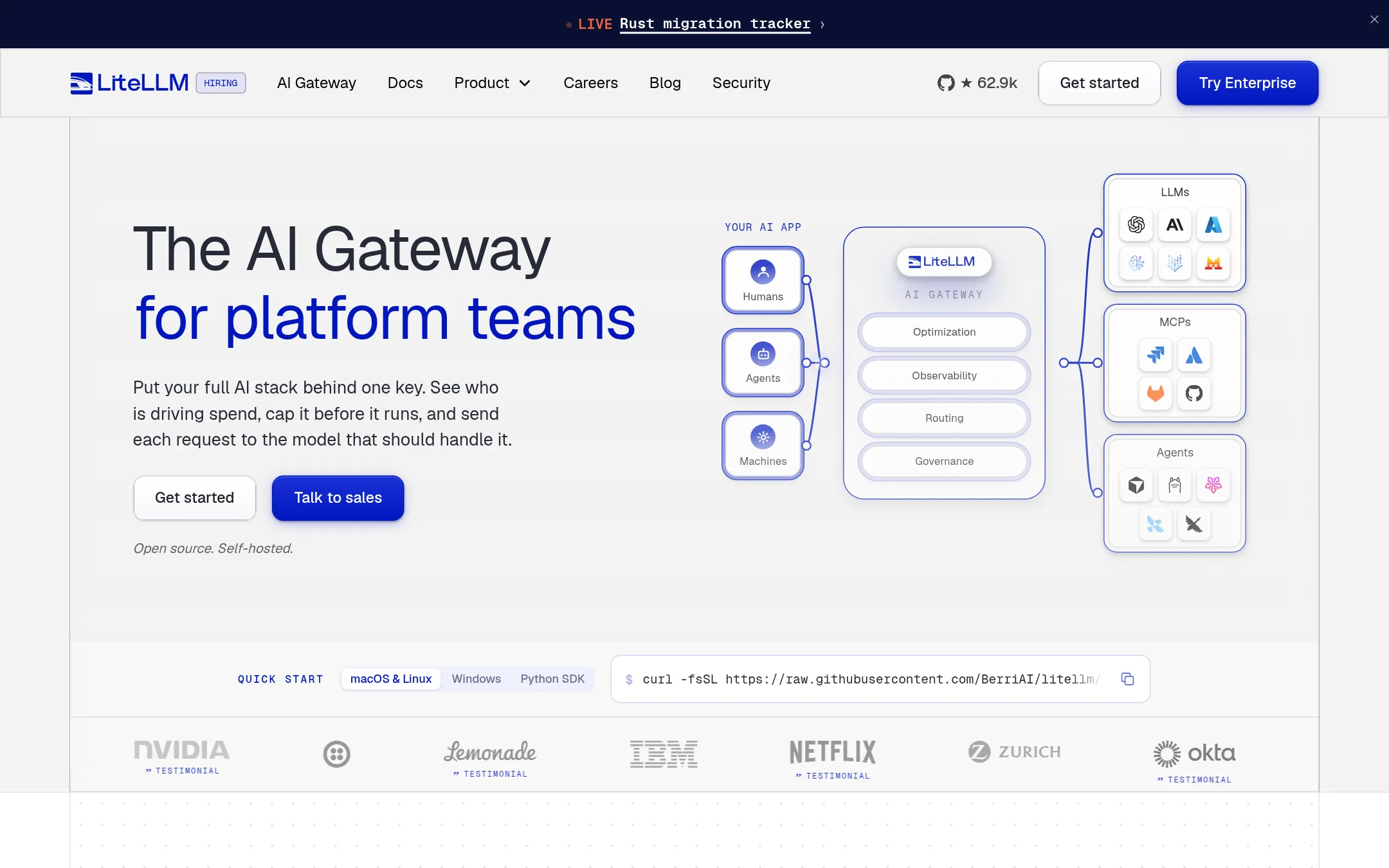
LiteLLM is an open-source AI gateway that puts many LLM providers behind one OpenAI-compatible API, with spend tracking, budgets and routing. A team would pick it over Unify when they want to self-host the gateway, keep their traffic inside their own infrastructure, and control model access and costs across the whole organisation rather than improve a model over time.
Where it is strong
- Open source under the MIT license, and self-hostable with no license fee for the core gateway.
- Covers 140+ providers and 1,800+ models through one OpenAI-compatible API, so app code stays the same when models change.
- Per-key, per-team and per-model budgets and rate limits, with requests stopped at the cap.
Where it falls short
- Enterprise features such as SSO, SCIM and audit logs are sold on quotes, not published prices.
- The page describes a gateway for routing and governing model calls, not a product that trains models from user interactions as Unify describ
- Pricing:
- The open-source gateway is free to self-host with no license fee, and Enterprise pricing is based on annual gateway request capacity and support needs, with no figures published.
- MNot published
4.Martian
Best for: Research-minded AI teams that want to understand and interpret large language models before trusting them with more autonomy

- Pricing
- Not published
- Category
- Other
Martian is a research-driven company focused on understanding how machine intelligence works, with work spanning measurement, interpretability, and the theory of what models learn. Someone would pick it over Unify if they want to understand and explain their models rather than have a model that keeps learning from user interactions.
Where it is strong
- Focus on interpretability and explaining model behavior, not only performance
- Research team with stated background at major AI labs
- Commercializes its research through products tied to LLM usage
Where it falls short
- Homepage describes research direction rather than a clear product for building agents
- No published pricing, integrations, or customer details to compare
- Pricing:
- Pricing is not published on the site.
- HNot published
5.Helicone
Best for: Engineering teams shipping LLM features who need request logging, cost tracking and provider fallbacks without retraining a model
- Pricing
- Not published
- Category
- AI & Machine Learning
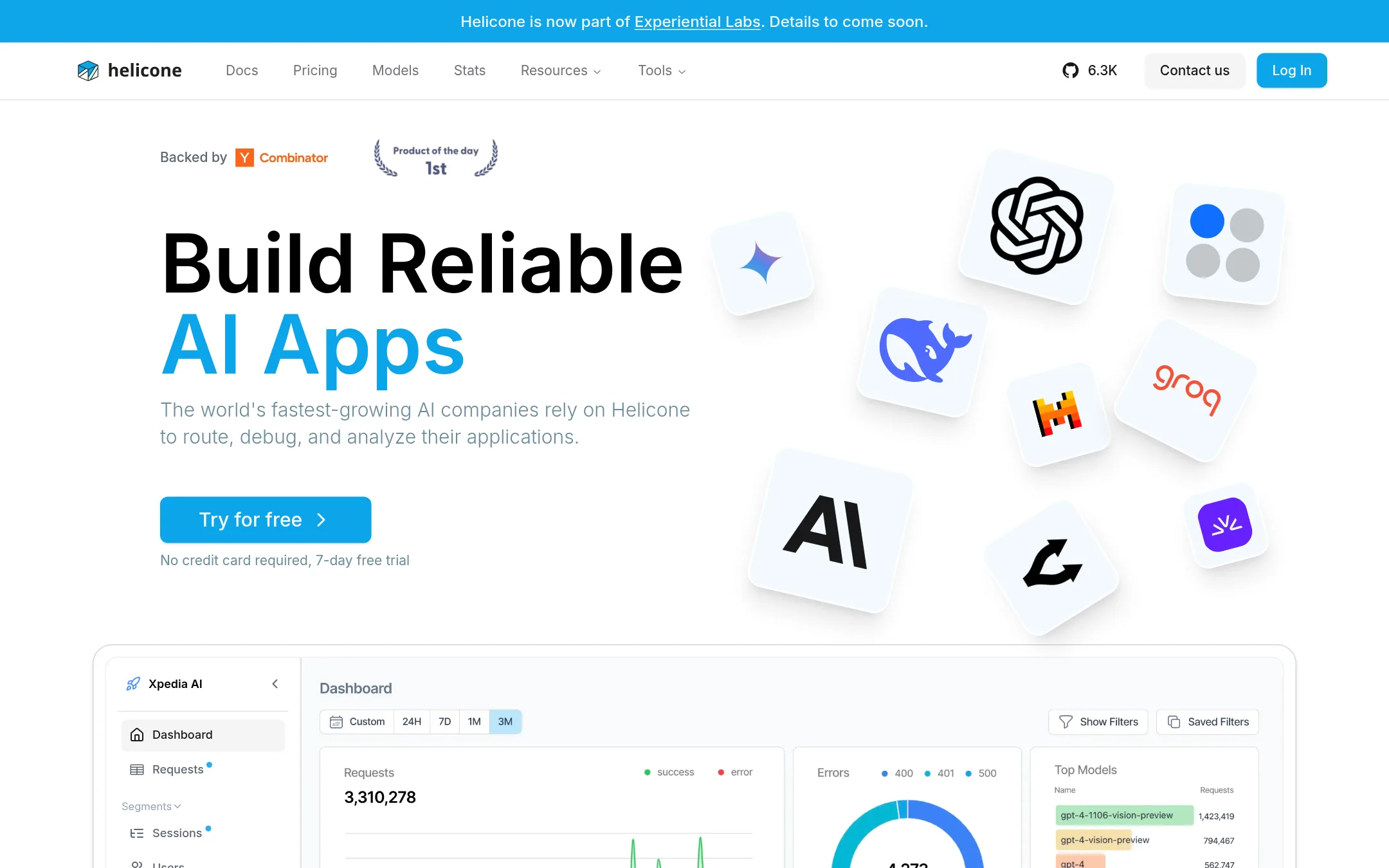
Helicone is an observability and gateway layer for LLM apps. It logs requests, tracks users and costs, runs prompt tests, and can route traffic with caching and automatic fallbacks. Someone would pick it over Unify when they want to monitor and control calls to existing model providers rather than train a model that improves from user interactions.
Where it is strong
- Logs requests, sessions and user analytics with a single-line integration
- Includes a gateway with caching, rate limits and automatic fallbacks
- Offers discounts for startups, students, non-profits and open-source companies
Where it falls short
- Focused on observing and routing calls, not on training or improving a model
- Paid tiers have usage limits on requests, storage and ingestion that scale with plan
- Pricing:
- Pricing is not published on the site.
See more comparisons in Productivity & Project Management alternatives.
FAQ
Questions about Unify alternatives
What does Unify do that these alternatives do not?
Unify's site describes a model that trains on every user interaction so that quality improves and cost and latency drop over time. Most of the alternatives here are gateways or observability tools that route, log or govern calls to existing models rather than training one.
Which alternative is cheapest to start with?
OpenRouter has a free tier with 25+ models and 50 requests a day, and it charges a fee on credit purchases with no subscription. LiteLLM's core gateway is free to self-host, though enterprise features are quoted separately.
Which option should I pick if I want to keep my traffic in my own infrastructure?
LiteLLM is open source under the MIT license and self-hostable, so you can run the gateway inside your own cloud. Portkey also offers an open source version that can be self-hosted, with private cloud and VPC options on custom terms.
Does Helicone or Portkey improve my model over time?
Neither product is described on its site as training or adapting the underlying model from user interactions. Helicone focuses on logging, cost tracking, prompt testing and routing, and Portkey on routing, fallbacks, caching, observability and guardrails.
Is pricing published for every alternative?
No. OpenRouter publishes its fee structure and LiteLLM publishes a free self-hosted tier, but Helicone, Portkey and Martian do not publish pricing on their sites, and enterprise tiers for several products are sold on custom quotes.
Last updated November 8, 2026.