
ZeroPath alternatives
6 products compared · Updated November 11, 2026
The short answer
The three strongest ZeroPath alternatives are Snyk, Semgrep and Checkmarx. Snyk suits development teams that already run several AppSec tools and want one platform covering dependencies, containers and AI-generated code. Semgrep suits engineering teams that want to write and customise their own scanning rules alongside a managed platform. Checkmarx suits enterprise security teams that need one suite covering SAST, SCA, DAST and AI component inventory under a formal procurement process.
Your shortlist, at a glance
Read the comparisons ↓ SnykFrom $25/mo + creditsDevelopment teams that already run several AppSec tools and want to consolidate onto one platform that covers dependencies, containers and AI-generated code.
 Semgrep$30/contributor/moEngineering teams that want to write and customise their own scanning rules alongside a managed security platform
 GitHub ProjectsFrom $0 / user / moEngineering teams already hosting code on GitHub that want planning and issue tracking in the same place as their repositories.
 CheckmarxCustom quoteEnterprise security teams that need one platform covering SAST, SCA, DAST, API security and AI component inventory, with a formal procurement process.
- VVeracodeNot publishedEnterprise security teams that need governance, policy enforcement and compliance reporting across a large application portfolio
 SonarQubeFrom $34/mo (100k LOC)Engineering teams that want code quality gates on every pull request and a self-hosted option for keeping code in-house
About ZeroPath and its alternatives
ZeroPath is an AI-native application security platform. According to its site, it finds vulnerabilities such as business logic flaws, auth bypasses and vulnerable dependencies, verifies whether they can be exploited, and generates working patches. Its site positions it around cutting noise from scanner output, and its published Team plan lists per-developer pricing at $60 per developer.
When comparing alternatives in this category, weigh the pricing structure first, since some vendors publish per-developer, per-contributor or per-line-of-code rates while others quote only on request. Check which regions and deployment models are supported, including cloud, self-hosted and air-gapped options. Look at which version control systems and ticketing tools integrate, what support and SLA terms come with each tier, and what the contract commitments are before you sign.
Explore the alternatives
- From $25/mo + credits
1.Snyk
Best for: Development teams that already run several AppSec tools and want to consolidate onto one platform that covers dependencies, containers and AI-generated code.

- Pricing
- From $25/mo + credits
- Category
- Security & Privacy
Snyk is an AI security platform covering code, open source dependencies, containers, infrastructure as code, and AI-generated code and agents. Teams pick it over ZeroPath when they want one vendor across many AppSec areas, plus controls for AI coding agents and AI application inventory. Its free tier also lets small teams start without a sales call.
Where it is strong
- Free plan covers open source, code, IaC and container scanning for individual developers and small teams.
- Covers AI-generated code, AI agents and AI application inventory alongside traditional AppSec.
- Publishes a per-capability credit rate card, so enterprise buyers can see what each product draws from their balance.
Where it falls short
- Team plan test limits are set per product, so heavy scanning on a small team can hit caps.
- Evo capabilities such as AI Pentesting and coding agent security need an Enterprise platform subscription, not the Free or Team plan.
- Pricing:
- Snyk's free plan has no monthly charge, and the Team plan starts at $25 per month with a 10-developer limit. Enterprise pricing uses prepaid credits at $1 per credit, and the site lists per-capability rates such as 1.0 credit per active contributor per day for
- $30/contributor/mo
2.Semgrep
Best for: Engineering teams that want to write and customise their own scanning rules alongside a managed security platform
- Pricing
- $30/contributor/mo
- Category
- Developer Tools
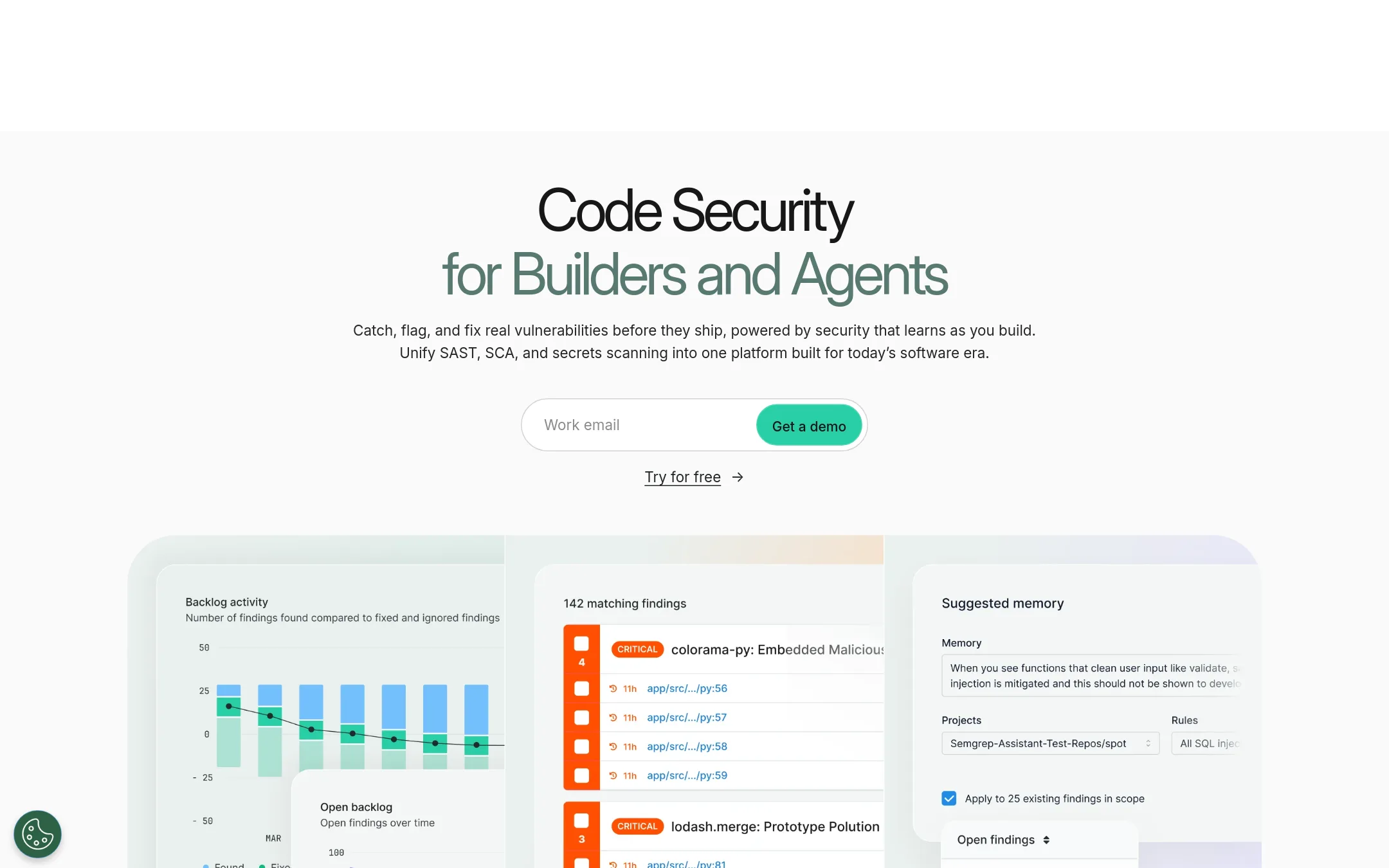
Semgrep is a static analysis platform that scans source code for security issues, with AI-assisted triage and remediation, plus SCA, secrets detection and malware blocking for open source packages. Pick it over ZeroPath when you want rule-based scanning you can write and extend yourself, or when you need a free tier to start with before committing budget.
Where it is strong
- Free tier covers up to 10 repositories and 10 contributors with cross-file analysis
- Rule-based engine can be extended with custom rules, so teams are not limited to vendor coverage
- Covers SAST, SCA, secrets and malware blocking from one platform with CI, IDE and PR integrations
Where it falls short
- Its pitch leans on rules and AI triage, while ZeroPath's listed differentiators are business logic flaws and generated patches that compile
- Per-contributor pricing grows with team size, and the Enterprise tier requires a sales conversation
- Pricing:
- Semgrep lists a free Teams tier, a Team plan at $30 per contributor per month for Code or Supply Chain and $15 for Secrets, and a custom-priced Enterprise plan, with AI credits included in each.
- Switching from ZeroPath:
- Moving from ZeroPath would mean reconfiguring scans and PR checks in Semgrep, since neither page describes a migration path.
- From $0 / user / mo
3.GitHub Projects
Best for: Engineering teams already hosting code on GitHub that want planning and issue tracking in the same place as their repositories.
- Pricing
- From $0 / user / mo
- Category
- Productivity & Project Management
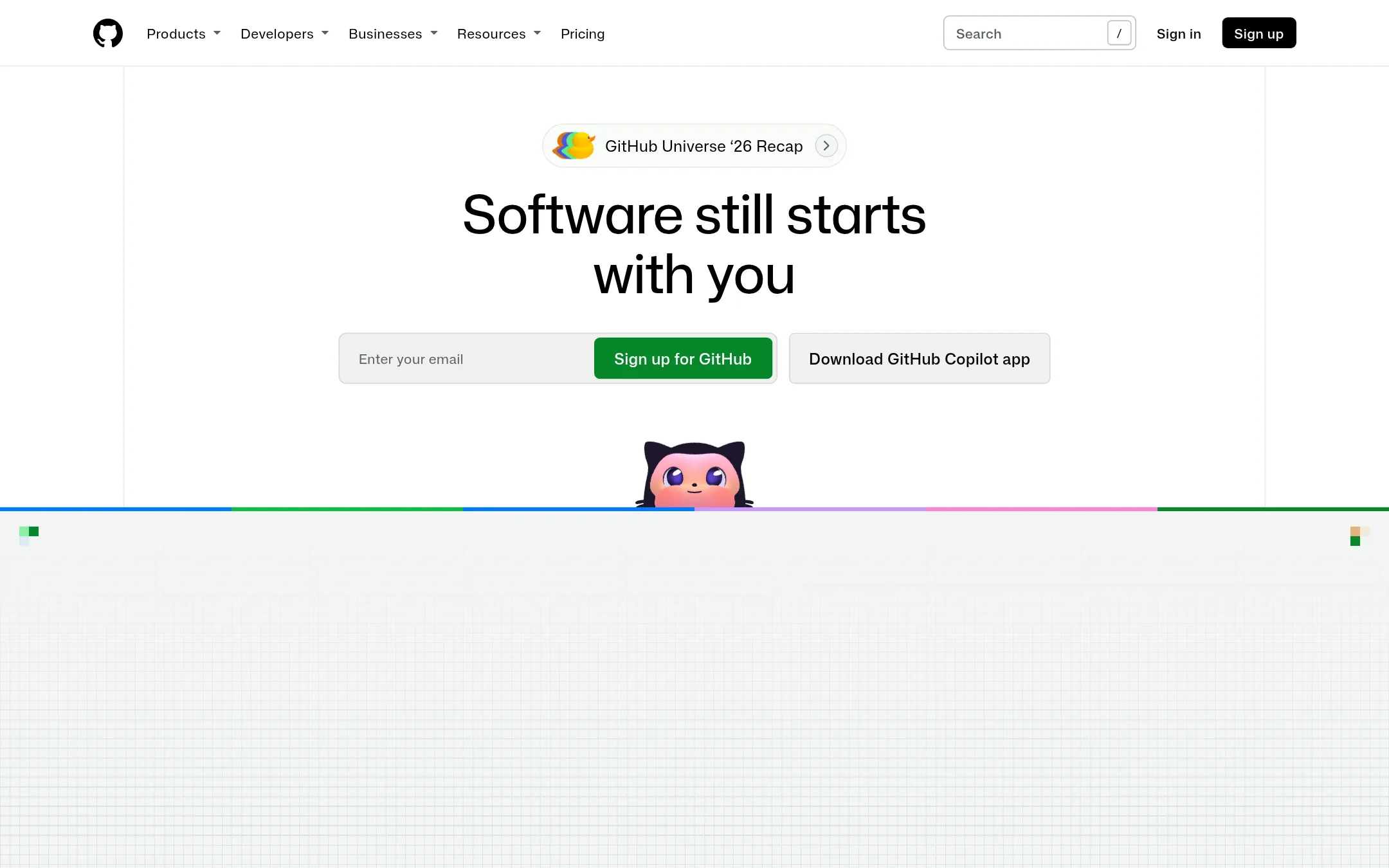
GitHub Projects is planning and tracking inside GitHub, so issues, pull requests and boards sit next to the code. Someone would pick it over ZeroPath when the need is to organise engineering work and track progress, not to find security vulnerabilities in the codebase. GitHub Code Security and Secret Protection cover some security scanning, but that is a separate job from the project boards.
Where it is strong
- Issues and boards live next to the code, so work and pull requests stay linked.
- A free tier covers unlimited public and private repositories.
- Copilot and Actions sit in the same platform for teams that want automation alongside tracking.
Where it falls short
- It is a project management tool first, so it does not replace ZeroPath's business logic and auth bypass detection.
- Advanced security features such as Code Security and Secret Protection are priced separately from the base plans.
- Pricing:
- Free is $0 with unlimited public and private repositories, Team is $4 per user per month, and Enterprise is $21 per user per month, with GitHub Code Security and Secret Protection listed separately from the base plans.
- Custom quote
4.Checkmarx
Best for: Enterprise security teams that need one platform covering SAST, SCA, DAST, API security and AI component inventory, with a formal procurement process.
- Pricing
- Custom quote
- Category
- Security & Privacy
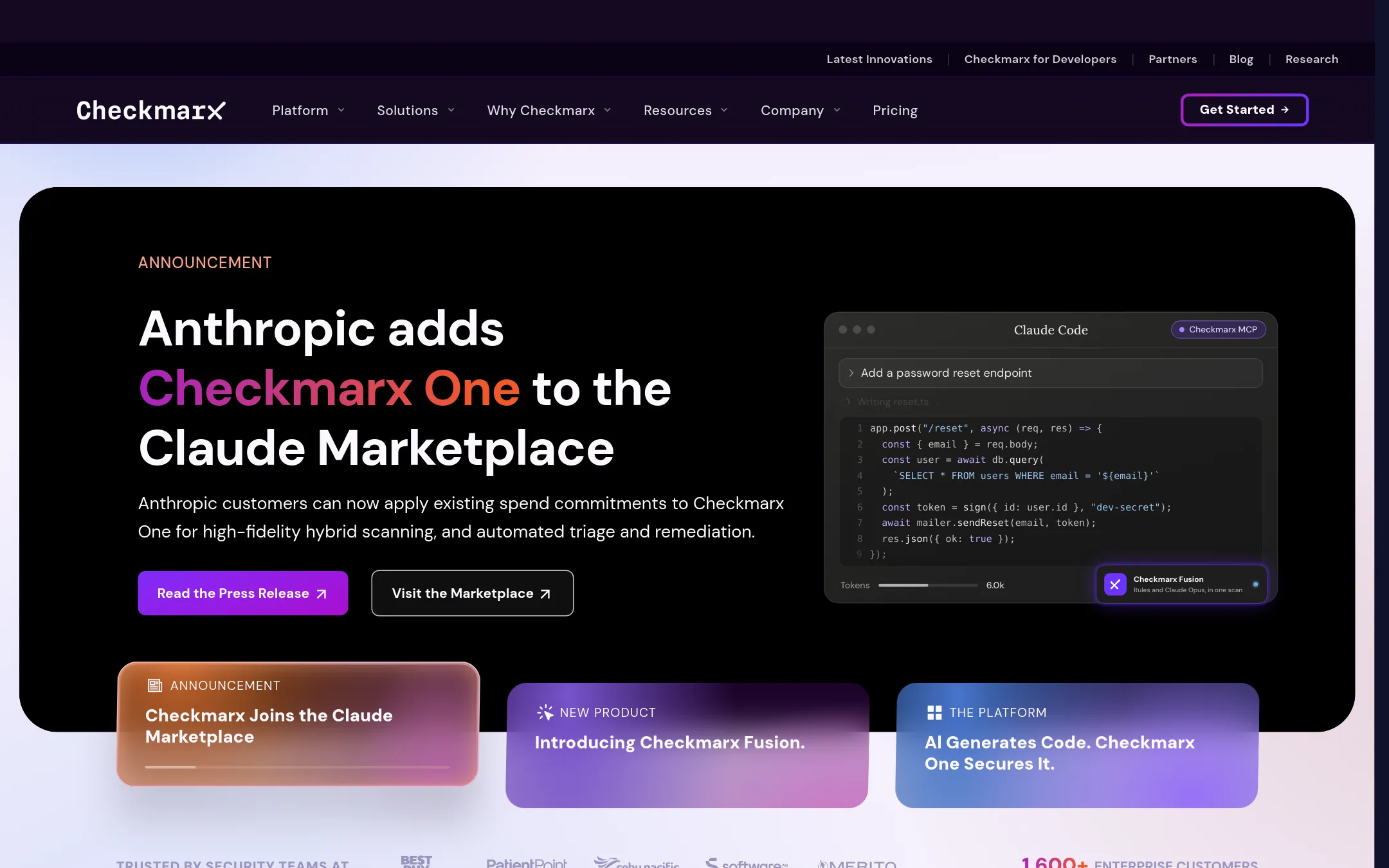
Checkmarx is an enterprise application security platform that combines static scanning, dependency checks, API security, and DAST across code, CI/CD, and AI components. Teams choose it over ZeroPath when they need broad coverage in one suite, including IaC, container security, malicious package protection, and a long list of add-ons under a unified risk view.
Where it is strong
- Covers SAST, SCA, DAST, API security, IaC, containers and secrets in one platform
- Adds an AI inventory and AI-BOM style visibility of models and agents
- Offers self-hosted and on-prem deployment for strict data requirements
Where it falls short
- Pricing requires a sales conversation, so budgeting takes longer than with ZeroPath's listed rate
- Breadth of modules and add-ons means setup and packaging can be complicated for small teams
- Pricing:
- Pricing is not published on the site. Packages are quoted per environment, modules and developer count, and the page includes Checkmarx Credits that pause actions when the balance reaches zero.
- VNot published
5.Veracode
Best for: Enterprise security teams that need governance, policy enforcement and compliance reporting across a large application portfolio
- Pricing
- Not published
- Category
- Other
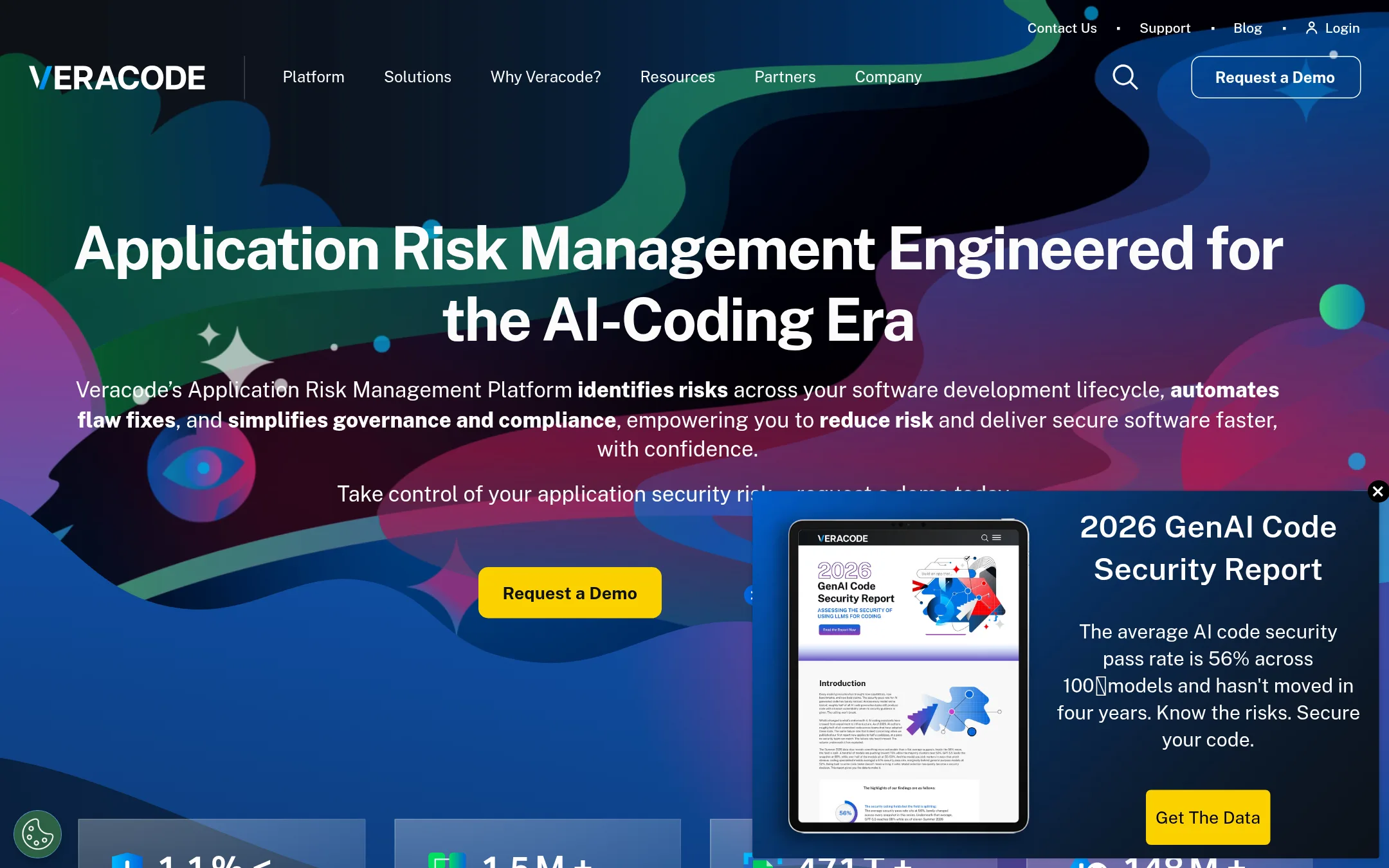
Veracode is an enterprise application risk management platform that covers code, dependencies, pipelines and governance, with AI-driven fix support. Someone would pick it over ZeroPath when they need a large, established vendor with broad policy control and compliance reporting across many teams.
Where it is strong
- Covers code, dependencies, containers and runtime signals in one platform
- Includes AI-driven remediation guidance inside existing developer tools
- Offers governance and reporting features for executives and compliance teams
Where it falls short
- Pricing is not published, so cost comparison requires a sales conversation
- The site does not show a self-serve plan like ZeroPath's per-developer Team tier
- Pricing:
- Pricing is not published on the site.
- From $34/mo (100k LOC)
6.SonarQube
Best for: Engineering teams that want code quality gates on every pull request and a self-hosted option for keeping code in-house
- Pricing
- From $34/mo (100k LOC)
- Category
- Developer Tools
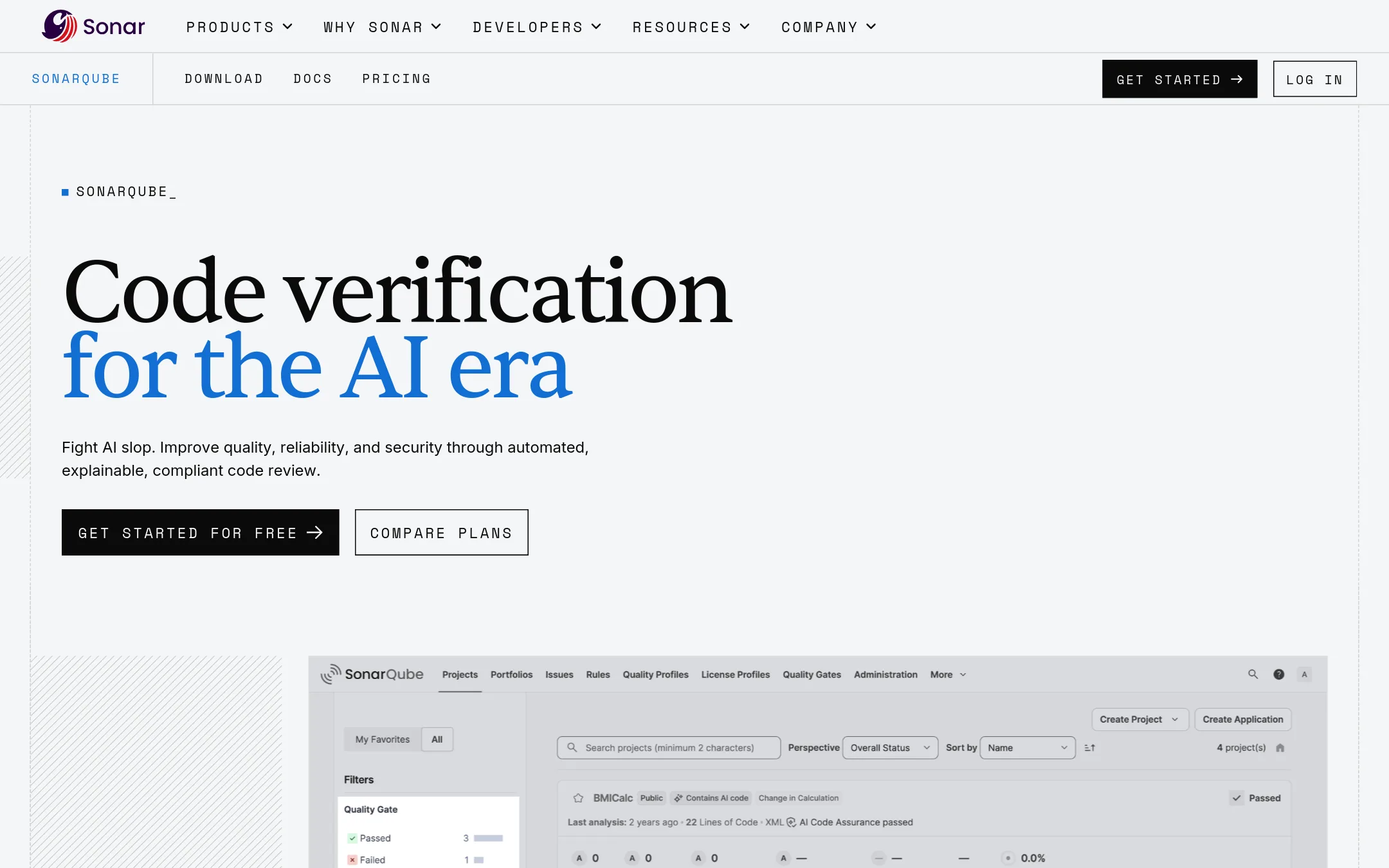
SonarQube is a code quality and security platform that scans every branch and pull request for bugs, vulnerabilities, secrets and technical debt across 35 or more languages. Teams pick it over ZeroPath when they want a long-established rules engine that also covers maintainability and architecture, and when they need a self-hosted option that runs inside their own perimeter, including air-gapped setups.
Where it is strong
- Covers 35+ languages and checks bugs, vulnerabilities and maintainability in one quality gate
- SonarQube Server runs on your own infrastructure, including air-gapped environments
- Free tier for private projects up to 50k lines of code, and free for public open-source repos
Where it falls short
- Dependency scanning with CVE and malicious package detection needs the separate Advanced Security add-on
- Pricing is by lines of code, so costs rise with repository size rather than per developer or scan
- Pricing:
- The Team plan has a free tier for private projects up to 50k lines of code, and paid plans start at $34 a month for up to 100k lines of code, with Enterprise priced on request.
- Switching from ZeroPath:
- Moving from ZeroPath would mean reconnecting your repositories and re-creating your security policies as SonarQube quality profiles and gates, since the two tools use different rule sets.
See more comparisons in Security & Privacy alternatives.
FAQ
Questions about ZeroPath alternatives
Which ZeroPath alternative is best for a team that already uses several security tools?
Snyk is the closest fit for that situation, since it covers open source dependencies, code, containers, infrastructure as code and AI-generated code on one platform. Its free plan lets small teams start without a sales call. Team limits on test volume can be reached quickly on busy projects, so check those against your scan cadence.
Can I run a ZeroPath alternative inside my own infrastructure?
SonarQube and Checkmarx both offer self-hosted deployment, and SonarQube Server can run in air-gapped environments. ZeroPath also lists on-prem and private cloud options, but only on its Enterprise plan. Veracode's deployment options are not detailed in the material reviewed here.
Which alternatives publish their prices?
Snyk, Semgrep, SonarQube and GitHub Projects publish prices on their sites, with free tiers available on several of them. Checkmarx and Veracode do not publish pricing, so costs require a sales conversation. ZeroPath lists $60 per developer for its Team plan and offers an Enterprise tier on request.
Which option suits a team that wants to write its own scanning rules?
Semgrep is the strongest fit, because its rule-based engine can be extended with custom rules rather than relying only on vendor coverage. Its free tier covers up to 10 repositories and 10 contributors. SonarQube also supports quality and security rules, though its listed focus is on code quality gates across many languages.
Is any alternative only for planning work rather than security scanning?
Yes. GitHub Projects is planning and issue tracking inside GitHub, so it does not replace vulnerability detection. GitHub Code Security and Secret Protection are sold separately from the base plans and cover some scanning, but they are a different job from the project boards.
Last updated November 11, 2026.