6 Best AI Data Platforms in 2026
Updated November 8, 2026
The short answer
The strongest AI data platforms for most buyers are Encord, Activeloop and Daft from Eventual. Encord suits AI teams handling large physical-world datasets such as sensor streams, video and text. Activeloop suits teams running agents in production that need shared memory and versioned data, with a pay-as-you-go tier to start. Daft suits robotics and ML teams that need to curate and transform large multimodal datasets in one open-source engine.
The shortlist, at a glance
Read the comparisons ↓ EncordNot publishedAI teams working with physical-world data such as sensor streams, video and text that need to manage and annotate very large datasets.
 ActiveloopFrom $0.25/1k tracesAI teams running agents in production that want shared memory and versioned, queryable data without standing up their own storage layer.
 EventualNot publishedRobotics and ML teams that need to curate and transform large multimodal datasets, such as video and sensor data, for AI training
 Ocular AINot publishedAI labs and large enterprises that need training data for speech, vision, or domain-specific reasoning models.
 AirweaveNot publishedEngineering teams building AI agents or RAG systems that need answers grounded in data from several apps and databases
 ShofoNot publishedAI labs and model builders who need large volumes of licensed-style multimodal training footage with matching transcripts or input logs.
About AI Data Platforms
AI data platforms are tools that store, organize, clean, label and retrieve the data that AI systems use for training, evaluation and live answers. They handle jobs such as managing large datasets, annotating video and text, transforming multimodal files, and feeding current information to AI agents.
The products on this list differ in approach, scale and pricing model. Encord and Ocular AI focus on large, complex datasets for AI teams and labs, with pricing handled through sales. Activeloop and Airweave focus on agent memory and retrieval, and Activeloop offers a pay-as-you-go tier. Daft is an open-source engine that runs the same code on a laptop or a cluster. Shofo sells training footage directly rather than providing software.
The 6 best AI Data Platforms, compared
- Not published
1.Encord
Best for: AI teams working with physical-world data such as sensor streams, video and text that need to manage and annotate very large datasets.
- Pricing
- Not published
- Category
- AI & Machine Learning
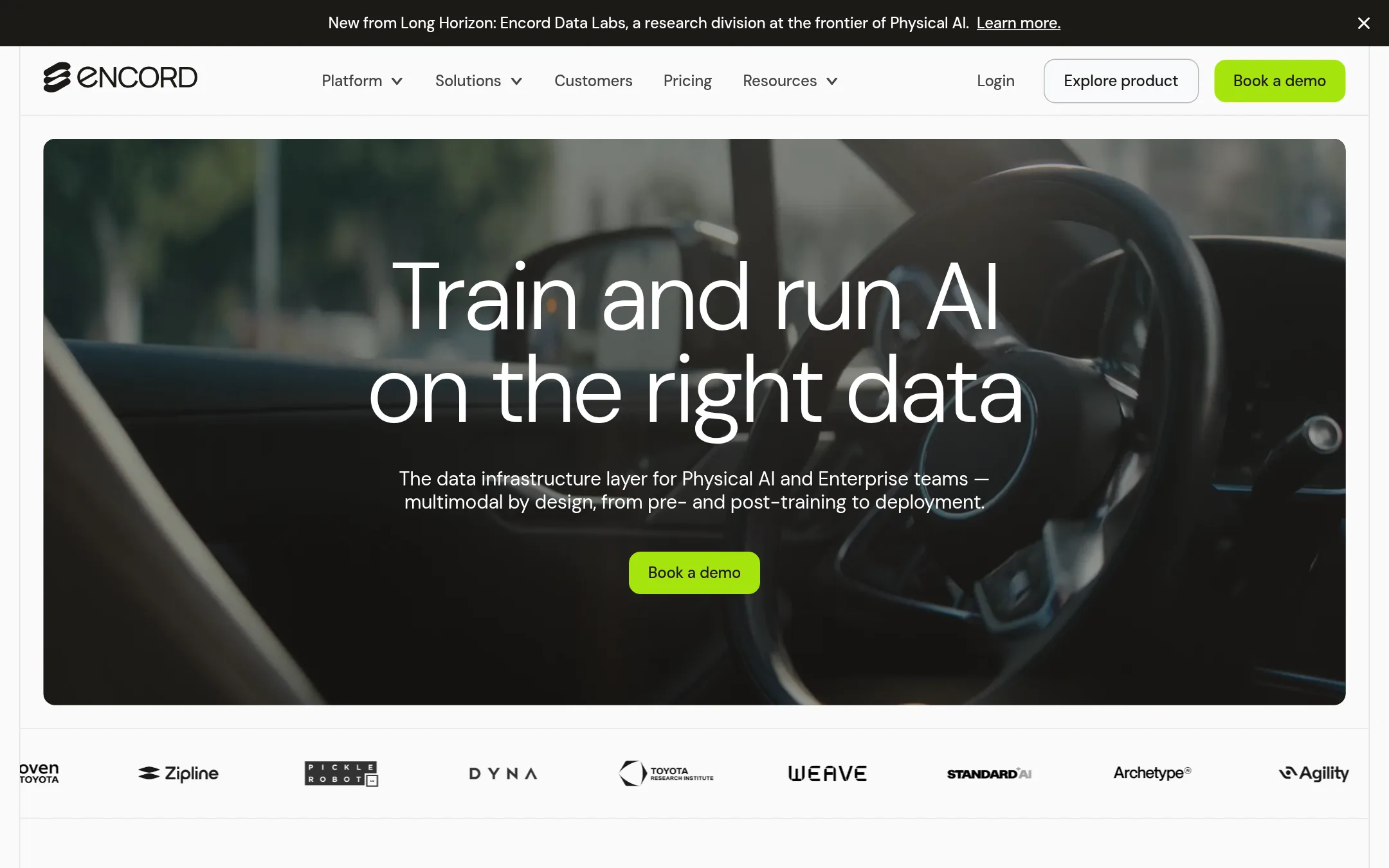
Encord is a data layer for AI teams that handles sensor streams, video and text in one place. It covers management, curation, annotation and alignment of very large datasets, up to petabytes. Over 300 AI teams use it, including Woven by Toyota, AXA, UiPath and Zipline, which gives it credibility for complex real-world data.
Where it is strong
- Handles multimodal data, from sensor streams to video to text, in one platform
- Built to manage and curate datasets at petabyte scale
- Named customers include Woven by Toyota, AXA, UiPath and Zipline
Where it falls short
- Pricing is not published, so cost must be confirmed directly with the vendor
- Built for AI teams with large, complex data, so it may be more than a small team with simple datasets needs
- Pricing:
- Pricing is not published on the site.
- From $0.25/1k traces
2.Activeloop
Best for: AI teams running agents in production that want shared memory and versioned, queryable data without standing up their own storage layer.
- Pricing
- From $0.25/1k traces
- Category
- AI & Machine Learning
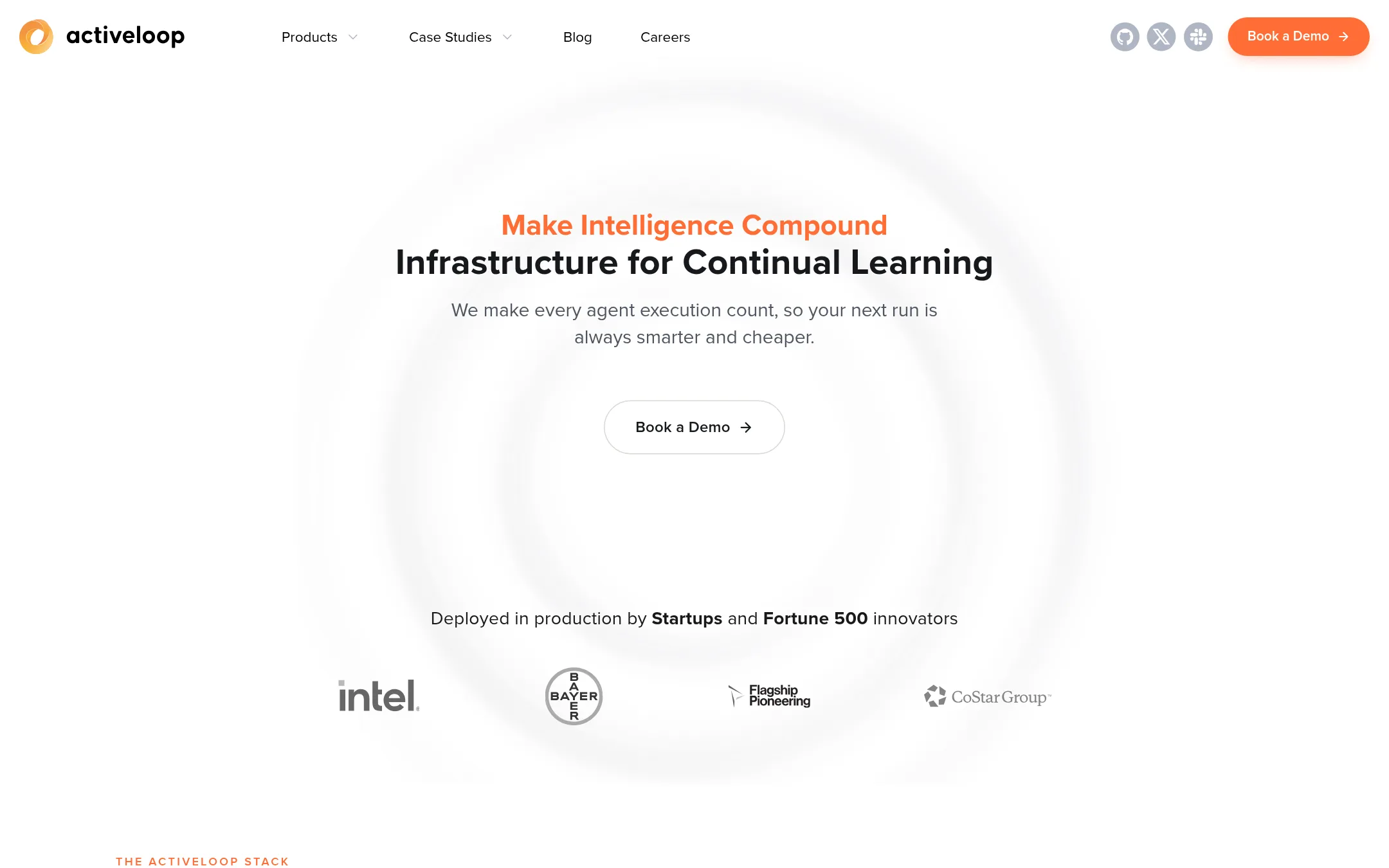
Activeloop builds Deeplake, a GPU-native database for AI agents that stores data in a versioned, queryable form. Its Hivemind product turns agent traces into team skills that are shared across an organization, which sets it apart from plain storage tools. The site lists a clear pay-as-you-go tier, so teams can test it before committing.
Where it is strong
- Pay-as-you-go Basic tier with no card needed to start
- Agent traces become shared team skills, so a fix found once is reused
- Enterprise option can run inside your own VPC with SAML SSO and SOC 2
Where it falls short
- Per-seat Team plan and enterprise pricing require contacting sales or reading the fine print for exact terms
- The site describes continuous learning in broad terms, so teams with simple retrieval needs may find it more than they need
- Pricing:
- The Basic plan is pay as you go with no card needed up front, includes 150k traces and 1.5M queries, then charges $0.25 per 1k traces and 10k queries, with unlimited seats. The Team plan is priced per seat with 1M traces and 10M queries per month per seat, and
- Not published
3.Eventual
Best for: Robotics and ML teams that need to curate and transform large multimodal datasets, such as video and sensor data, for AI training
- Pricing
- Not published
- Category
- AI & Machine Learning
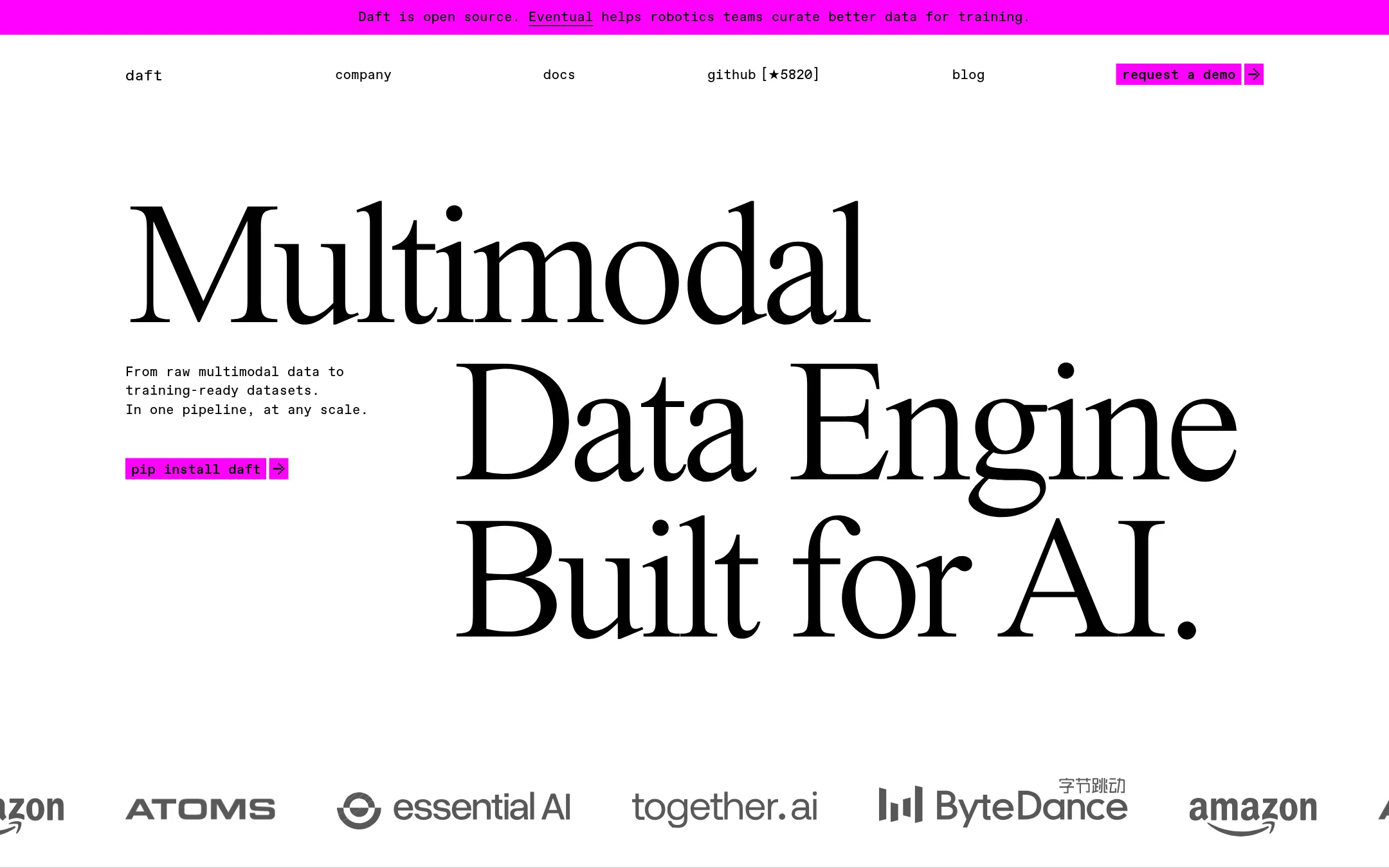
Daft is an open-source data engine that processes video, images, audio, and sensor data alongside structured metadata in one Python DataFrame or SQL pipeline. Its core is written in Rust, and it runs CPU and GPU steps in the same pipeline, so teams can move from a laptop to a cluster without rewriting code. It is released under Apache 2.0 and has more than 5k GitHub stars.
Where it is strong
- Handles images, video, audio and structured data in one dataframe
- Same code runs on a laptop or a distributed cluster
- Open source under Apache 2.0 with a Pandas or Spark style API
Where it falls short
- Pricing is not published, so managed hosting costs are unknown from the site
- Teams without Python or data engineering experience will need time to learn the dataframe model
- Pricing:
- Pricing is not published on the site.
- Not published
4.Ocular AI
Best for: AI labs and large enterprises that need training data for speech, vision, or domain-specific reasoning models.
- Pricing
- Not published
- Category
- AI & Machine Learning
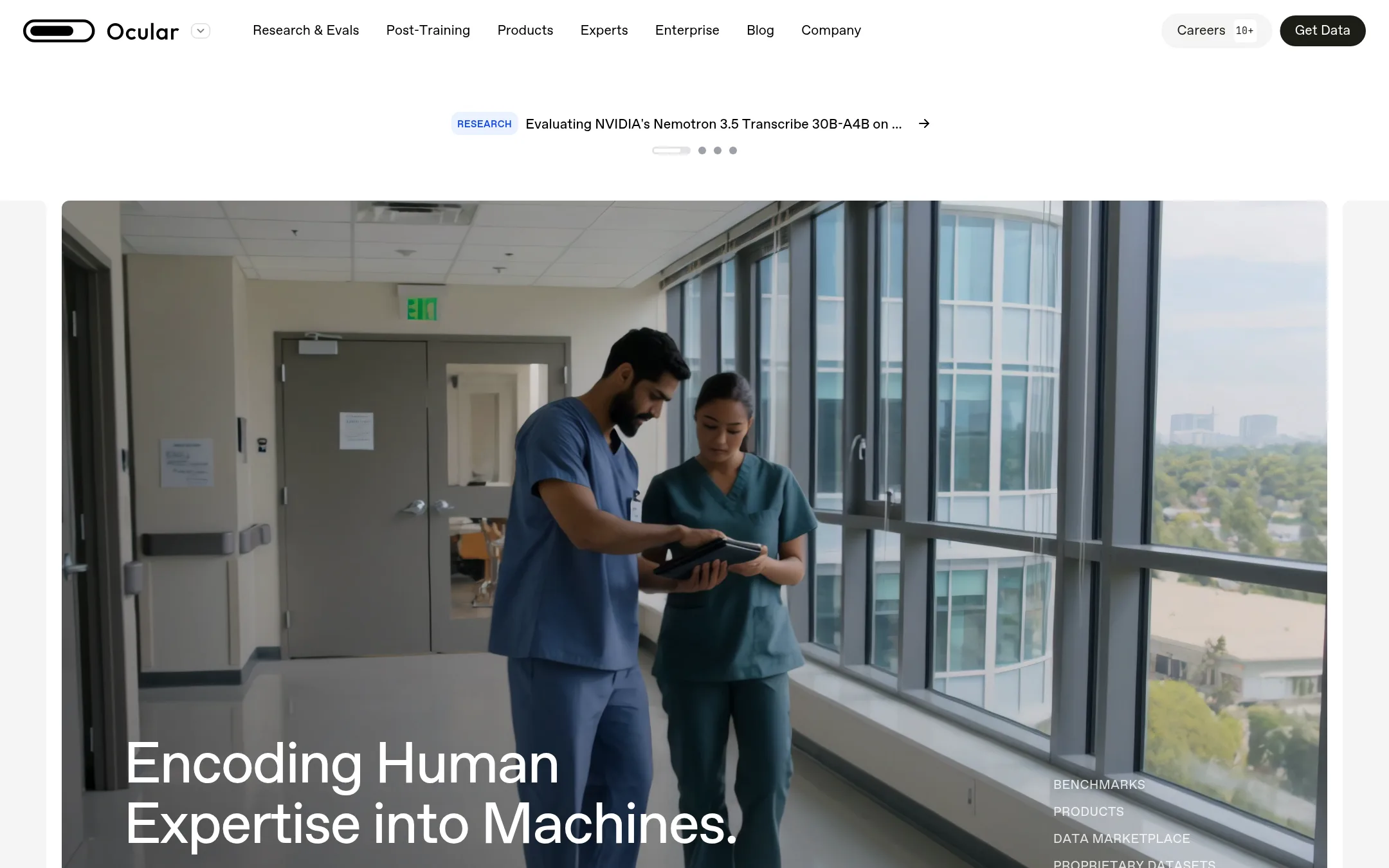
Ocular AI is an applied research lab that builds training data for frontier models, capturing human expertise through an Expert Network and a Data Foundry. Its credibility rests on public benchmarks: its Converse-STT benchmark scored 21 speech-to-text models, with ElevenLabs' Scribe v2 leading at a 1.22% word error rate.
Where it is strong
- Publishes open-source benchmarks, Converse-STT and Converse-Diarization, that teams can check
- Sources data from professionals such as lawyers, linguists, and voice actors across domains
- Produces multilingual and multi-accent conversational datasets
Where it falls short
- Pricing is not listed, so budget must be confirmed through a sales conversation
- Built for AI labs and large enterprises, so it is a poor fit for small teams needing self-serve tooling
- Pricing:
- Pricing is not published on the site.
- Not published
5.Airweave
Best for: Engineering teams building AI agents or RAG systems that need answers grounded in data from several apps and databases
- Pricing
- Not published
- Category
- AI & Machine Learning
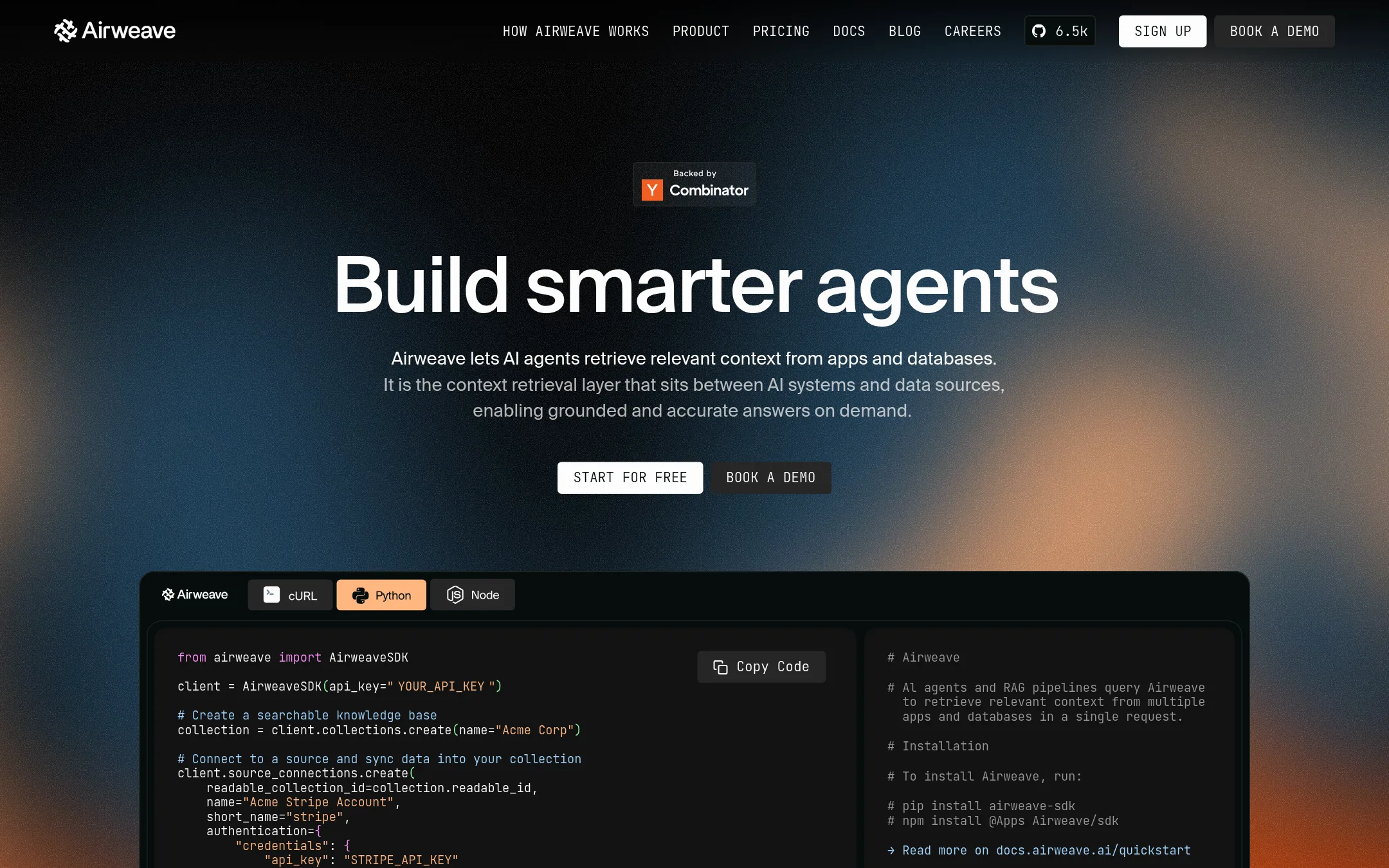
Airweave is an open-source context retrieval layer that sits between AI agents and data sources such as apps, tools and databases. It syncs data in real time and exposes it through one search interface, so agents answer from current information. It ships with over 50 prebuilt connectors, which cuts down on custom integration work.
Where it is strong
- Over 50 prebuilt connectors handle auth and sync for common sources
- Real-time sync means agents avoid stale snapshots
- Open source, and works with LangChain, Composio and Pipedream
Where it falls short
- Built for engineering teams, so it is a poor fit for non-technical buyers
- Pricing details are not published on the site, so costs need to be confirmed directly
- Pricing:
- Pricing is not published on the site.
- Not published
6.Shofo
Best for: AI labs and model builders who need large volumes of licensed-style multimodal training footage with matching transcripts or input logs.
- Pricing
- Not published
- Category
- AI & Machine Learning
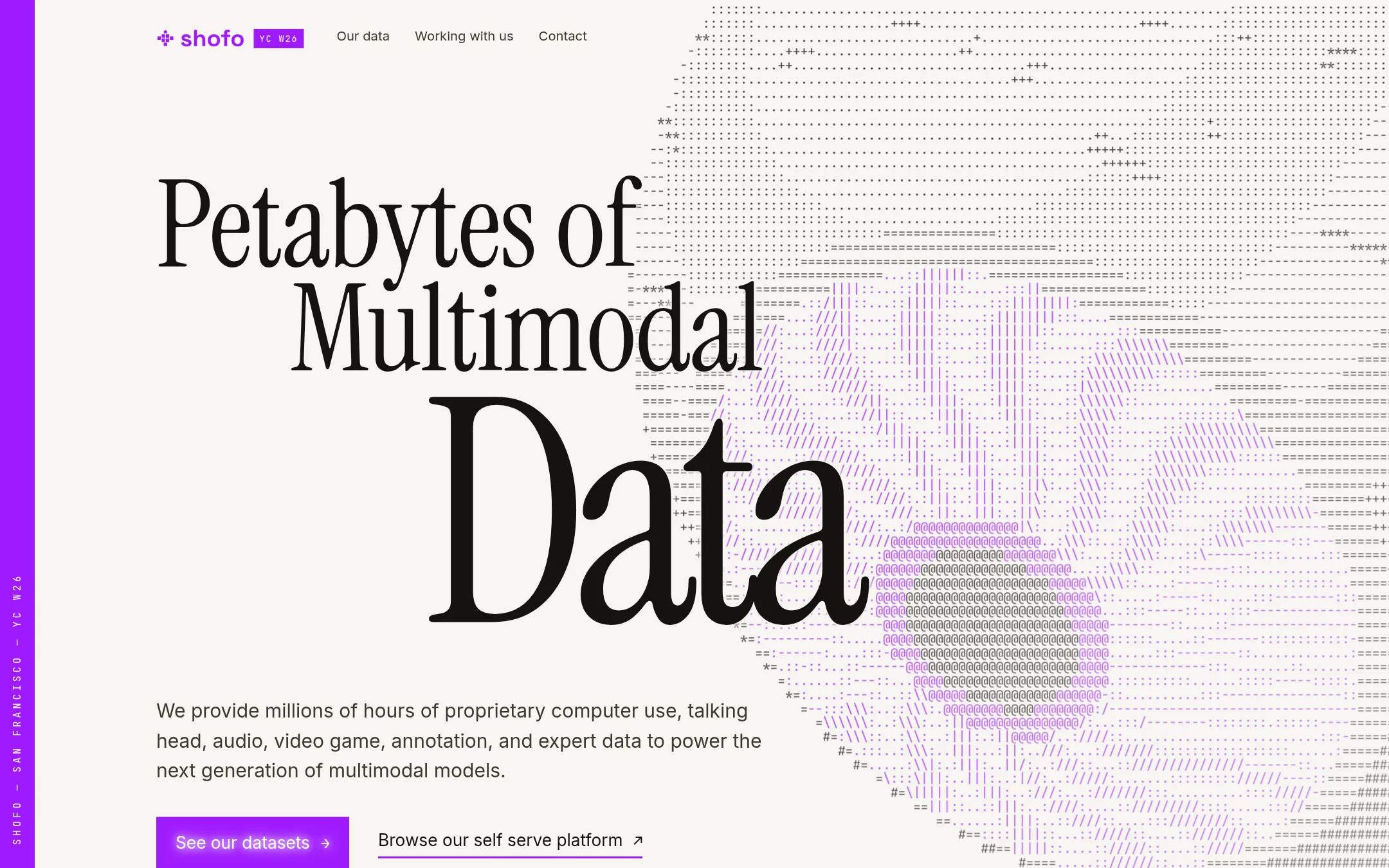
Shofo sells proprietary multimodal training data to AI labs, covering computer use, talking head footage, speech and audio, video games, and expert physical work. Its computer use and gaming datasets include full input logs, so the screen, keyboard, and mouse actions are recorded alongside the video. The company describes itself as the Common Crawl for videos, and its site says it has millions of hours of data.
Where it is strong
- Computer use data includes full keyboard and mouse input logs
- Talking head and speech datasets come with transcripts
- Covers a wide range of modalities, including expert physical labor footage
Where it falls short
- No pricing or self-serve signup is listed, so buyers must contact the company
- The listing is unverified and its customer claims are general, not named
- Pricing:
- Pricing is not published on the site.
How to choose AI Data Platforms
Start with pricing structure. Activeloop publishes a pay-as-you-go Basic tier, while Encord, Eventual, Ocular AI, Airweave and Shofo do not publish prices on their sites, so budgets for those products must be confirmed directly with each vendor.
Consider who the product is built for. Encord and Ocular AI target AI teams and large enterprises with complex data. Airweave and Daft are built for engineering teams and assume comfort with Python or data pipelines. Match the tool to the skills your team already has.
Check integrations and the data types you need to handle. Airweave ships with more than 50 prebuilt connectors and works with LangChain, Composio and Pipedream. Daft handles images, video, audio and structured data in one dataframe. Confirm that the platform supports your sources and file types before you commit.
Review data and compliance terms. Activeloop's enterprise option can run inside your own VPC with SAML SSO and SOC 2. For training footage from Shofo or expert data from Ocular AI, confirm licensing and consent terms in writing.
Look at support and contract terms. Several products require a sales conversation for exact pricing, so ask about seat limits, usage caps and renewal terms before signing.
FAQ
Questions about AI Data Platforms
What is an AI data platform?
An AI data platform is software that manages the data AI systems depend on, including storage, labeling, curation, transformation and retrieval. Some products focus on large training datasets, while others feed live information to AI agents. The right choice depends on whether your main need is training data or retrieval for running systems.
Which AI data platform has a free or low-cost way to start?
Activeloop offers a Basic plan that is pay as you go, with no card needed up front, and includes 150k traces and 1.5M queries before usage charges apply. Daft is open source under Apache 2.0, so the core engine can be used without a license fee. Other products on this list do not publish pricing.
Can AI data platforms handle video, audio and sensor data?
Yes, several products on this list do. Encord handles sensor streams, video and text at petabyte scale. Daft processes video, images, audio and sensor data alongside structured metadata. Shofo sells multimodal footage and speech datasets for model training.
How do I choose between a data labeling platform and an agent retrieval layer?
Labeling platforms like Encord and Ocular AI help teams prepare and annotate training data. Retrieval layers like Airweave connect agents to live data sources so answers reflect current information. Choose based on whether your work centers on training models or on running agents in production.
Why do some products on this list have no published pricing?
Several vendors, including Encord, Eventual, Ocular AI, Airweave and Shofo, do not publish prices on their websites. Their costs depend on factors such as data volume, seats and enterprise terms. Buyers should request a quote directly and confirm usage limits and renewal terms before committing.
Last updated November 8, 2026.