12 Best AI Healthcare Platforms in 2026
Updated November 8, 2026
The short answer
The strongest AI healthcare platforms on this list are Athelas, Kabilah and Wedge. Athelas suits clinics that want documentation, billing and phone work in one system. Kabilah suits hospital nursing units on Epic or Meditech that want less charting and handoff time. Wedge suits large health systems and hospitals that want back-office departments such as billing and claims automated.
The shortlist, at a glance
Read the comparisons ↓ OwkinNot publishedPharma and biotech R&D teams that need AI support for drug discovery, trial design and pipeline decisions.
 Buoy HealthNot publishedIndividuals and consumer health teams who want a symptom checker that routes people to the right care, not a clinical workflow tool for providers.
 Akido LabsNot publishedPatients and health systems looking for next-day in-person care and shorter wait times, especially where access is the main bottleneck.
 AthelasNot publishedClinics and medical practices that want documentation, billing and phone work handled in one platform to cut admin time and burnout.
 Mindset HealthNot publishedClinicians, health systems, and patients dealing with chronic IBS, chronic pain, menopause, or anxiety who have not found relief from medications alone
 Sully.aiNot publishedHealth systems and large clinic groups with big clinician teams that want to cut call center costs and add patient capacity.
 voizeNot publishedSkilled nursing and long-term care facilities that want nurses and CNAs to chart at the bedside instead of after shifts.
 KabilahNot publishedHospital nursing units and health systems on Epic or Meditech that want to cut charting and handoff time for bedside nurses
 mdhubCustom quoteBehavioral health clinics that spend hours each day on session notes and want admissions and billing handled by the same platform.
 DeltyNot publishedHealth plans, IPAs, ACOs and medical groups that carry risk-bearing contracts and need risk, quality and care teams working from one record.
 WedgeNot publishedLarge health systems, hospitals, health plans and multi-physician groups that want to automate back-office departments like billing, claims and records.
 Beacon HealthNot publishedPrimary care practices and value-based care teams that need repetitive EHR work like care gap closure and outreach automated across their patient panel.
About AI Healthcare Platforms
AI healthcare platforms use artificial intelligence to handle clinical, administrative or patient-facing work in healthcare. Some draft clinical notes from conversations, some take patient calls and book appointments, some code and submit claims, and others help researchers find new drug targets. The right platform depends on which job is costing the most time or money.
The products on this list differ in approach, scale and pricing model. Some target pharma research teams, others target consumer symptom checking, clinic operations, nursing workflows or health system back offices. Most do not publish prices, so cost comparison usually means a sales conversation.
The 12 best AI Healthcare Platforms, compared
- Not published
1.Owkin
Best for: Pharma and biotech R&D teams that need AI support for drug discovery, trial design and pipeline decisions.
- Pricing
- Not published
- Category
- Healthcare
Owkin builds agentic AI and biological reasoning models that work on complex patient data to find new biology. Its flagship K Pro agent supports decisions across drug discovery, clinical trials and portfolio choices, using spatial biology and multi-omics data. Its models are validated in real-world patients, and four large pharma companies, AstraZeneca, Sanofi, Servier and Boehringer Ingelheim, are named as users.
Where it is strong
- Named pharma users include AstraZeneca, Sanofi, Servier and Boehringer Ingelheim
- Models are continuously validated against real-world patient data
- Works with spatial biology and multi-omics data
Where it falls short
- Pricing is not published, so cost must be settled through a sales conversation
- Built for drug R&D and clinical research, so it is a poor fit for clinics or hospital operations teams
- Pricing:
- Pricing is not published on the site.
- Not published
2.Buoy Health
Best for: Individuals and consumer health teams who want a symptom checker that routes people to the right care, not a clinical workflow tool for providers.
- Pricing
- Not published
- Category
- Healthcare
Buoy Health is an AI symptom checker that asks personalized questions to narrow down possible causes and points users toward the right kind of care. Its content is written and reviewed by doctors, clinicians, nurses, and therapists, and backed by clinical research. That clinician review is what makes it a credible option for people who want clear guidance instead of alarming search results.
Where it is strong
- Asks personalized follow-up questions to narrow down possible issues
- Health content is reviewed by doctors, clinicians, nurses, and therapists
- Guidance is meant to be clear and actionable rather than vague or alarmist
Where it falls short
- It is not a substitute for professional medical advice
- Pricing details are not published, so cost has to be checked directly with the vendor
- Pricing:
- Pricing is not published on the site.
- Not published
3.Akido Labs
Best for: Patients and health systems looking for next-day in-person care and shorter wait times, especially where access is the main bottleneck.
- Pricing
- Not published
- Category
- Healthcare
Akido Labs builds Scope AI, which it says increases in-person visit capacity by 10x across primary care and specialties. Its Akido Care network reports more than 500,000 patients served through 245 providers at 96 locations, with about 620,000 visits per year. That scale of real clinical operations is what makes it a credible pick here.
Where it is strong
- Reports 500,000+ patients served across 96 locations
- Targets next-day visits instead of a 26-day average lead time
- Offers house calls and a zero-copay model
Where it falls short
- Pricing and plan details are not published, so cost is hard to compare
- The site describes its approach more than it documents specific software features for buyers
- Pricing:
- Pricing is not published on the site.
- Not published
4.Athelas
Best for: Clinics and medical practices that want documentation, billing and phone work handled in one platform to cut admin time and burnout.
- Pricing
- Not published
- Category
- Healthcare
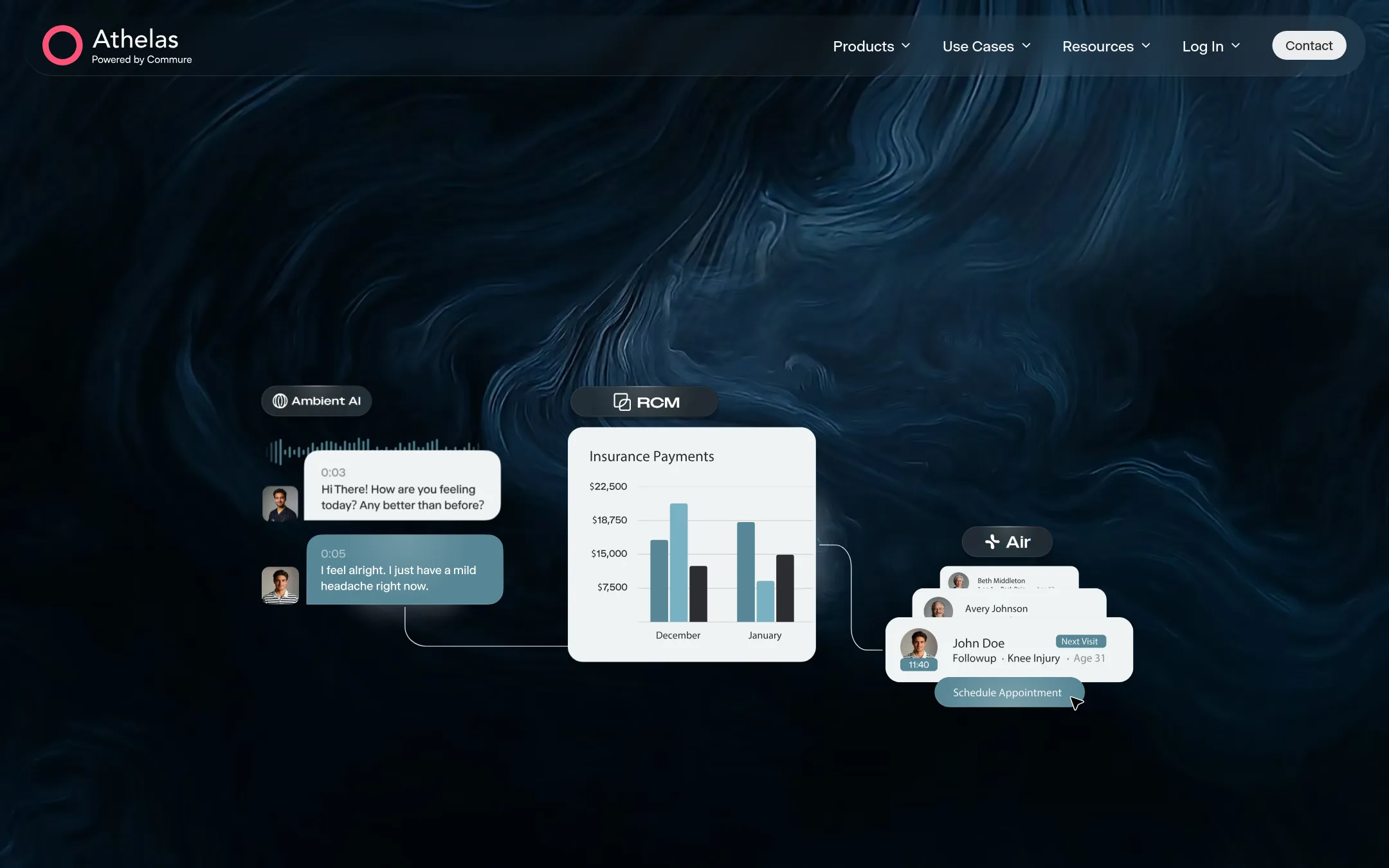
Athelas is an AI operating system for clinics that covers documentation, billing, scheduling, messaging and clinical operations in one platform. It uses an ambient AI scribe, automated coding and claims tools, and voice agents that handle calls and reminders around the clock. Its strongest concrete claim is that 90% or more of claims need no human touch with its revenue cycle automations.
Where it is strong
- Ambient AI scribe reduces documentation time, which the company reports at 80%
- Covers EHR, billing, scheduling and phone tasks in one system
- Voice agents handle scheduling, call routing and reminders 24/7
Where it falls short
- Pricing is not listed, so cost comparison requires a sales conversation
- The reported results are company figures and the listing is not verified
- Pricing:
- Pricing is not published on the site.
- Not published
5.Mindset Health
Best for: Clinicians, health systems, and patients dealing with chronic IBS, chronic pain, menopause, or anxiety who have not found relief from medications alone
- Pricing
- Not published
- Category
- Healthcare
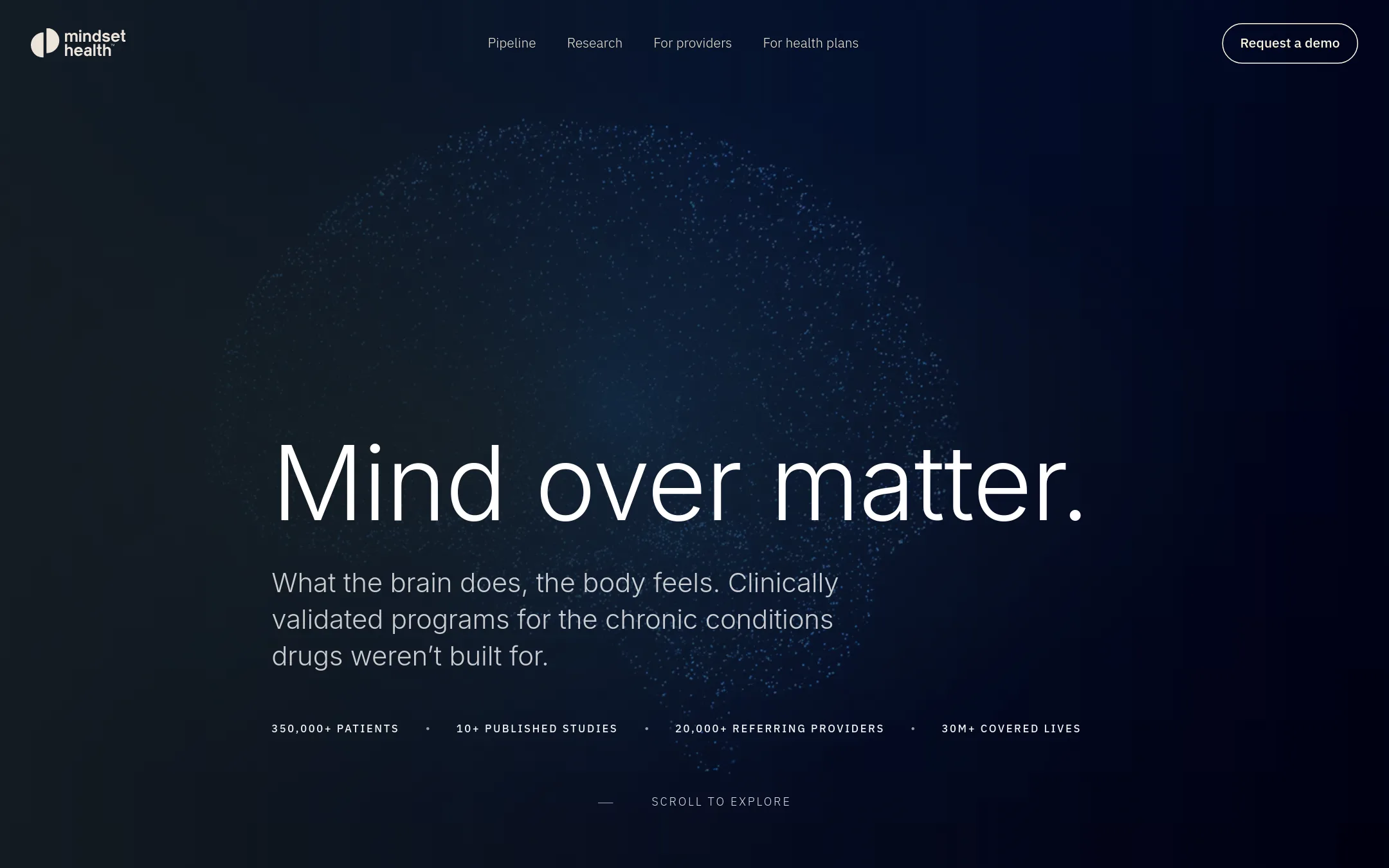
Mindset Health builds digital programs that use behavioral techniques to address the brain-body link in conditions like IBS, chronic pain, and menopause. Each program is built with an academic center that wrote the original protocol and is tested in randomized trials. The company reports 10+ published studies and 350,000+ patients helped, with one peer-reviewed gut-directed hypnotherapy trial showing 58% of participants with clinically significant abdominal pain reduction at 6 weeks, versus 35% on active control.
Where it is strong
- Programs are built with the academic centers that wrote the original protocols
- Content adapts to each user's progress across sessions, lessons, and exercises
- Runs from a phone, with symptom tracking and outcome measurement built in
Where it falls short
- Pricing and plan details are not published, so cost comparison requires contacting the company
- Currently focused on a set of chronic conditions, so it does not cover general physical health needs
- Pricing:
- Pricing is not published on the site.
- Not published
6.Sully.ai
Best for: Health systems and large clinic groups with big clinician teams that want to cut call center costs and add patient capacity.
- Pricing
- Not published
- Category
- AI & Machine Learning
Sully.ai runs AI agents for health systems, covering the front desk, the visit, and follow-up work, all connected to the EHR. The site points to a concrete result: a reported saving of $680,000 a year in call center operating costs, drawn from health systems using the platform.
Where it is strong
- Handles inbound patient calls and appointment scheduling with AI agents
- Includes a scribe that captures the patient's story during visits
- Site reports 1 million patients seen and about 18.5% more patients seen at some customers
Where it falls short
- Pricing is not published, so budgeting requires a sales conversation
- Built for healthcare organizations with large clinician teams, so small independent practices may not be the target buyer
- Pricing:
- Pricing is not published on the site.
- Not published
7.voize
Best for: Skilled nursing and long-term care facilities that want nurses and CNAs to chart at the bedside instead of after shifts.
- Pricing
- Not published
- Category
- AI & Machine Learning
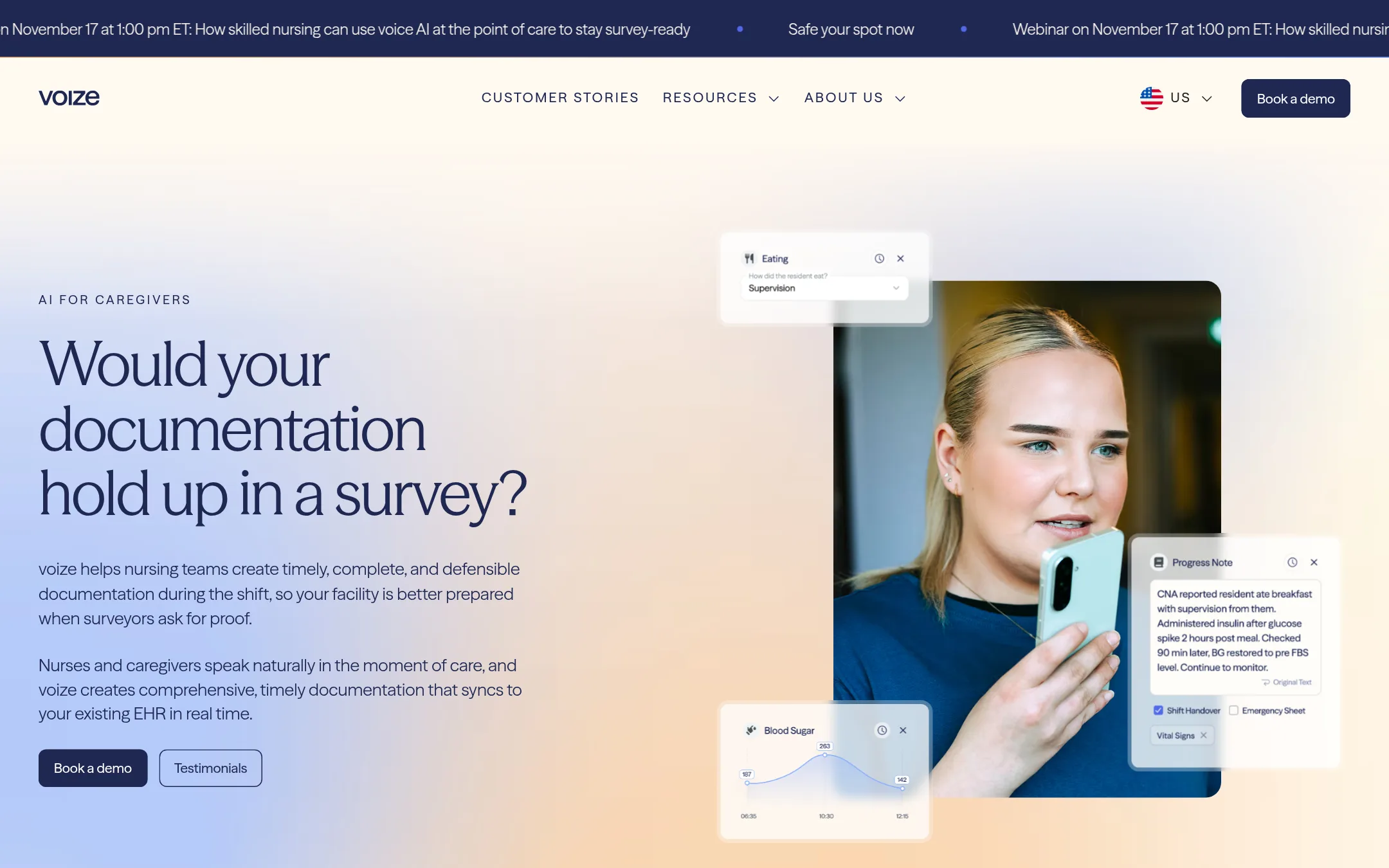
voize is a voice documentation app for skilled nursing and long-term care staff. Caregivers speak during the shift, and the AI turns that speech into structured entries that sync directly into the facility's existing EHR. It works offline and recognizes patient names, which matters on busy floors with spotty Wi-Fi.
Where it is strong
- Charting happens during care, with entries that sync straight into the existing EHR
- Works offline and syncs in the background once a connection returns
- Caregivers review and approve every entry on their phone before it is final
Where it falls short
- Built for long-term care, so it is not aimed at hospitals or outpatient clinics
- Pricing is not listed, so you need to book a demo to learn the cost
- Pricing:
- Pricing is not published on the site.
- Not published
8.Kabilah
Best for: Hospital nursing units and health systems on Epic or Meditech that want to cut charting and handoff time for bedside nurses
- Pricing
- Not published
- Category
- Healthcare
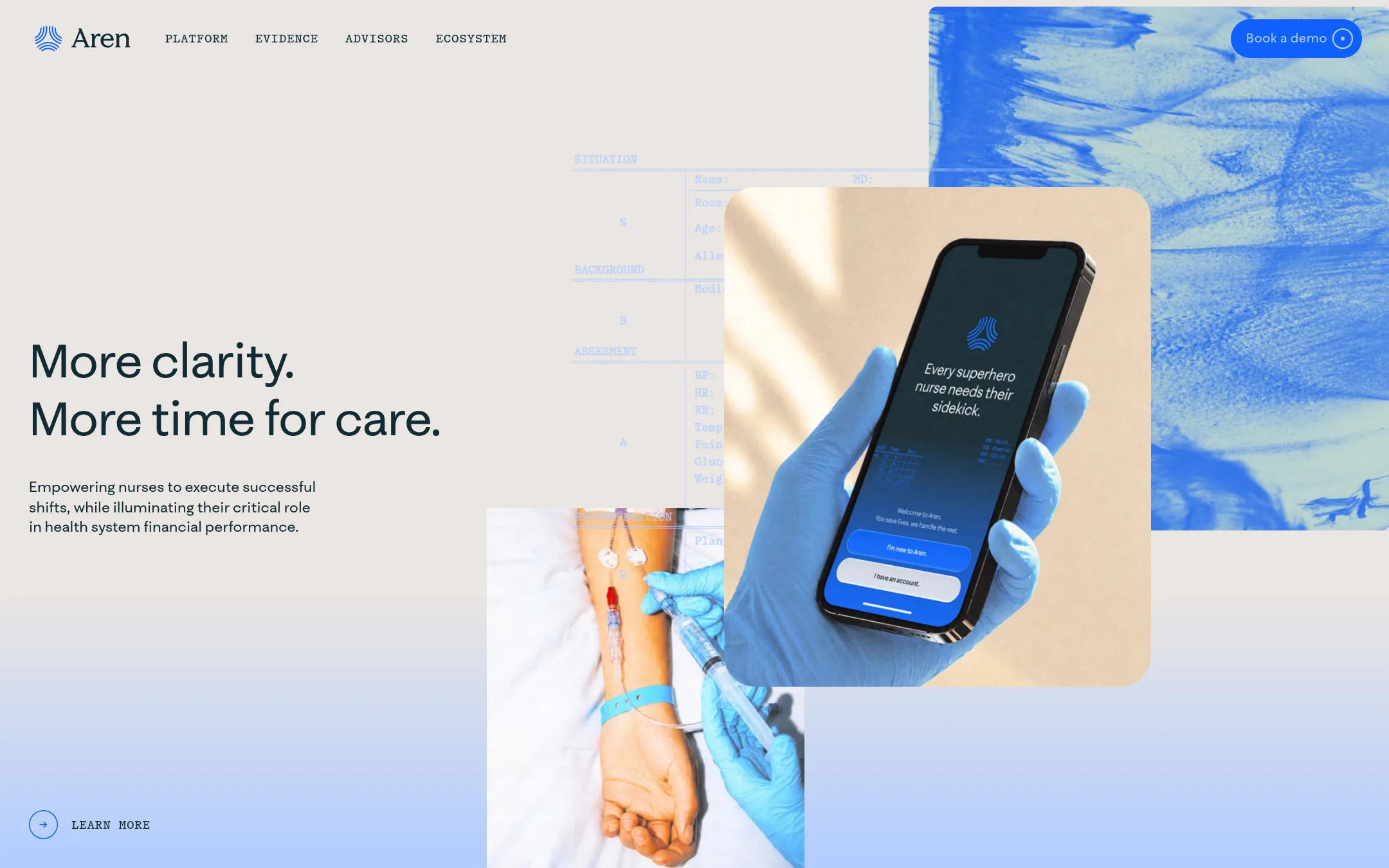
Aren is an agentic AI platform built for nurses, aimed at the shift itself: verbal handoffs, digital report sheets, task prioritization, and charting. It connects to Epic and Meditech through FHIR and exports notes into the EHR, so nurses are not rekeying the same patient details. It is HIPAA and SOC 2 Type II compliant, which matters for health systems weighing a clinical tool.
Where it is strong
- Checks verbal handoffs for missing critical information and flags inaccuracies
- Connects to Epic and Meditech using FHIR interoperability standards
- Offers SSO, role-based access controls, and a system-wide analytics console
Where it falls short
- Built specifically for nursing workflows, so it does not serve other clinical roles
- Only fits health systems on the EHRs it supports, and the site names Epic and Meditech only
- Pricing:
- Pricing is not published on the site.
- Custom quote
9.mdhub
Best for: Behavioral health clinics that spend hours each day on session notes and want admissions and billing handled by the same platform.
- Pricing
- Custom quote
- Category
- AI & Machine Learning
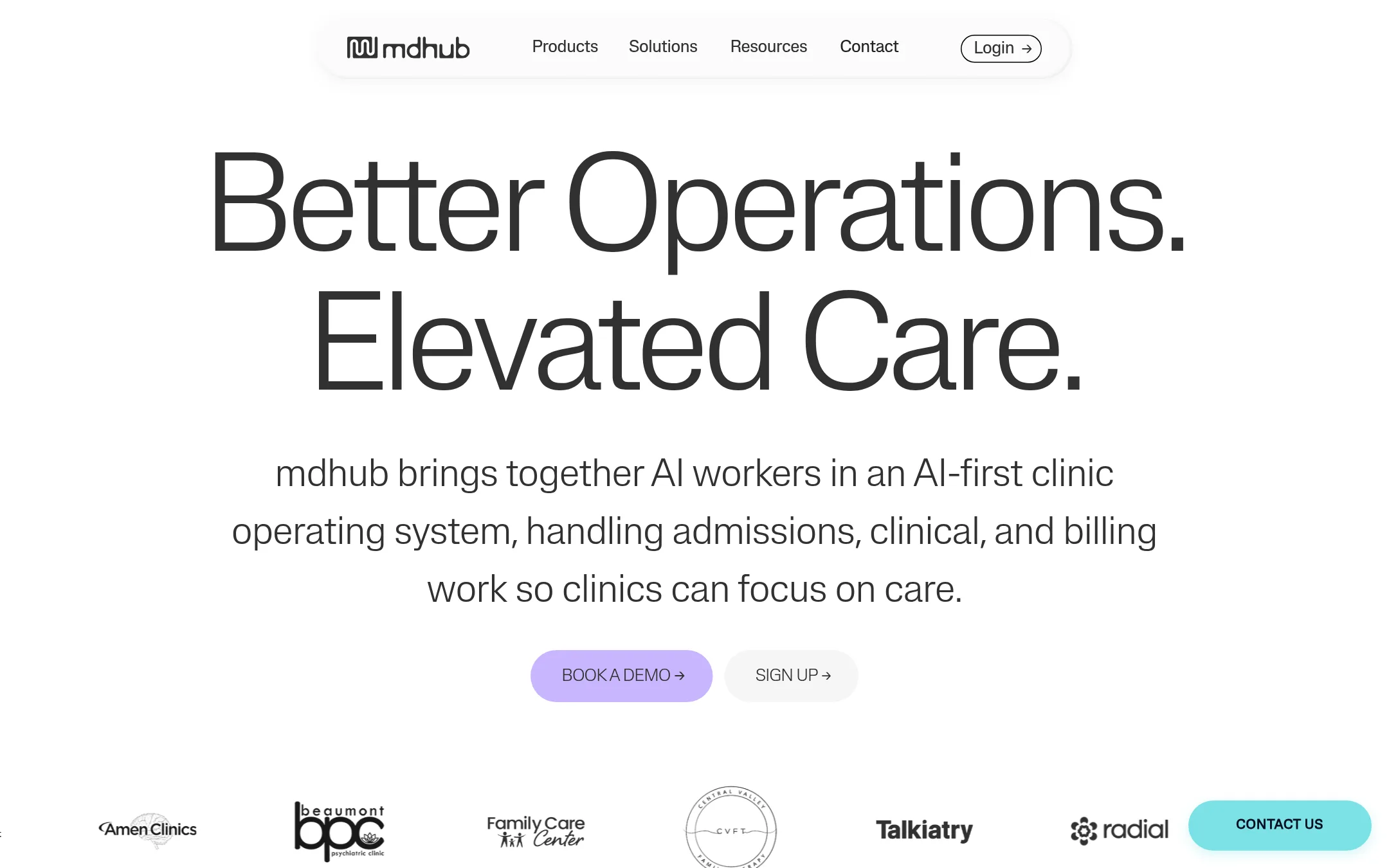
mdhub runs AI workers for behavioral health clinics across three areas: admissions, clinical documentation, and billing. Its clinical assistant, Emma, records sessions and generates structured notes with CPT codes drawn from the clinical context. The product is HIPAA-compliant and SOC 2 certified, which matters for a clinic handling patient records.
Where it is strong
- Handles admissions, clinical notes, and billing in one system.
- Generates notes during the session and assigns CPT codes from the clinical context.
- Supports multiple languages for patient conversations, with selectable output language.
Where it falls short
- Its focus is behavioral health, so it is a weak fit for general medical practices.
- The published text lists no dollar prices, so you will need to request a quote to compare costs.
- Pricing:
- The Professional tier includes up to 50 sessions per month, and the Enterprise tier offers unlimited sessions, with prices not stated in the published text.
- Not published
10.Delty
Best for: Health plans, IPAs, ACOs and medical groups that carry risk-bearing contracts and need risk, quality and care teams working from one record.
- Pricing
- Not published
- Category
- Healthcare
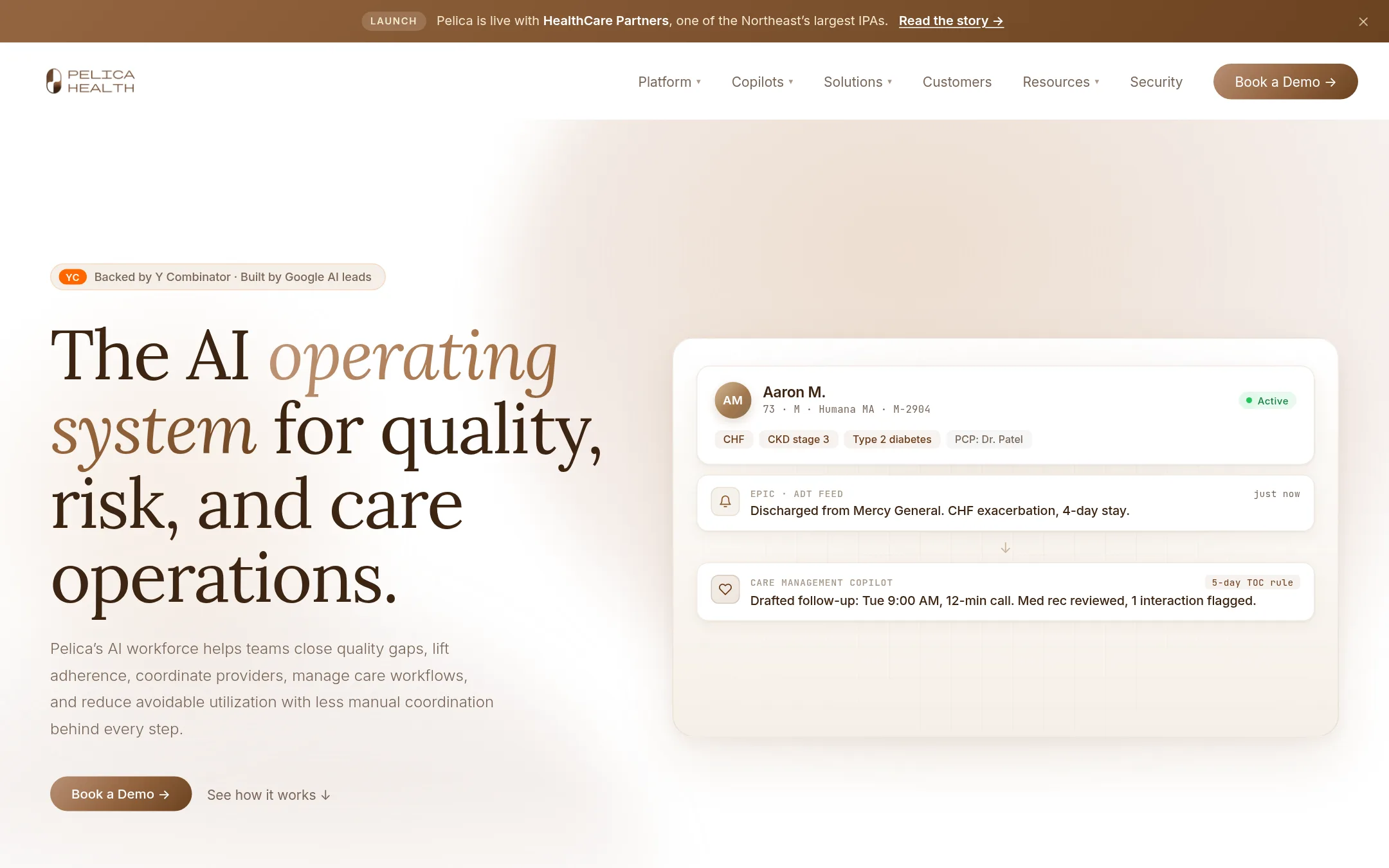
Pelica is an AI operating system for risk-bearing healthcare organizations such as health plans, IPAs, ACOs and medical groups. It runs 80+ specialized AI agents behind copilots for risk adjustment, quality, pharmacy and care management, all reading one shared patient record. One concrete detail: a physician-led IPA serving 200,000 members across New York used it to stop calling the same patient three times in one week.
Where it is strong
- Shared canonical record lets risk, quality, pharmacy and care teams avoid duplicate outreach
- Real-time HCC capture is designed to be RADV-defensible, with chain-of-custody on each captured HCC
- Security documentation such as a SOC 2 Type II report and BAA template is available on request
Where it falls short
- Pricing is not public, so you need a sales conversation to estimate cost
- Built for risk-bearing organizations, so it is a poor fit for teams on fee-for-service without value-based contracts
- Pricing:
- Pricing is not published on the site.
- Not published
11.Wedge
Best for: Large health systems, hospitals, health plans and multi-physician groups that want to automate back-office departments like billing, claims and records.
- Pricing
- Not published
- Category
- Healthcare
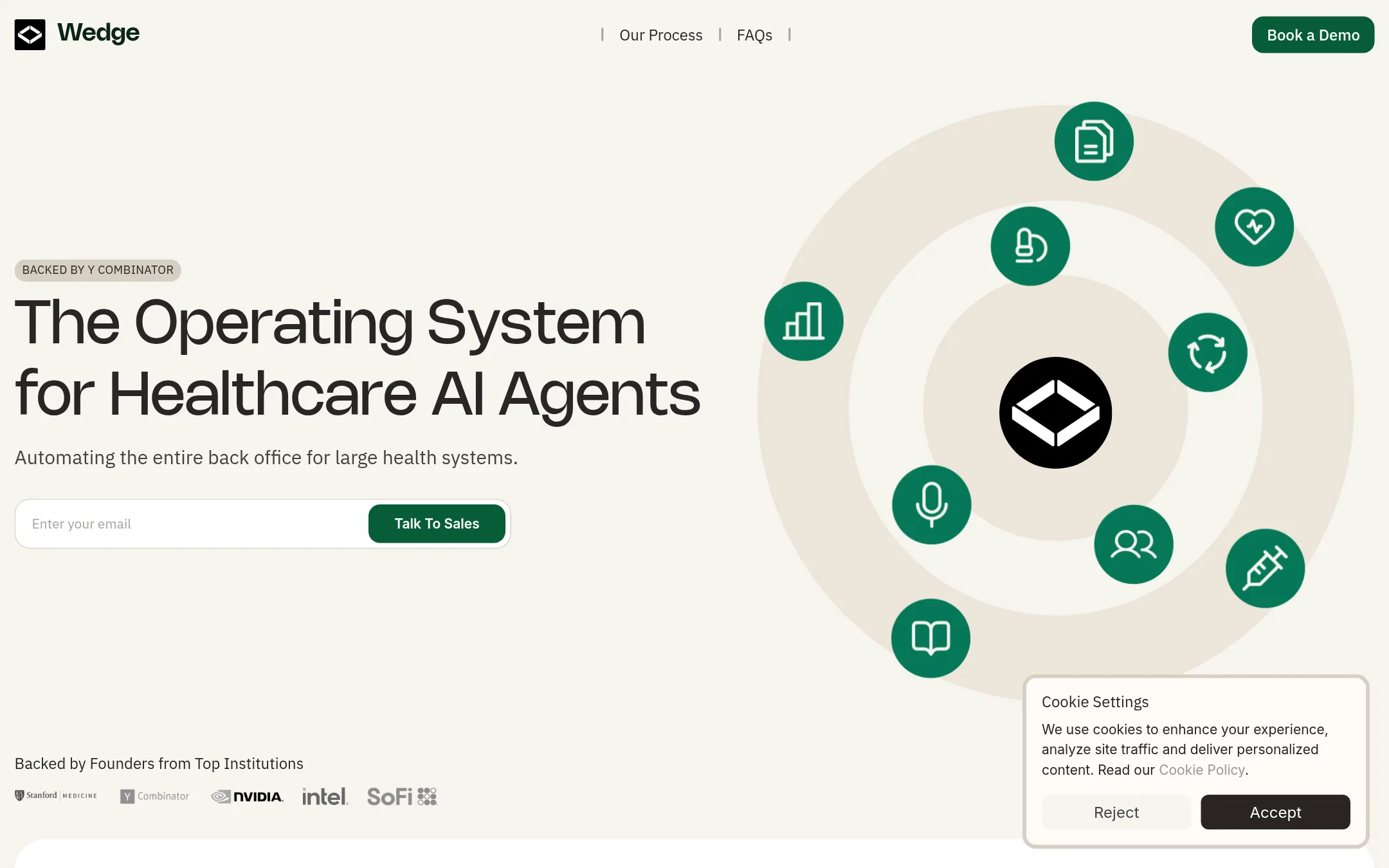
Wedge builds AI agents that automate back-office work for large health systems, starting with an audit that maps tasks and ties each agent to measurable outcomes like recaptured revenue and saved hours. Onsite forward-deployed engineers customize and maintain the agents, and the company is backed by Y Combinator. It reports $250,000 per year in savings for one client and says it has reached 60+ locations.
Where it is strong
- Covers billing, claims, coding, records retrieval and front-desk work in one platform
- Onsite engineers tailor each agent to the health system's workflows
- Each agent is tied to defined ROI targets before rollout
Where it falls short
- Built for large health systems, so smaller practices may not fit
- No public pricing, so budgeting requires a sales conversation
- Pricing:
- Pricing is not published on the site.
- Not published
12.Beacon Health
Best for: Primary care practices and value-based care teams that need repetitive EHR work like care gap closure and outreach automated across their patient panel.
- Pricing
- Not published
- Category
- Healthcare
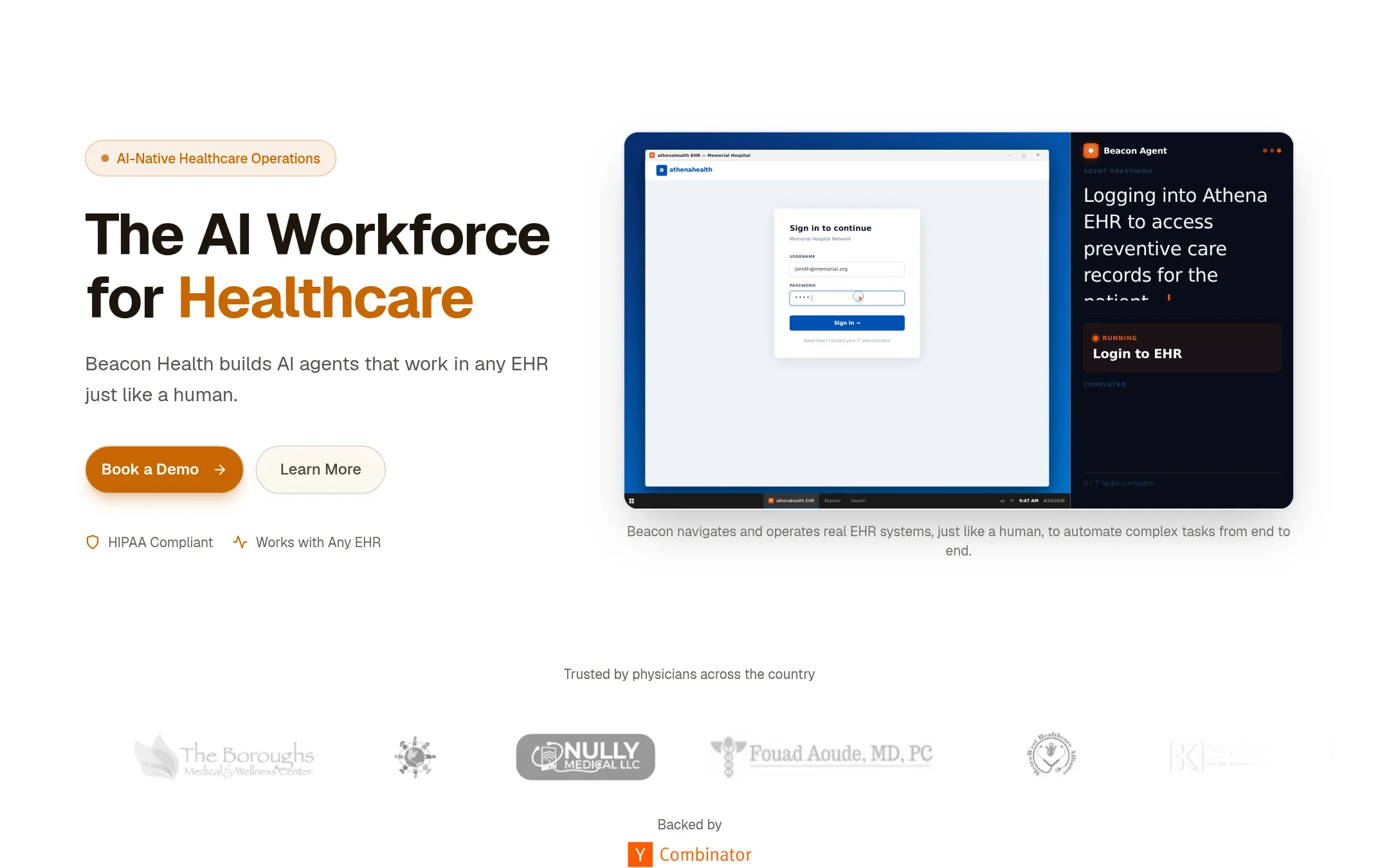
Beacon Health builds AI agents that operate EHR systems the way a person would, by recording a workflow's clicks, navigation and data entry and turning it into a reusable agent. It runs across AthenaHealth, Epic and ECW, which makes it a practical pick for practices that cannot wait for an EHR vendor to build an API. The ability to chain agents across patient charts, care gaps and outreach is what sets it apart from simpler automation tools.
Where it is strong
- Records real EHR workflows and converts them into reusable agents without custom integration
- Works across AthenaHealth, Epic and ECW, plus payer portals
- Lets you pause, review or intervene in any agent while it runs
Where it falls short
- No pricing is published, so you need a sales conversation to compare costs
- Its described focus is primary care and value-based care, so other specialties may find less fit
- Pricing:
- Pricing is not published on the site.
How to choose AI Healthcare Platforms
Start with pricing structure. Most platforms on this list do not publish prices, and several are sold through demos or contracts. Ask for per-seat, per-session, per-agent or enterprise quotes in writing so you can compare them on equal terms.
Check who the product is built for. A tool designed for health systems with large clinician teams may not suit a small independent practice, and a platform built for long-term care may not fit a hospital. Matching the product to your setting matters more than feature count.
Confirm integrations before you commit. Some products connect to specific EHRs, such as Epic, Meditech, AthenaHealth or ECW, while others work through the existing record or through screen-level automation. If your EHR is not on the vendor's list, the product may not deliver the time savings promised.
Review data handling and compliance. Several products on this list state HIPAA compliance, SOC 2 certification or a willingness to provide security documentation and a business associate agreement. Ask for these documents early, especially for any tool that records patient conversations.
Ask about support and contract terms. Some vendors offer onsite engineering, ongoing maintenance or customization, while others run on self-serve setup. Clarify contract length, implementation timeline and who is responsible for maintaining the agents or workflows after launch.
FAQ
Questions about AI Healthcare Platforms
What are AI healthcare platforms?
AI healthcare platforms use artificial intelligence to perform healthcare tasks such as documentation, scheduling, billing, symptom checking or research support. The products on this list cover clinical workflows, patient access, back-office operations and drug discovery. Each one targets a different job within healthcare.
How much do AI healthcare platforms cost?
Most of the platforms on this list do not publish prices on their websites. Cost usually has to be settled through a demo or sales conversation. Ask each vendor for a written quote that states the pricing unit, such as per seat, per session or per agent.
Do AI healthcare platforms need to integrate with an EHR?
Many do, and the EHR matters a great deal. Some products connect to specific systems such as Epic, Meditech, AthenaHealth or ECW, while others work through screen-level automation. Confirm that your EHR is supported before you assume the time savings will apply.
Are AI healthcare platforms HIPAA compliant?
Some are. Several products on this list state HIPAA compliance or SOC 2 certification, and some offer a business associate agreement on request. Verify these details directly with the vendor and request the documentation before handling patient data.
Who should choose an AI healthcare platform?
The right buyer depends on the product. Pharma and biotech teams may need research-focused tools, clinics may need documentation and billing help, and health systems may need back-office automation. Each product on this list is aimed at a specific kind of organization, so match the tool to your setting first.
Last updated November 8, 2026.