11 Best AI Testing Tools in 2026
Updated November 8, 2026
The short answer
The three strongest AI testing tools on this list are Momentic, Stably AI, and Autosana. Momentic suits engineering teams that want end-to-end tests on every pull request without heavy maintenance. Stably AI suits startups and product teams where QA, PM, and engineering all touch release checks. Autosana suits mobile and web engineering teams that ship often and want to stop maintaining brittle UI scripts.
The shortlist, at a glance
Read the comparisons ↓Stably AIFrom $10/mo, creditsStartups and product teams where QA, PM, and engineering all touch release checks and want tests that stay reliable without constant upkeep.
 Armilla AINot publishedAI developers, vendors and deployers in financial services, HR and hiring, or retail that need written AI liability cover to show enterprise customers or regulators.
 Bronco AINot publishedChip design and verification teams, from fast-moving startups to large chip companies, that want AI help with testbench bring-up, regression triage and coverage closure.
 MomenticFree plan, $125/10k crEngineering teams that want end-to-end tests on every pull request without spending hours maintaining a brittle test suite
 SuperagentFree tier, from $499/mSoftware teams that ship AI agents or run coding agents and want always-on security testing without replacing their current tools
 IntrycNot publishedCustomer support teams that want AI to score every conversation and turn those scores into agent coaching
 BlaxelUsage-based, $200 freeEngineering teams building autonomous agents that run for long periods, go idle, and need to pick up where they left off.
 KashikoiNot publishedStartups and product teams shipping AI agents that want to catch failures in simulation before real users hit them
 DocketNot publishedQA teams and product companies that need broad regression coverage across mobile, web and desktop without a large QA staff
 PlaygentNot publishedFinance and banking AI teams that need domain-specific environments to post-train agents on tasks like LBO modeling, earnings normalization, and merger synergy analysis.
 AutosanaFree tier, then $0.10/Mobile and web engineering teams that ship often and are tired of maintaining brittle UI test scripts.
About AI Testing Tools
AI testing tools use artificial intelligence to create, run, repair, and analyze software tests. They help teams write tests from plain language, keep tests working when the interface changes, and sort failures by cause so engineers spend less time on upkeep.
The products on this list differ in approach and scope. Some focus on end-to-end tests for web and mobile apps, such as Momentic, Stably AI, and Autosana. Others target specific domains, including chip verification with Bronco AI, customer support QA with Intryc, and finance agent environments with Playgent. Pricing models vary as well, from credit-based plans to usage-based pay-as-you-go, while several vendors do not publish prices.
The 11 best AI Testing Tools, compared
- From $10/mo, credits
1.Stably AI
Best for: Startups and product teams where QA, PM, and engineering all touch release checks and want tests that stay reliable without constant upkeep.
- Pricing
- From $10/mo, credits
- Category
- AI & Machine Learning
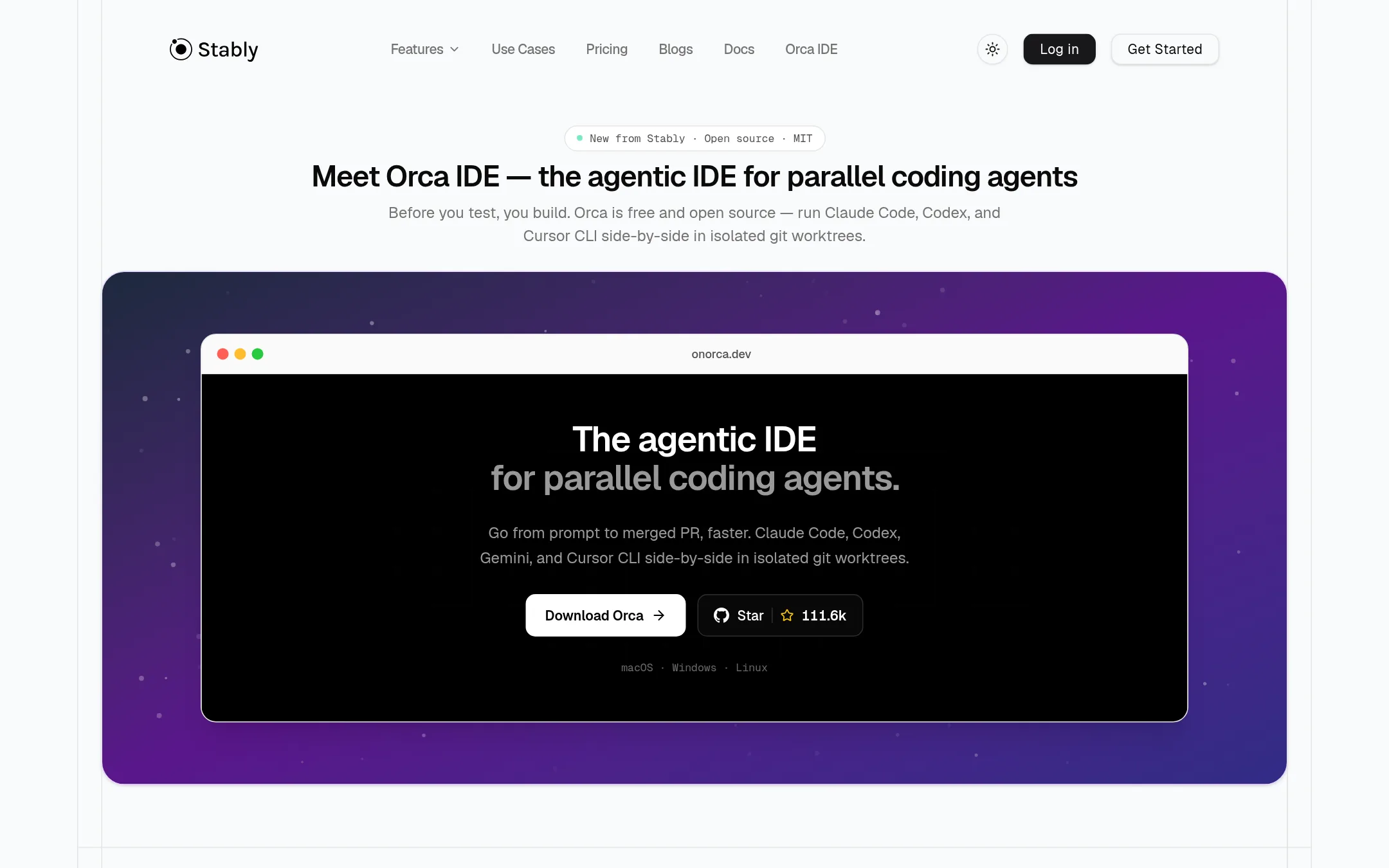
Stably AI takes plain-English test descriptions, or a recording of a flow, and turns them into reviewable Playwright tests. It runs them in the cloud or in your CI with screenshots, traces, and recordings, and it proposes fixes when a test drifts from the product. Changes sync both ways with your Git repo, so engineers can edit the Playwright code directly.
Where it is strong
- Writes Playwright tests from plain English or recordings, with steps you can review
- Syncs cloud edits and repo code bidirectionally, so engineers keep control in Git
- Flags test drift and likely real bugs for review instead of silently changing tests
Where it falls short
- Credit-based usage means costs depend on browser time and AI model choice, which takes some tracking to predict
- Enterprise features such as SAML SSO, SLAs, and 24/7 support sit behind a custom tier
- Pricing:
- Plans start at $10 per month with $10 of included credits on Hobby, then $60 per month on Team and $250 per month on Growth, with Enterprise pricing available for teams spending over $1k per month.
- Not published
2.Armilla AI
Best for: AI developers, vendors and deployers in financial services, HR and hiring, or retail that need written AI liability cover to show enterprise customers or regulators.
- Pricing
- Not published
- Category
- AI & Machine Learning
Armilla AI sells affirmative AI liability insurance, a standalone policy that names AI failure modes such as model errors, hallucinations, agent mistakes and regulatory violations. Most general policies were written before generative AI and some insurers now add AI exclusions, so a named AI policy is the point of difference. It is underwritten by Lloyd's underwriters and backed by Chaucer, AXIS Capital and Convex, with limits up to US$25 million aggregate per insured.
Where it is strong
- Names specific AI failure modes, including hallucinations, agent mistakes and AI regulatory violations
- Backed by Lloyd's underwriters and named carriers Chaucer, AXIS Capital and Convex
- Limits up to US$25 million aggregate per insured and up to US$5 million per model
Where it falls short
- Coverage is offered only through licensed surplus lines brokers in the US and Canada
- No published pricing, so cost must be discussed directly and no coverage is bound until written confirmation after underwriting
- Pricing:
- Pricing is not published on the site.
- Not published
3.Bronco AI
Best for: Chip design and verification teams, from fast-moving startups to large chip companies, that want AI help with testbench bring-up, regression triage and coverage closure.

- Pricing
- Not published
- Category
- AI & Machine Learning
Bronco is an AI system for chip design verification that reads specs, builds test plans, and generates UVM stimulus and checkers. It also triages nightly regression failures and debugs failing simulations by reading waveforms, logs, RTL and spec. The site says it is deployed on-prem and cites a claim of taking root-cause time from days to 15 minutes.
Where it is strong
- Covers spec review, testbench bring-up, regression triage and simulation debug in one system
- Handles large files, including waveforms over 100GB, from block to SoC level
- Onboarding runs in stages: a day 0 bring-up, sample runs in weeks 1-2, and an evaluation on a real block in week 3 and beyond
Where it falls short
- It is built for ASIC verification teams, so it is not relevant to general software testing
- Deployment is on-prem and the site does not list pricing, so buyers need to contact the company for cost and terms
- Pricing:
- Pricing is not published on the site.
- Free plan, $125/10k cr
4.Momentic
Best for: Engineering teams that want end-to-end tests on every pull request without spending hours maintaining a brittle test suite
- Pricing
- Free plan, $125/10k cr
- Category
- Developer Tools
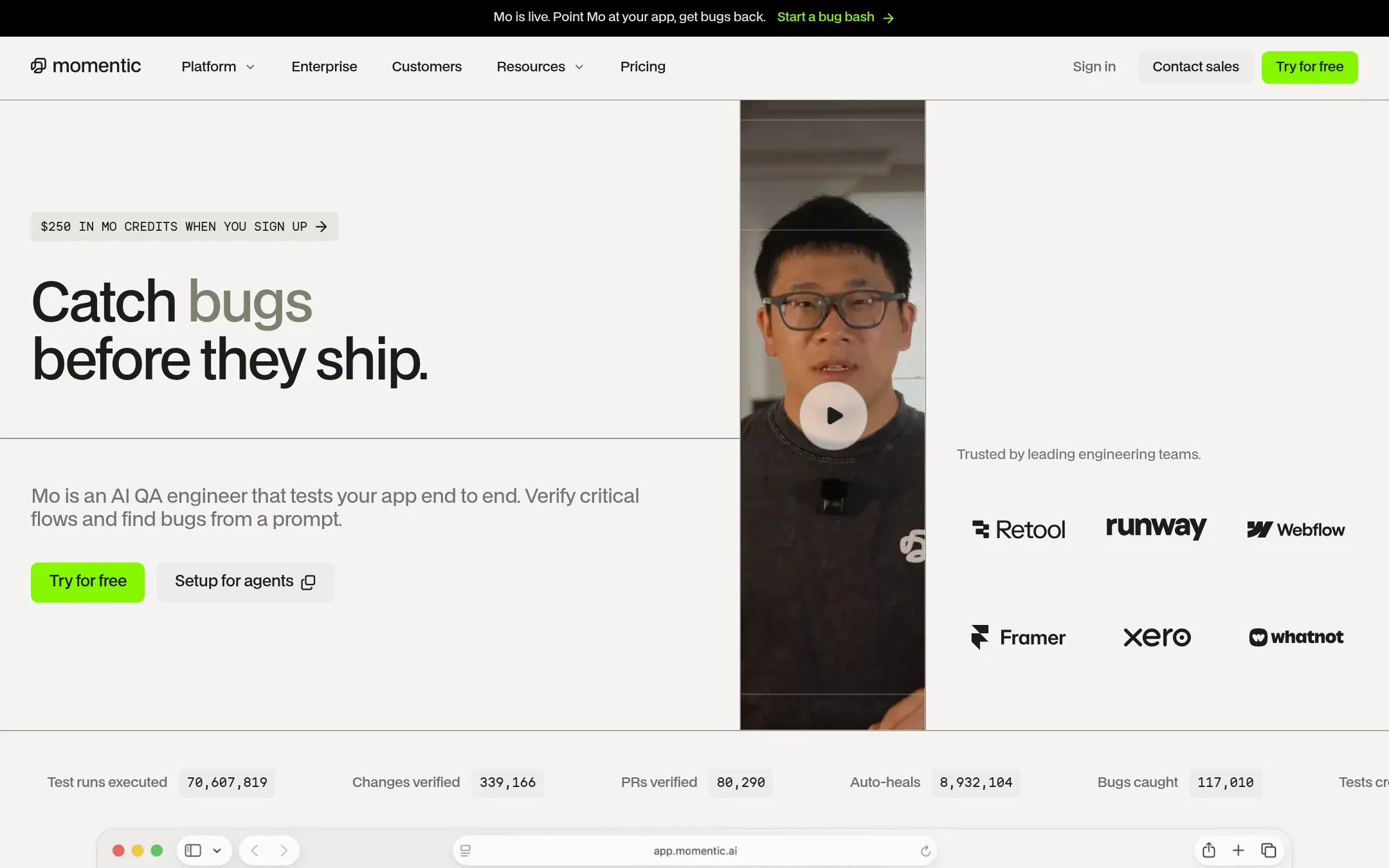
Momentic is an AI-native end-to-end testing platform. You write tests as plain-English YAML, run them locally and in CI, and it repairs selectors when the UI changes. It also shows screenshots and traces for each failure and classifies failures as app bugs, flakiness, or environment issues. The site says it is SOC 2 Type 2 certified, which matters for teams with compliance needs.
Where it is strong
- Tests are written in plain-English YAML that engineers and coding agents can both review
- Failures include screenshots and traces, and AI triage sorts them by cause
- Permanent healing proposes test-file repairs for review when the UI changes
Where it falls short
- Costs are metered in credits per step, browser minute and AI feature, so heavy AI use can be hard to forecast
- Mobile emulator sessions are capped at 15 minutes on lower plans and need Enterprise for longer runs
- Pricing:
- Free plan includes 2,000 credits per month, Pay-as-you-go includes 10,000 credits per month at $125 per additional 10,000-credit block, and Enterprise uses custom test-based pricing.
- Free tier, from $499/m
5.Superagent
Best for: Software teams that ship AI agents or run coding agents and want always-on security testing without replacing their current tools
- Pricing
- Free tier, from $499/m
- Category
- Security & Privacy
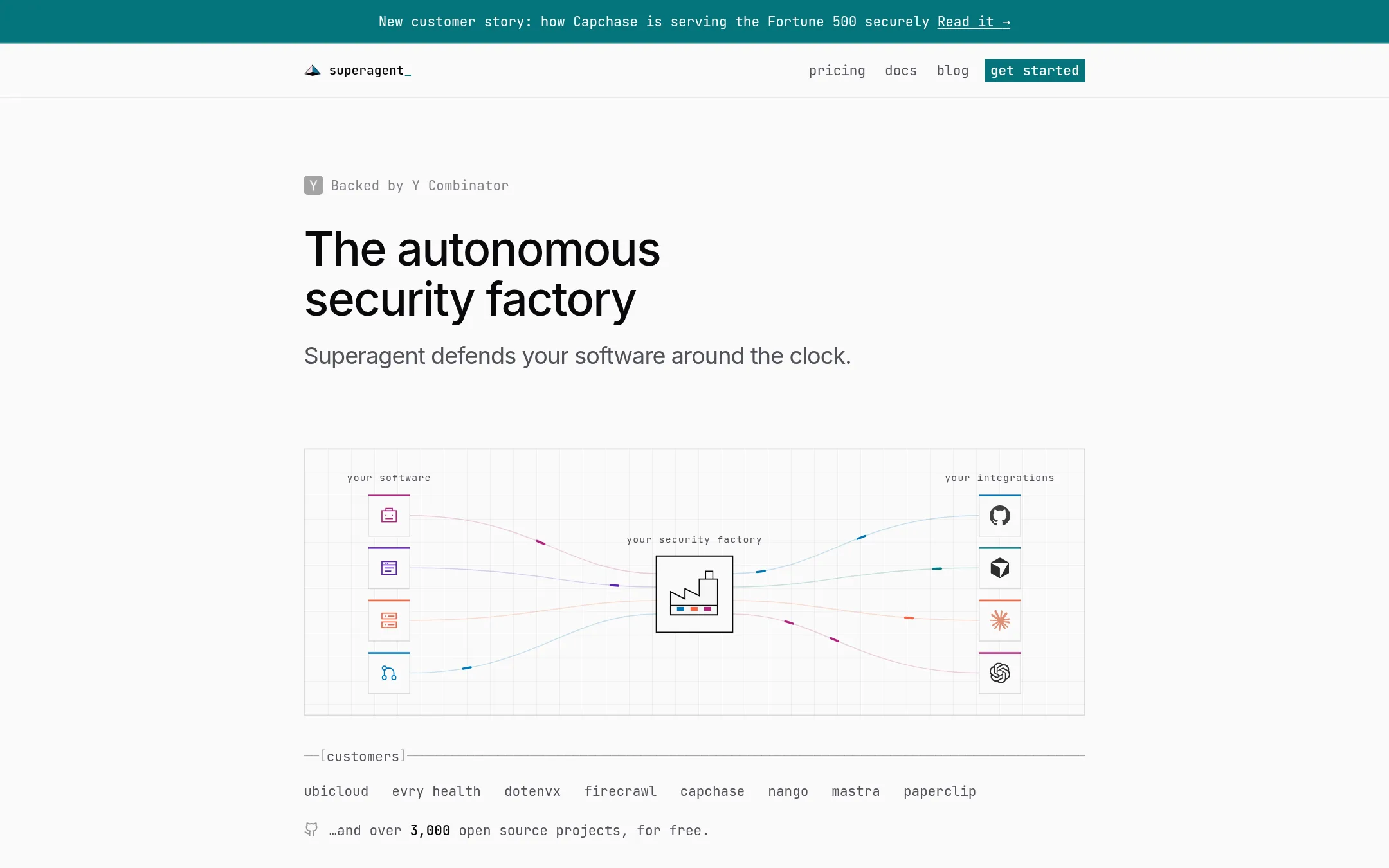
Superagent is an autonomous security service that runs red team exploit testing, PR security scans, and guardrails for AI agents. It works with the tools and workflows a team already runs, so there is no replacement project to adopt. Its open-source plan is free for public repositories, and it updates its own triage through a self-learning loop.
Where it is strong
- Red teams applications and reports exploit paths an attacker would use
- Turns vulnerable dependencies into tested pull requests ready to merge
- Unlimited seats and every feature on each plan, including API and MCP access
Where it falls short
- Credits meter private repository usage, so heavy scanning means watching the monthly allowance
- Paid private-repository plans start at $499 per month, which may be steep for very small teams
- Pricing:
- Open-source repositories are free, private repositories have a free tier with 100 credits per month, and paid plans run $499, $1,499, and from $3,999 per month.
- Not published
6.Intryc
Best for: Customer support teams that want AI to score every conversation and turn those scores into agent coaching
- Pricing
- Not published
- Category
- Customer Support
Intryc uses AI to score customer support conversations, moving QA from manual sampling to full coverage. It also turns findings into coaching, quizzes, and pre-launch agent simulations, so the scoring feeds directly into training. Deel reports that it doubled its QA evaluation capacity without adding headcount, and the platform connects to over 40 apps with SOC 2, GDPR, and HIPAA compliance listed.
Where it is strong
- Scores every conversation with AI scorecards instead of manual sampling
- Connects QA findings to coaching and simulations in one system
- Lists one-click integration with over 40 apps and SOC 2, GDPR, and HIPAA compliance
Where it falls short
- Pricing is not published, so budgeting requires a sales conversation
- Its focus is customer support QA, so teams wanting general-purpose AI testing may need a different tool
- Pricing:
- Pricing is not published on the site.
- Usage-based, $200 free
7.Blaxel
Best for: Engineering teams building autonomous agents that run for long periods, go idle, and need to pick up where they left off.
- Pricing
- Usage-based, $200 free
- Category
- AI & Machine Learning
Blaxel gives each agent its own isolated microVM that boots in milliseconds and resumes from standby in about 25ms with memory state intact. It also offers persistent file systems and programmable networking with outbound firewalling and static IPs. The fast resume and per-agent isolation are what set it apart for teams running agents that sit idle and wake up mid-task.
Where it is strong
- Sandboxes resume from standby in about 25ms with memory state intact.
- Suspended time does not count toward active CPU billing.
- Outbound firewalling, static IPs and a managed egress proxy give fine control over what agents can reach.
Where it falls short
- Agent Runtime and MCP server pricing are listed as coming soon or still being rolled out, so parts of the stack are not yet fully available.
- Dedicated deployments with up to 256 GB RAM per sandbox require a custom quote, and pricing for those is not published.
- Pricing:
- Pay-as-you-go pricing is usage-based with up to $200 in free credits, and active CPU is billed at $0.0000115 per GB RAM per second, with suspended time not counted.
- Not published
8.Kashikoi
Best for: Startups and product teams shipping AI agents that want to catch failures in simulation before real users hit them
- Pricing
- Not published
- Category
- AI & Machine Learning
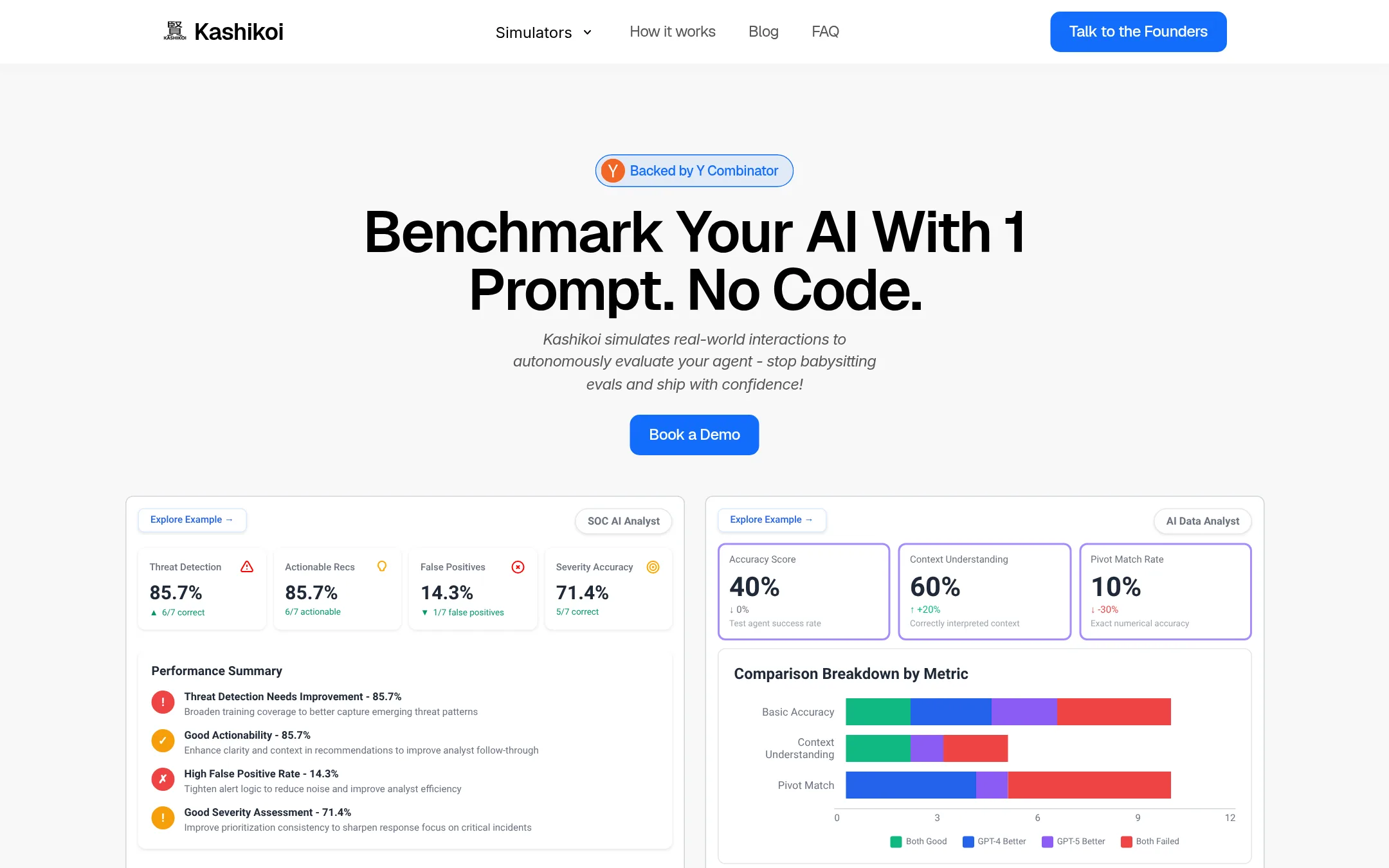
Kashikoi is a simulation platform that tests AI agents by running them through simulated real-world interactions, so bugs show up before customers see them. You can benchmark an agent with a single prompt and without writing code. The company is backed by Y Combinator, and the platform builds custom connectors for your AI stack when the standard ones do not cover it.
Where it is strong
- Benchmarks an agent from one prompt, with no code required
- Builds custom connectors for your AI stack to give fuller test coverage
- Gives actionable insights and synthetic data for tuning prompts and models
Where it falls short
- Pricing is not published, so you need to book a demo to learn costs
- Its own site does not list which specific AI frameworks come pre-supported
- Pricing:
- Pricing is not published on the site.
- Not published
9.Docket
Best for: QA teams and product companies that need broad regression coverage across mobile, web and desktop without a large QA staff
- Pricing
- Not published
- Category
- Developer Tools
Docket uses AI agents to test mobile, web and desktop apps from one platform. It records user interactions and self-heals tests when UI elements move, so scripts do not break after every interface change. It also handles flows that branch based on user input or app state.
Where it is strong
- Covers mobile, web and desktop from one platform
- Self-heals tests when elements move, cutting script maintenance
- Handles dynamic flows that change with user input or state
Where it falls short
- Pricing is not published, so cost must be confirmed with the vendor
- The listing is not verified, so buyers should check claims in a trial
- Pricing:
- Pricing is not published on the site.
- Not published
10.Playgent
Best for: Finance and banking AI teams that need domain-specific environments to post-train agents on tasks like LBO modeling, earnings normalization, and merger synergy analysis.
- Pricing
- Not published
- Category
- AI & Machine Learning
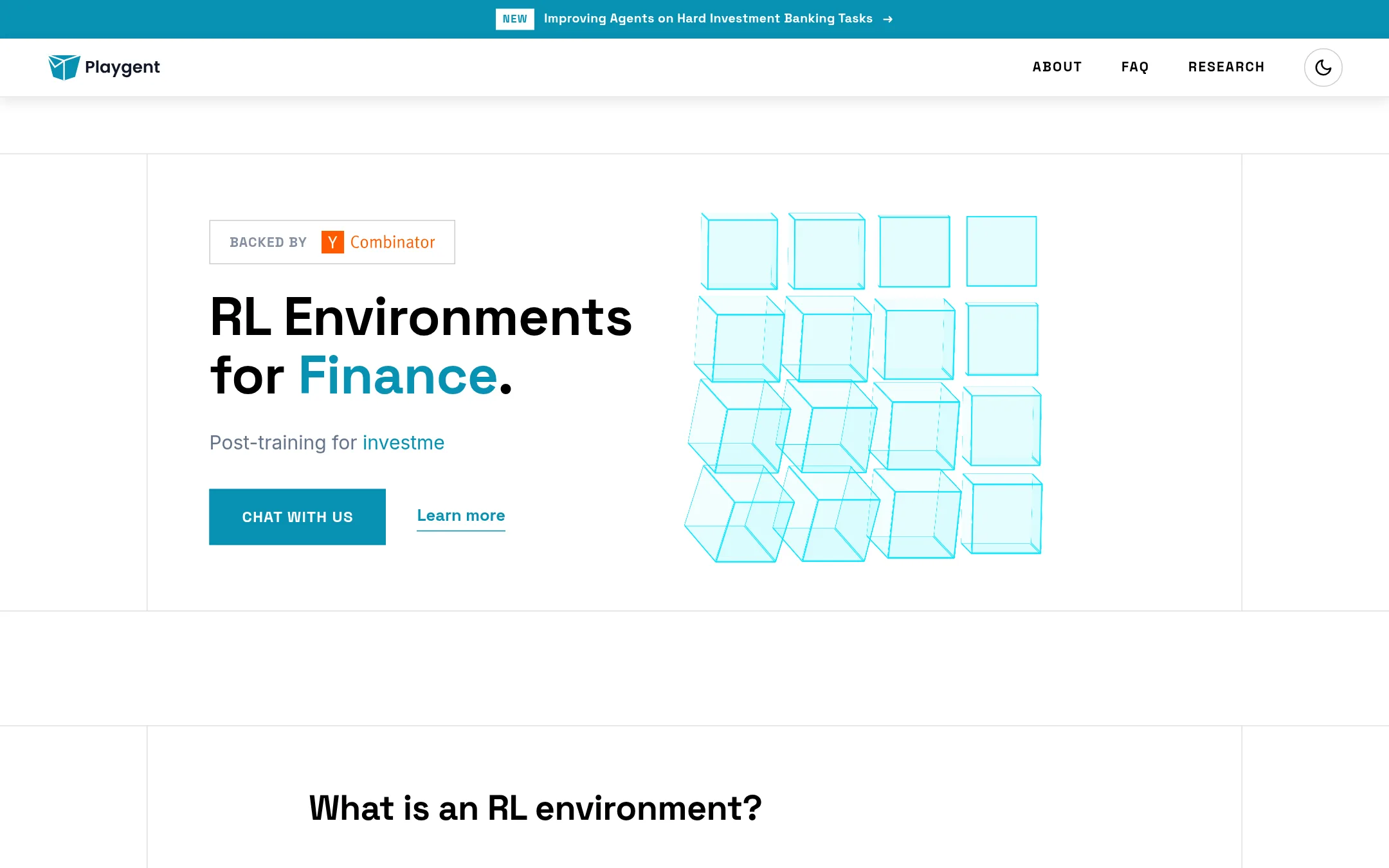
Playgent builds reinforcement learning environments for finance, including tasks, verification rubrics, and simulated market conditions. Its tasks are written and checked by a network of finance experts, which matters if you need agents to handle real analyst work. Examples on the site include LBO returns analysis and Adjusted EBITDA normalization.
Where it is strong
- Tasks and verifiers are written by finance experts, not generic benchmarks
- Covers concrete workflows such as LBO returns, Adjusted EBITDA, and synergies
- Agent performance is benchmarked, so you can measure progress against a reference
Where it falls short
- Built for finance and banking, so it is a poor fit for teams testing agents in other domains
- No public pricing, so you must contact the company to learn cost and access terms
- Pricing:
- Pricing is not published on the site.
- Free tier, then $0.10/
11.Autosana
Best for: Mobile and web engineering teams that ship often and are tired of maintaining brittle UI test scripts.
- Pricing
- Free tier, then $0.10/
- Category
- Developer Tools
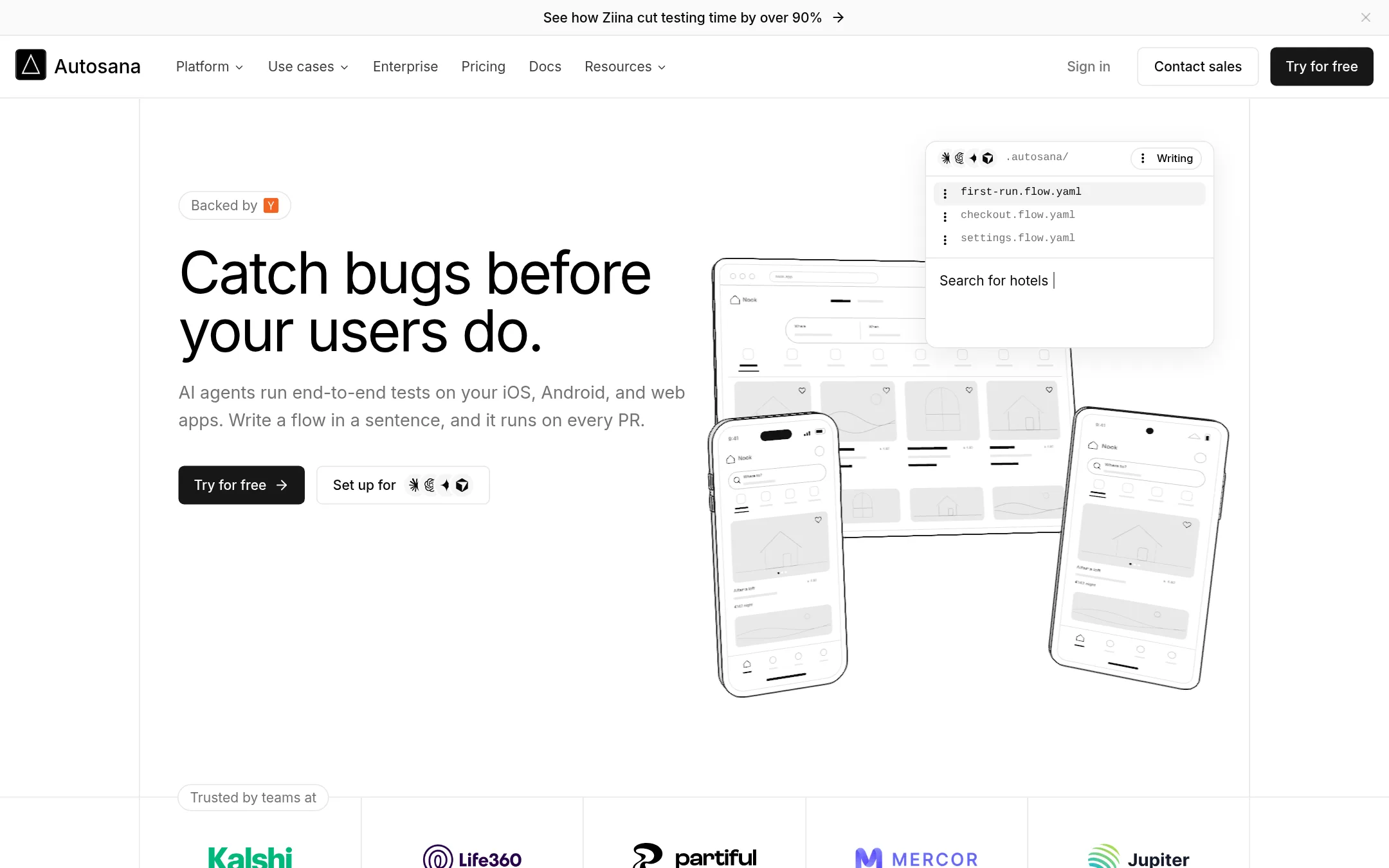
Autosana runs end-to-end tests on iOS, Android, and web apps from plain-language descriptions of user journeys, such as adding a hoodie to a bag and checking out. Tests run on every pull request, and flows adapt when the UI changes as long as the user journey stays intact. Engineers can drive it through the CLI, API, or MCP, so a coding agent can run and fix flows before a PR is opened.
Where it is strong
- Write flows in a sentence or two, with no selectors or scripts to maintain.
- Runs on every pull request and posts results and videos directly on the PR.
- Works with iOS, Android, and web, and tests can live in your repo as code.
Where it falls short
- Usage-based pricing means costs rise with run volume, and the free tier includes only one cloud session.
- Physical device sessions and SSO are limited to higher tiers, so smaller teams may need to upgrade for those needs.
- Pricing:
- Pricing is usage-based with 1,000 free AI actions refilled every month, then $0.10 per AI action and $0.01 per cached action, with Startup and Pro plans listed at 15,000 and 50,000 AI actions per month.
How to choose AI Testing Tools
Start with pricing structure. Several tools meter costs in credits, AI actions, or active compute time, so heavy use can be harder to forecast than a flat plan. Estimate your likely test volume before you commit.
Check who the product is built for. A tool made for mobile and web engineering teams will not fit an ASIC verification group, and a finance-focused environment will not help a support team score conversations. Match the product to your actual job.
Look at integrations and where tests live. Some tools sync with your Git repository so engineers can edit the code directly, while others run tests as part of pull request checks or through a CLI and API. Confirm the tool fits your existing workflow.
Review data handling and compliance. Some vendors list SOC 2, GDPR, or HIPAA certification, and some offer on-prem deployment. If your data is sensitive, verify these claims and ask for documentation before signing.
Finally, read the support and contract terms. Enterprise features such as SSO, SLAs, and 24/7 support often sit behind custom tiers, and some vendors require a sales conversation before revealing pricing.
FAQ
Questions about AI Testing Tools
What are AI testing tools?
AI testing tools use artificial intelligence to help create, run, and maintain software tests. Many let teams write tests in plain English, repair tests when the interface changes, and classify failures as app bugs, flakiness, or environment issues. Some also target specialized areas such as chip verification or customer support QA.
How do AI testing tools handle changes to the user interface?
Several tools on this list repair their tests automatically when interface elements move or change. Momentic repairs selectors and proposes test-file fixes for review, and Autosana adapts flows as long as the user journey stays intact. Docket also self-heals tests when elements move.
How is pricing usually structured for these tools?
Pricing varies widely across this list. Momentic and Autosana meter usage in credits or AI actions, Stably AI uses tiered monthly plans with credits, and Blaxel uses pay-as-you-go billing based on active compute. Many vendors, including Armilla AI, Bronco AI, and Intryc, do not publish prices and require a sales conversation.
Can engineers still control the tests the AI writes?
Yes. Stably AI syncs changes both ways with your Git repo so engineers can edit the Playwright code directly, and Momentic writes tests as plain-English YAML that engineers and coding agents can review. Autosana can store tests in your repo as code, so they go through normal review.
Do these tools meet compliance requirements?
Some do, but this varies by product. Momentic states it is SOC 2 Type 2 certified, and Intryc lists SOC 2, GDPR, and HIPAA compliance. Bronco AI deploys on-prem. Buyers with strict requirements should verify these claims and request documentation before committing.
Last updated November 8, 2026.