6 Best Data Integration Platforms in 2026
Updated October 16, 2026
The short answer
For most data teams, Fivetran is the strongest pick for automated, high-volume pipelines into warehouses and lakes. Airbyte suits teams that want deployment flexibility and a large open-source connector library. Stitch is a solid choice for smaller teams needing simple, code-free syncs from 130+ sources.
The shortlist, at a glance
Read the comparisons ↓ AirbyteFrom $189/moTeams that need to move data from many sources into analytics or AI agents and want deployment flexibility from cloud to on-prem.
 FivetranFree plan, usage-basedData teams that need to automate high-volume pipelines from many sources into a warehouse or lake, especially for analytics and AI initiatives.
 StitchFrom 5M rows/mo, custoData engineers and business analysts who want to automate pipeline management and sync data from 130+ sources without writing complex code.
 TalendNot publishedTeams that need a mature data integration platform with strong data quality and governance, especially those preparing data for AI and analytics.
 TolemiNot publishedState and local government teams that need to break down departmental silos and act on property, housing, and inspection data.
 ElevateNot publishedPrivate equity firms and roll-up operators that need to unify data from multiple acquired businesses into one system.
About Data Integration Platforms
Data integration platforms move data from source systems into warehouses, lakes, or other destinations. They automate the extraction, loading, and transformation work that would otherwise require custom scripts and ongoing maintenance. These platforms handle schema changes, monitor pipeline health, and prepare data for analytics or AI workloads.
The products on this list differ in approach, scale, and pricing. Airbyte offers open-source flexibility with hybrid deployment. Fivetran focuses on fully managed automation at enterprise scale. Stitch provides a simpler, row-based pricing model. Talend adds data quality and governance. Tolemi and Elevate target specific verticals like local government and private equity roll-ups.
The 6 best Data Integration Platforms, compared
- From $189/mo
1.Airbyte
Best for: Teams that need to move data from many sources into analytics or AI agents and want deployment flexibility from cloud to on-prem.
- Pricing
- From $189/mo
- Category
- Analytics & Data
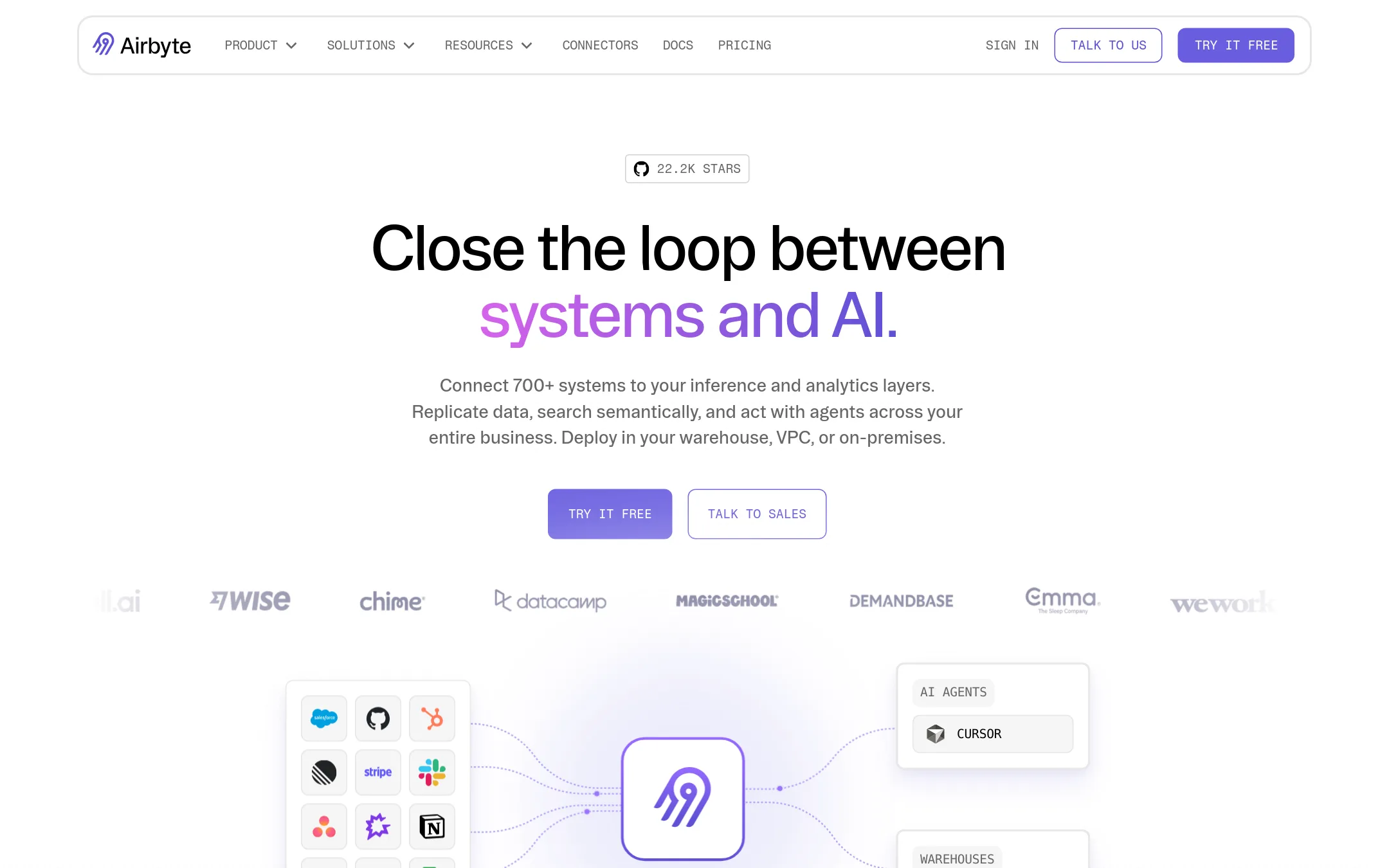
Airbyte is an open-source data movement platform that runs ELT pipelines across 700+ connectors to warehouses, lakes, vector databases, or AI agents. It offers a Context Store for cross-system queries and real-time read/write access via MCP, SDK, and CLI. The hybrid deployment option keeps data in your environment while Airbyte manages the control plane.
Where it is strong
- 700+ pre-built connectors with one-click setup
- Hybrid deployment keeps data in your environment
- Context Store enables cross-system semantic search
Where it falls short
- Pricing is volume-based on Standard, which can grow with data
- Plus plan requires 40+ credits monthly to be cost-effective
- Pricing:
- Standard starts at $195/mo and Plus at $189/mo with 40 credits. Pro and Enterprise Flex use capacity-based pricing on Data Workers.
- Free plan, usage-based
2.Fivetran
Best for: Data teams that need to automate high-volume pipelines from many sources into a warehouse or lake, especially for analytics and AI initiatives.
- Pricing
- Free plan, usage-based
- Category
- Analytics & Data
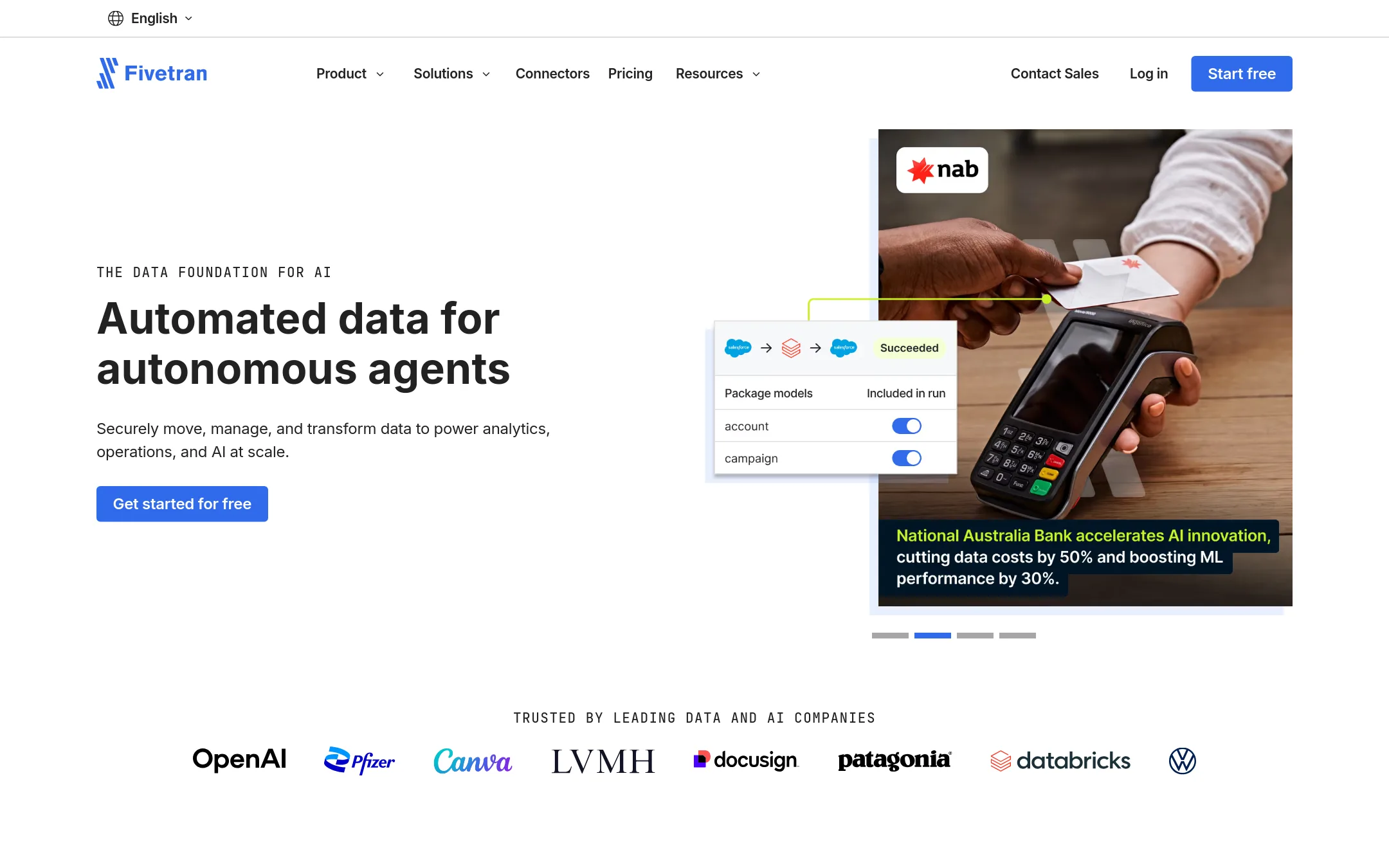
Fivetran is an automated data movement platform that moves data from 700+ sources into warehouses, lakes, and applications. It handles schema changes automatically and offers SQL-based transformations, making it a credible pick for teams that need reliable pipelines at scale. The platform syncs over 2 trillion rows per month, which shows it can handle heavy workloads.
Where it is strong
- 700+ fully managed connectors and 200+ activation destinations
- Automatic schema change handling, with 33.5M+ changes managed per month
- Hybrid deployment option and enterprise security certifications (SOC 1/2, GDPR, HIPAA, ISO 27001)
Where it falls short
- Pricing can get complex with usage-based costs per connection
- Free plan is limited to low data volumes, so larger teams will need paid plans
- Pricing:
- Free plan includes 500,000 monthly active rows for connections, 3,500 for activations, and 5,000 model runs. Paid plans start at a $5 base charge per standard connection, with usage-based pricing that decreases as volume increases. Annual contracts save up to
- From 5M rows/mo, custo
3.Stitch
Best for: Data engineers and business analysts who want to automate pipeline management and sync data from 130+ sources without writing complex code.
- Pricing
- From 5M rows/mo, custo
- Category
- Analytics & Data
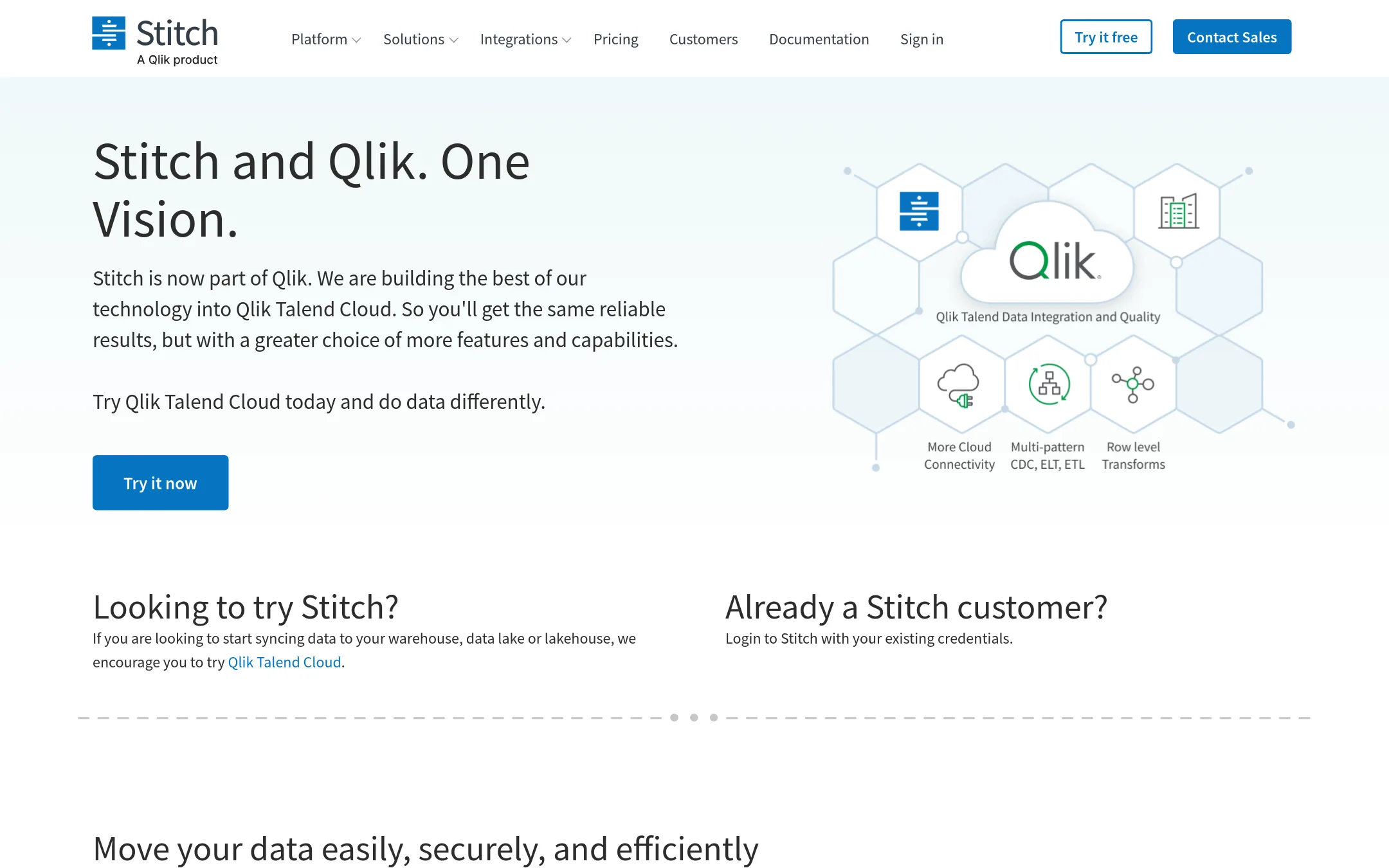
Stitch is a data integration platform that automates pipeline management and syncs data from 130+ sources to warehouses, data lakes, or lakehouses. It is now part of Qlik, with its technology being built into Qlik Talend Cloud. The platform emphasizes secure, compliant pipelines and one-time configuration for ongoing monitoring. It offers a 14-day free trial with unlimited row syncing, which is a concrete detail that makes it easy to evaluate before committing.
Where it is strong
- Connects to 130+ data sources, including cloud and on-premises
- 14-day free trial with unlimited row syncing, no credit card required
- SOC 2 Type II and ISO 27001 compliance on Standard plan
Where it falls short
- Pricing is based on row usage, which can get expensive at high volumes
- Phone support is not guaranteed on all plans, only chat and email during regional business hours
- Pricing:
- Standard plan starts at 5-300 million rows/month with 1 destination, 10 Standard sources, and 5 users. Advanced plan includes 100 million rows/month, 3 destinations, and unlimited users. Premium plan offers 1 billion rows/month and 5 destinations, with US pric
- Not published
4.Talend
Best for: Teams that need a mature data integration platform with strong data quality and governance, especially those preparing data for AI and analytics.
- Pricing
- Not published
- Category
- Analytics & Data
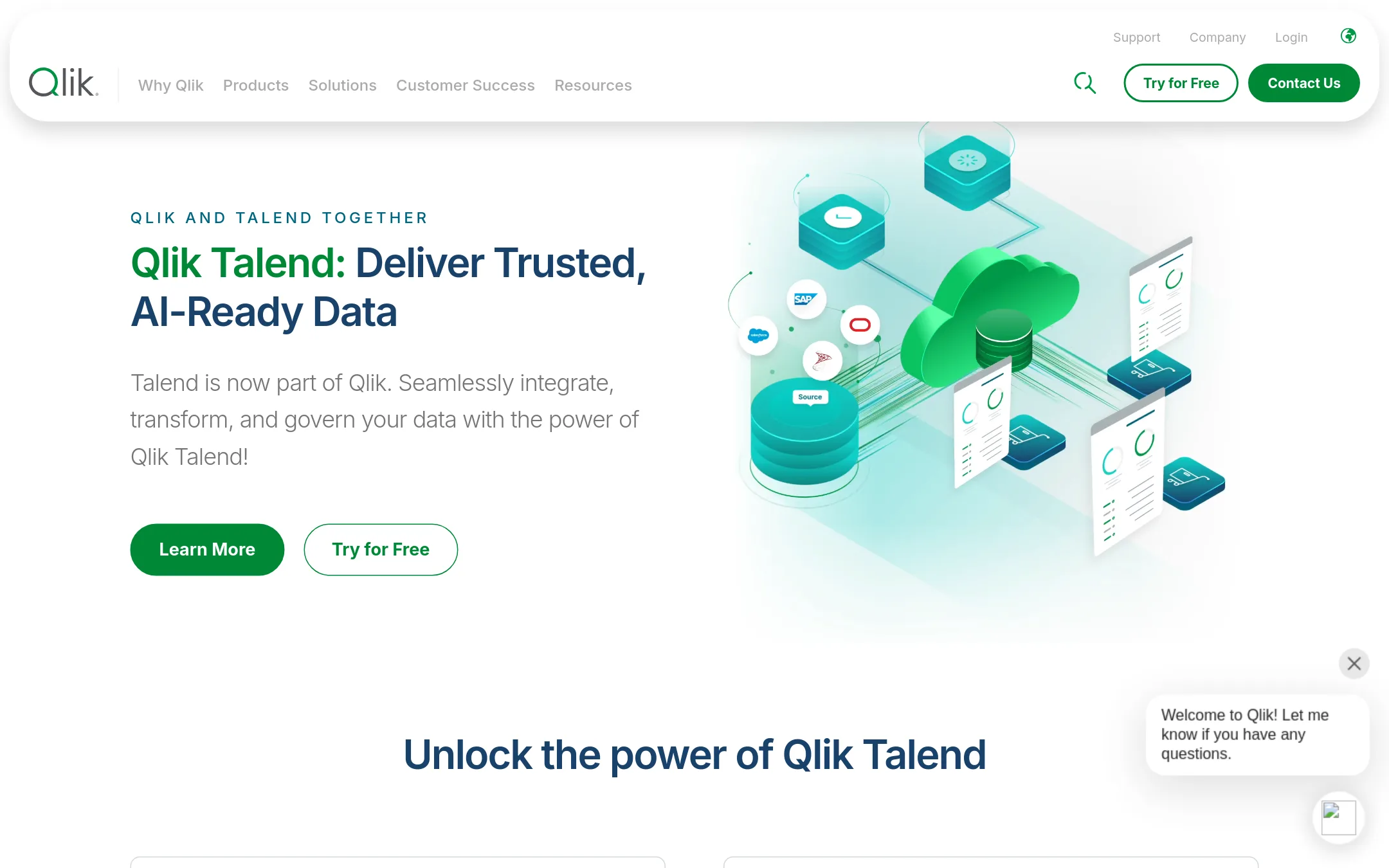
Talend, now part of Qlik, provides data integration, transformation, and governance across any environment. It is built for AI and analytics workloads, with a focus on trusted data. The platform includes data movement, streaming, and application/API integration as core capabilities.
Where it is strong
- Includes data quality and governance features alongside integration.
- Supports data movement, streaming, and application/API integration.
- Positioned as AI-ready, with a foundation for analytics workloads.
Where it falls short
- Pricing is not transparent, requiring a sales conversation.
- May be more complex than lighter-weight integration tools for simple use cases.
- Pricing:
- Pricing is not published on the site.
- Not published
5.Tolemi
Best for: State and local government teams that need to break down departmental silos and act on property, housing, and inspection data.
- Pricing
- Not published
- Category
- Other
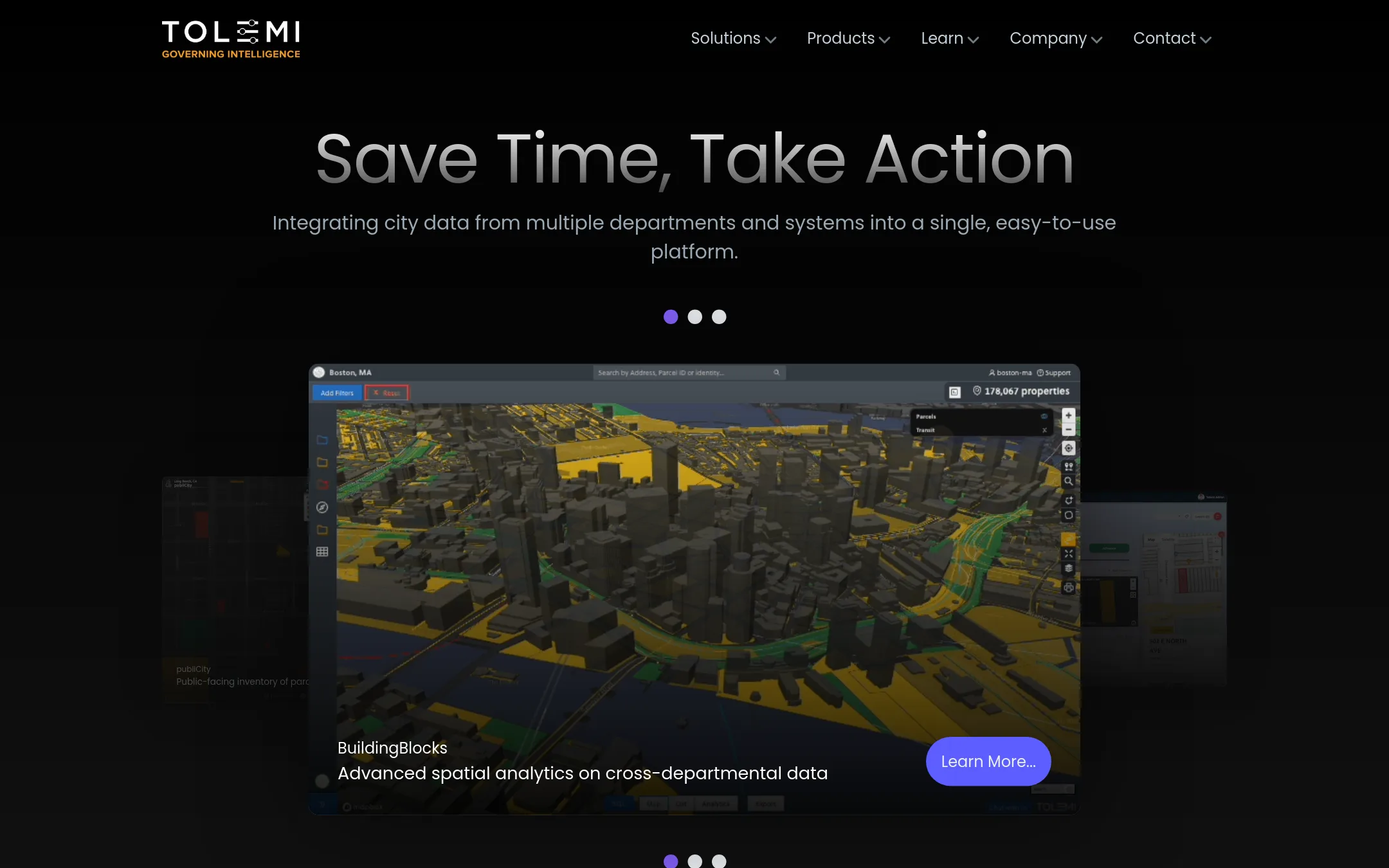
Tolemi combines data from multiple city departments into one platform, with tools for spatial analytics, parcel management, and public-facing inventories. It is a credible pick for local governments because it is built around real municipal workflows, like prioritizing inspection backlogs and supporting rental compliance programs. Cities such as Buffalo, Brockton, and Lawrence have used it for initiatives like clean sweeps and property compliance.
Where it is strong
- Integrates data from multiple departments into one portal
- Includes three tools for analytics, project management, and public outreach
- Used by real cities for inspection and compliance programs
Where it falls short
- No pricing information is available on the website
- Designed specifically for government use, so it may not fit private-sector teams
- Pricing:
- Pricing is not published on the site.
- Not published
6.Elevate
Best for: Private equity firms and roll-up operators that need to unify data from multiple acquired businesses into one system.
- Pricing
- Not published
- Category
- Finance & Accounting
Elevate automates data integration for private equity backed companies that acquire and combine other businesses. It cleans and migrates data from legacy systems into new operational platforms, cutting conversion timelines from weeks to hours. It also supports diligence analytics, portfolio tracking, and AI workflows like month-end close automation, with a track record from first acquisitions to companies over $1B in revenue.
Where it is strong
- Automated migration pipelines from legacy systems
- Daily data refresh cycles for unified queryable databases
- Supports AI workflows like month-end close automation
Where it falls short
- Pricing is not listed, so budgeting requires a sales call
- Built for roll-ups, so single-company teams may find it overkill
- Pricing:
- Pricing is not published on the site.
How to choose Data Integration Platforms
Pricing structure is a key factor. Fivetran charges per connection with usage-based volume costs. Stitch prices by rows per month. Airbyte uses credits and capacity-based pricing. Talend, Tolemi, and Elevate do not publish pricing, so you will need a sales conversation to estimate costs.
Consider who the platform is built for. Fivetran and Airbyte serve data engineering teams. Stitch targets data engineers and business analysts. Talend suits teams needing governance. Tolemi is for local governments. Elevate is for private equity firms and roll-up operators.
Check the number and type of integrations. Airbyte and Fivetran each offer 700+ connectors. Stitch has 130+ sources. Talend supports data movement, streaming, and API integration. Tolemi integrates city department data. Elevate migrates from legacy systems.
Data and compliance matter. Fivetran has SOC 1/2, GDPR, HIPAA, and ISO 27001. Stitch offers SOC 2 Type II and ISO 27001 on Standard. Airbyte supports hybrid deployment to keep data in your environment. Talend includes data quality and governance features.
Support and contract terms vary. Stitch offers chat and email support, but phone support is not guaranteed on all plans. Fivetran requires annual contracts for savings. Airbyte has free and paid plans with volume-based pricing. Talend, Tolemi, and Elevate require sales engagement for pricing and terms.
FAQ
Questions about Data Integration Platforms
What is the difference between ELT and ETL in data integration platforms?
ELT loads data into the destination first, then transforms it there. Airbyte and Fivetran follow this model. ETL transforms data before loading, which Talend supports. Most modern platforms use ELT because it is faster and more scalable.
How do I estimate the cost of a data integration platform?
Look at the pricing model. Fivetran charges per connection and usage volume. Stitch charges per row. Airbyte uses credits and capacity. For platforms without published pricing, request a quote and provide your data volume and source count.
Can these platforms handle real-time data integration?
Fivetran and Airbyte support real-time or near-real-time syncs. Airbyte offers real-time read/write access via MCP, SDK, and CLI. Talend includes streaming capabilities. Stitch focuses on batch syncs, so real-time needs may require a different tool.
What security and compliance certifications should I look for?
Fivetran has SOC 1/2, GDPR, HIPAA, and ISO 27001. Stitch offers SOC 2 Type II and ISO 27001 on Standard. Airbyte supports hybrid deployment to keep data in your environment. Check the vendor's compliance page for your specific requirements.
Which platform is best for a small team with limited data volume?
Stitch has a free trial with unlimited row syncing and a Standard plan starting at 5 million rows per month. Fivetran offers a free plan with 500,000 monthly active rows. Airbyte's Standard plan starts at $195 per month. Small teams should compare these entry-level options.
Last updated October 16, 2026.