11 Best EHR Software in 2026
Updated October 15, 2026
The short answer
For large health systems needing a unified record across facilities, Epic is the strongest pick. Independent practices wanting a mobile-friendly EHR with billing and telehealth should choose DrChrono. Startups building healthcare apps are best served by Medplum, an open source, FHIR-native platform.
The shortlist, at a glance
Read the comparisons ↓ EpicNot publishedLarge health systems and hospitals that need a unified patient record across multiple facilities.
 DrChronoNot publishedIndependent medical practices, from solo practitioners to multi-location clinics, that want a mobile-friendly EHR with integrated billing and telehealth.
 MEDITECHNot publishedHospitals and health systems that need a fully integrated, interoperable EHR with AI-driven insights and revenue cycle management.
AllscriptsNot publishedIndependent medical practices that want an integrated EHR and practice management system with revenue cycle support.
 NextGen OfficeCustom quoteSpecialty medical practices that want integrated EHR, practice management, and patient engagement with AI-assisted documentation.
 Akute HealthFrom $300/moDirect primary care clinics, concierge practices, and digital health companies that want to reduce admin work with automation and scale patient volume.
MedplumFree, $2k/mo, $6k/moStartups and developers building healthcare applications who need an open source, FHIR-native EHR platform with cloud or self-hosted options.
 OrchidNot publishedIndependent mental health professionals who want an EHR that also brings in clients through referrals and marketing.
 OpenEMRNot publishedClinics and practices that want full data ownership and are comfortable managing their own hosting, whether on-premises or in the cloud.
 SimplePracticeFrom $24.50/moTherapists, speech-language pathologists, occupational therapists, and psychiatrists in solo or group practices who need an integrated EHR with telehealth and insurance tools.
 TherapyNotesNot publishedBehavioral health practices of any size, from solo therapists to large groups, that need scheduling, billing, and documentation in one place.
About EHR Software
EHR software manages patient records, scheduling, billing, and clinical documentation in one system. It replaces paper charts and helps practices run more efficiently while meeting regulatory standards.
The products on this list differ in approach, scale, and pricing. Some like Epic and MEDITECH target large hospitals with enterprise-level features. Others like DrChrono and SimplePractice focus on independent practices with transparent tiers. Open source options like OpenEMR and Medplum offer full control but require technical expertise.
The 11 best EHR Software, compared
- Not published
1.Epic
Best for: Large health systems and hospitals that need a unified patient record across multiple facilities.
- Pricing
- Not published
- Category
- Healthcare
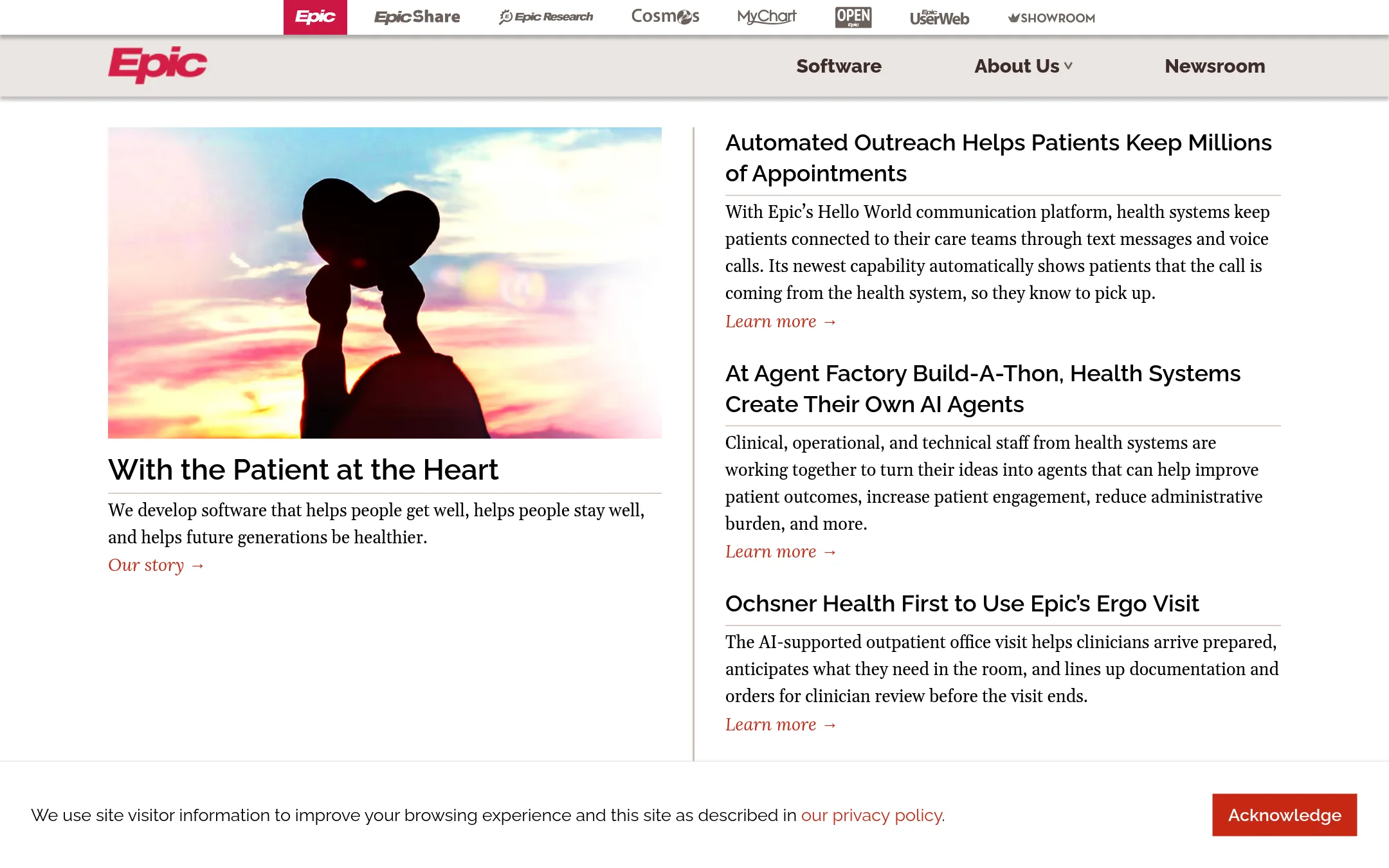
Epic builds a single medical record that follows each patient across care settings, which supports higher-quality, personalized care. It includes county-level health alerts, TEFCA interoperability with the Social Security Administration, and AI tools for scheduling and prior authorization. Founded in 1979, it is a long-standing choice for large health systems.
Where it is strong
- Single comprehensive medical record per patient
- County-level health alerts for public health
- AI-drafted responses for prior authorizations
Where it falls short
- Pricing not transparent, likely enterprise-level
- May be too heavy for small practices or startups
- Pricing:
- Pricing is not published on the site.
- Not published
2.DrChrono
Best for: Independent medical practices, from solo practitioners to multi-location clinics, that want a mobile-friendly EHR with integrated billing and telehealth.
- Pricing
- Not published
- Category
- Healthcare
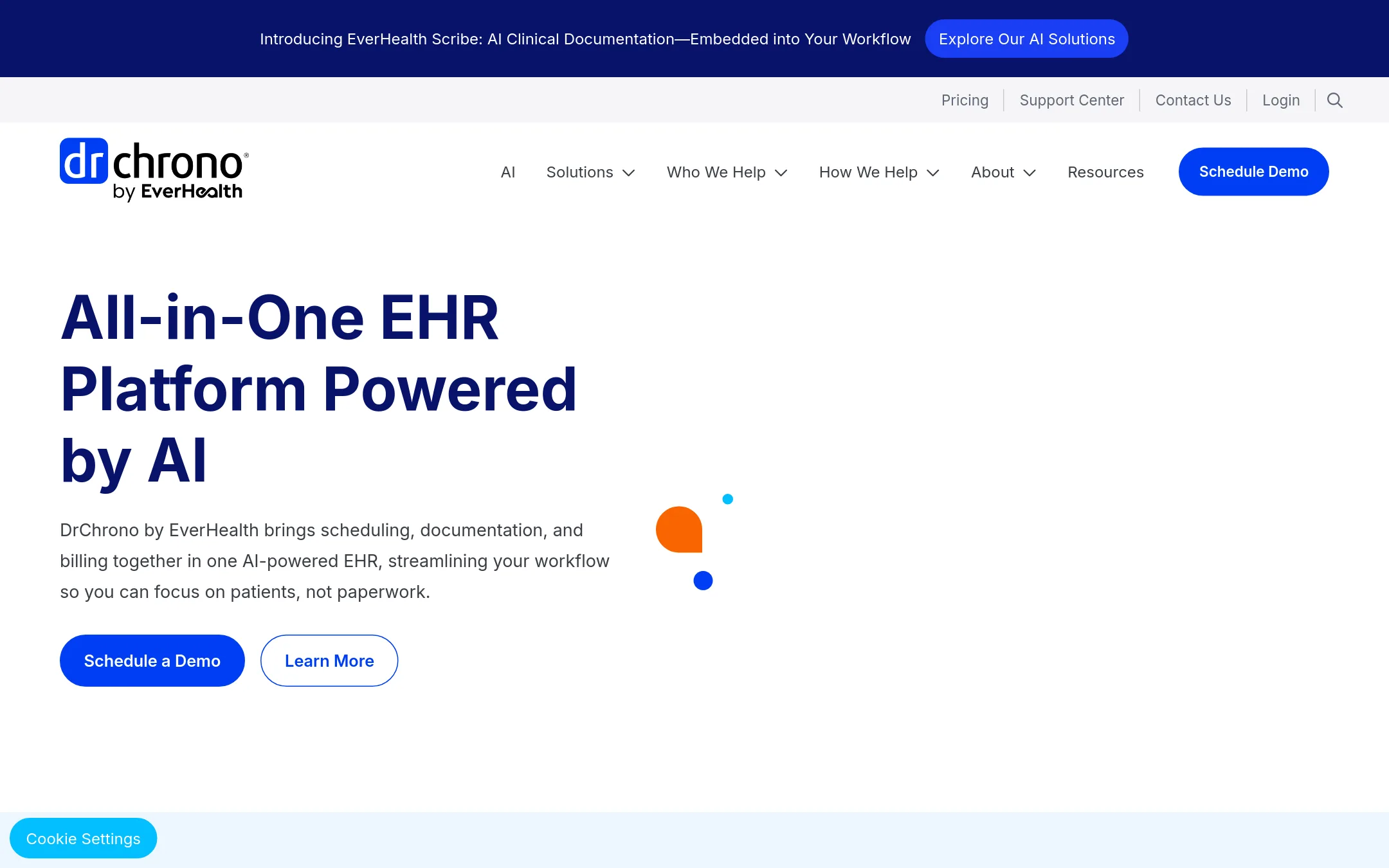
DrChrono is a cloud-based EHR platform that combines scheduling, clinical documentation, and billing in one system. It is built for independent practices and is known for its mobile-friendly design, having been voted #1 mobile EHR by physicians from 2013 to 2026. The platform includes telehealth, a patient portal, and revenue cycle management tools.
Where it is strong
- Mobile EHR with full functionality on iOS and Android.
- Integrated billing with customizable billing profiles to speed up claims.
- Built-in telehealth with no extra logins for patients.
Where it falls short
- Pricing is not transparent. You need to contact sales for a quote.
- Some features like lab integration and advanced AI are only available as paid add-ons.
- Pricing:
- Pricing is offered in three tiers: Foundation, Growth, and Premium. Add-ons like lab integration and advanced AI features are available for extra fees. Specific prices are not listed on the site.
- Not published
3.MEDITECH
Best for: Hospitals and health systems that need a fully integrated, interoperable EHR with AI-driven insights and revenue cycle management.
- Pricing
- Not published
- Category
- Healthcare
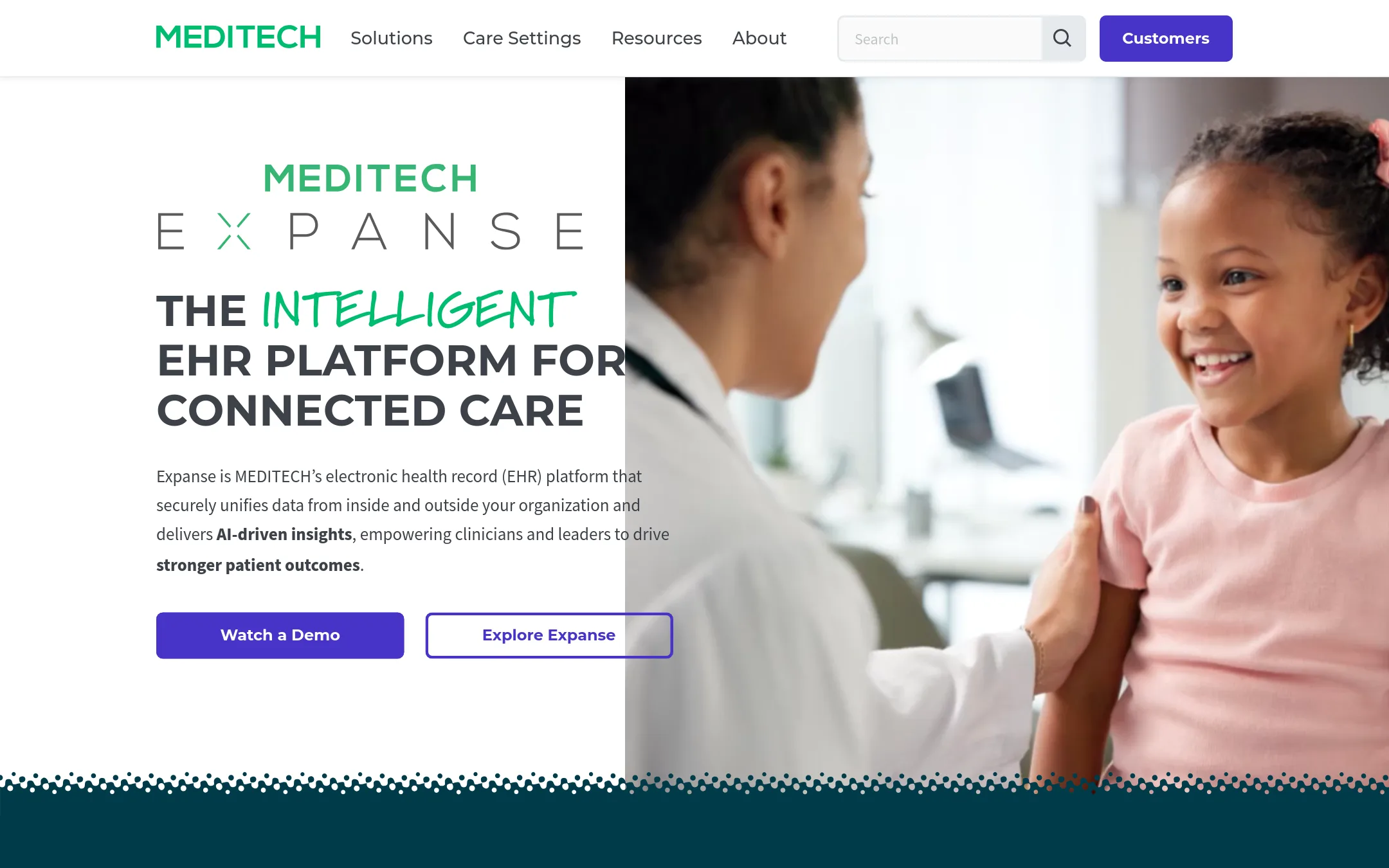
MEDITECH Expanse is a fully integrated EHR platform used by more than 2,300 institutions worldwide. It unifies data from inside and outside the organization and delivers AI-driven insights, with a strong focus on interoperability and care coordination. The platform is credible for health systems of all sizes, from independent community hospitals to large enterprises like HCA Healthcare.
Where it is strong
- Fully integrated platform covering acute care, ambulatory, and other settings.
- AI-driven insights and predictive modeling, such as no-show reduction.
- Interoperability network with Consolidated Patient Summary for connected care.
Where it falls short
- Pricing not disclosed, making cost comparison difficult.
- Primarily designed for large health systems, not small independent practices.
- Pricing:
- Pricing is not published on the site.
- Not published
4.Allscripts
Best for: Independent medical practices that want an integrated EHR and practice management system with revenue cycle support.
- Pricing
- Not published
- Category
- Healthcare
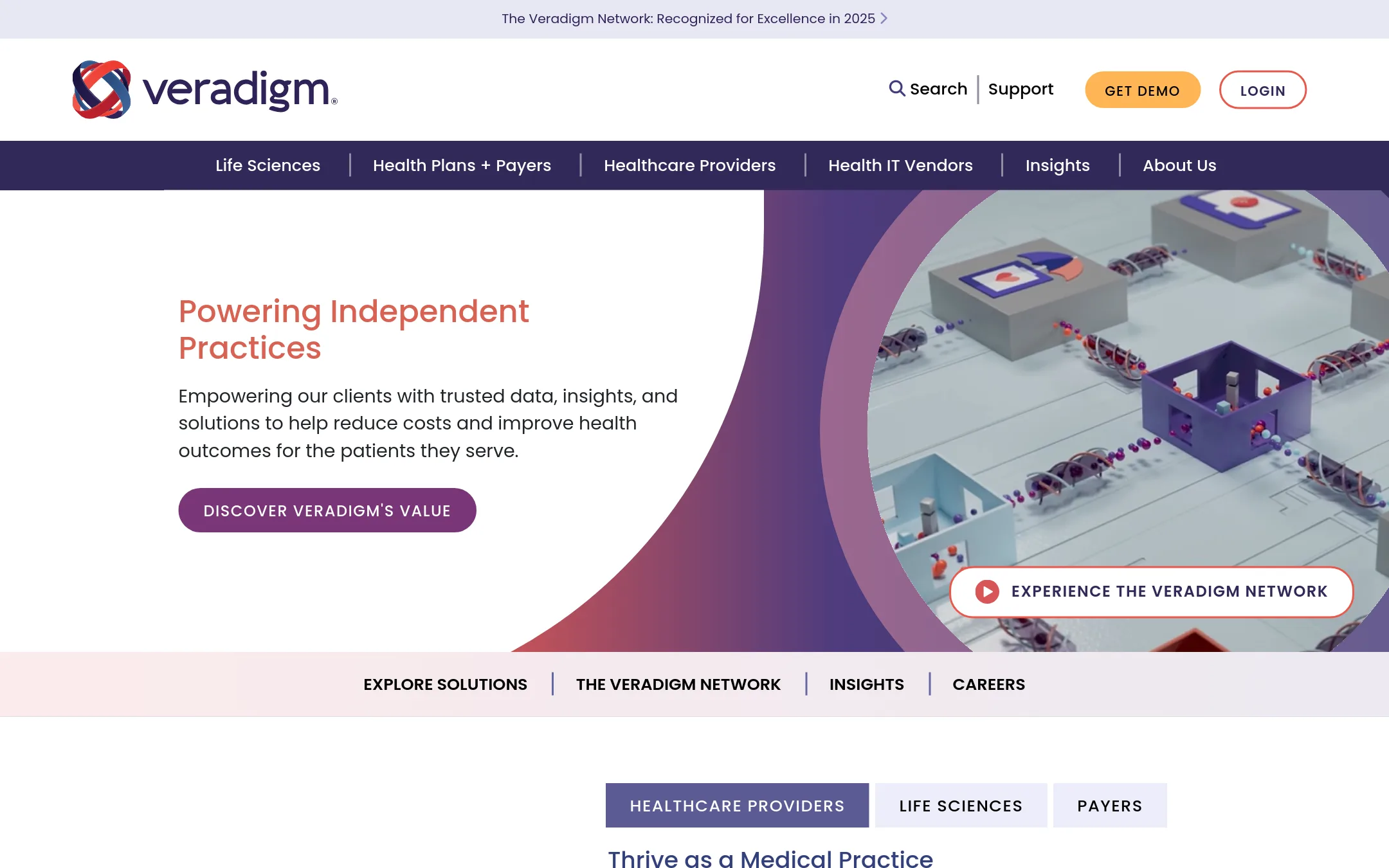
Allscripts is now Veradigm, offering an integrated platform that includes EHR, practice management, revenue cycle services, and patient engagement. It is a credible pick because it combines clinical and financial tools with real-world data and analytics, backed by a large network of partners and AI technologies.
Where it is strong
- Integrated EHR, practice management, and revenue cycle services
- Access to Veradigm Network with API connectivity and ePrescribing
- Real-world data and analytics for life sciences and payers
Where it falls short
- Pricing not published, requires contacting sales
- Brand transition may confuse existing Allscripts users
- Pricing:
- Pricing is not published on the site.
- Custom quote
5.NextGen Office
Best for: Specialty medical practices that want integrated EHR, practice management, and patient engagement with AI-assisted documentation.
- Pricing
- Custom quote
- Category
- Healthcare
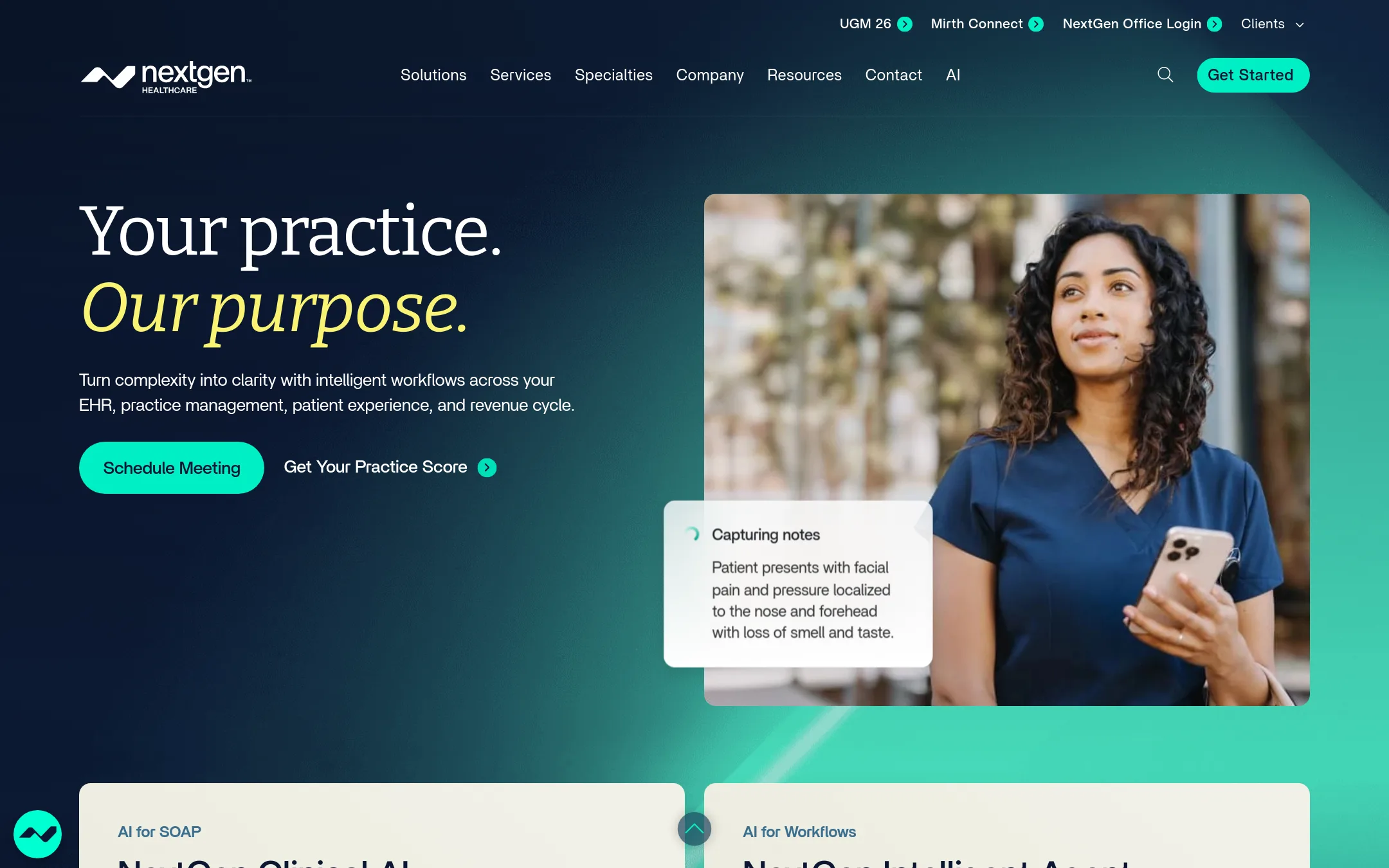
NextGen Office is a cloud-based EHR and practice management platform built for specialty practices. It combines EHR, scheduling, billing, and patient engagement in one system, and its AI can turn conversations into SOAP notes, saving up to 2.5 hours per day. The platform is credible because it offers specialty-specific workflows and measurable outcomes like 45% faster claim resolution.
Where it is strong
- AI-generated SOAP notes from conversations
- Self-scheduling and appointment reminders
- Real-time insurance eligibility verification
Where it falls short
- Pricing is not published. Requires contacting sales
- May be more than needed for solo practices that only need basic EHR
- Pricing:
- Pricing is tailored to each practice based on provider count, selected solutions, specialty workflows, and services. You can choose per-provider or percentage-of-volume pricing models. Contact NextGen for a quote.
- From $300/mo
6.Akute Health
Best for: Direct primary care clinics, concierge practices, and digital health companies that want to reduce admin work with automation and scale patient volume.
- Pricing
- From $300/mo
- Category
- Healthcare
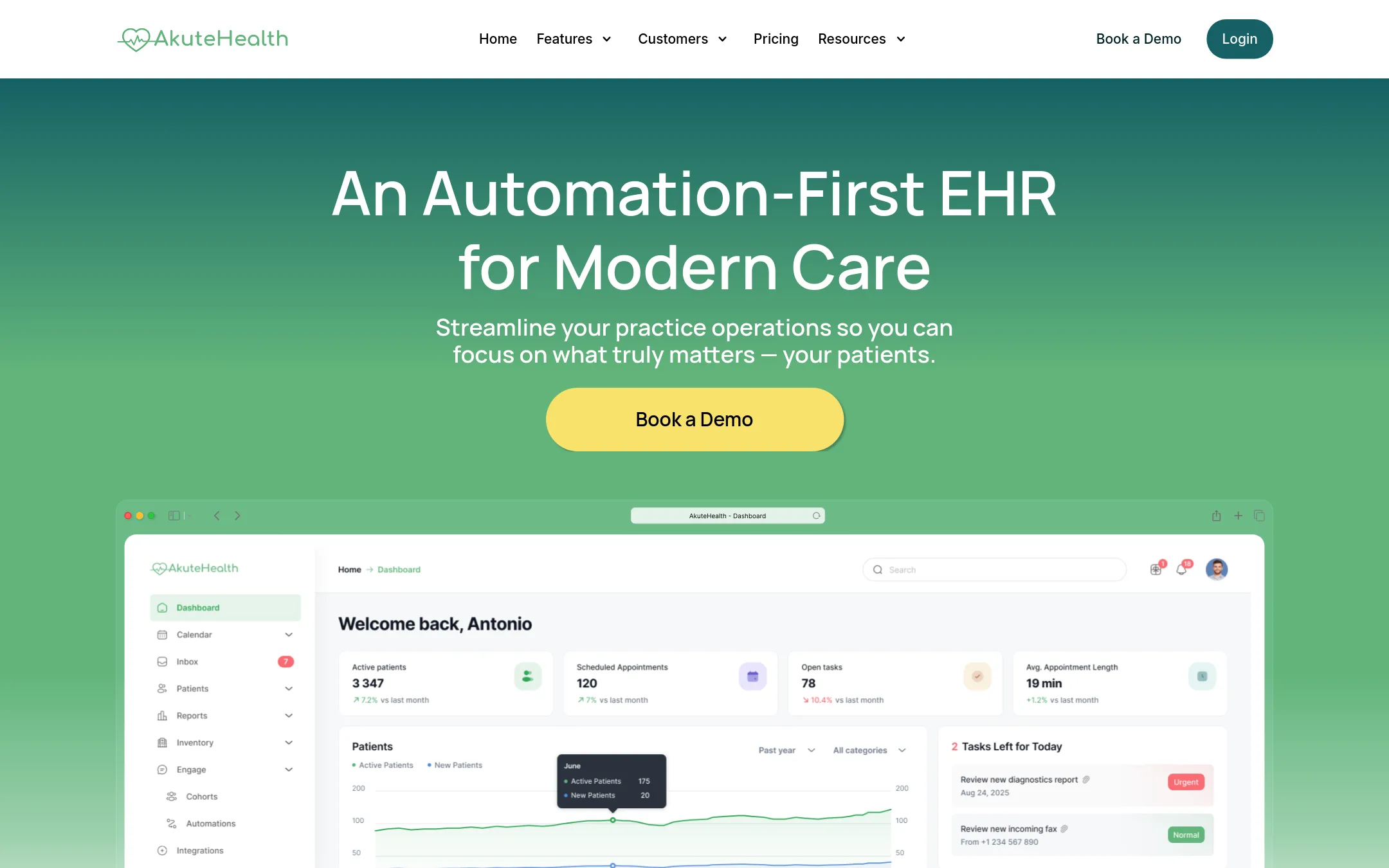
Akute Health is an automation-first EHR for digital health companies, direct primary care, concierge, med spa, and wellness practices. It combines scheduling, charting, e-prescribing, messaging, labs, and billing in one place, with cohort automations that act like an extra staff member. Pricing starts at $300 per month for one clinician and 100 patients, scaling with additional patients and clinicians.
Where it is strong
- Cohort automations handle patient care shuffling in the background, saving staff time.
- Includes e-prescribing, telemedicine, lab ordering, and faxing in one platform.
- Open API for developers and integrations with Spruce and Hint for billing.
Where it falls short
- Pricing may be high for solo providers with low patient volume.
- No mention of built-in billing for all tiers. Hint Core billing is an add-on.
- Pricing:
- Essentials plan is $300/month for 1 clinician and 100 patients, with $0.75 per additional patient. A higher tier costs $550/month for 2 clinicians and 300 patients, with $0.85 per additional patient.
- Free, $2k/mo, $6k/mo
7.Medplum
Best for: Startups and developers building healthcare applications who need an open source, FHIR-native EHR platform with cloud or self-hosted options.
- Pricing
- Free, $2k/mo, $6k/mo
- Category
- Healthcare
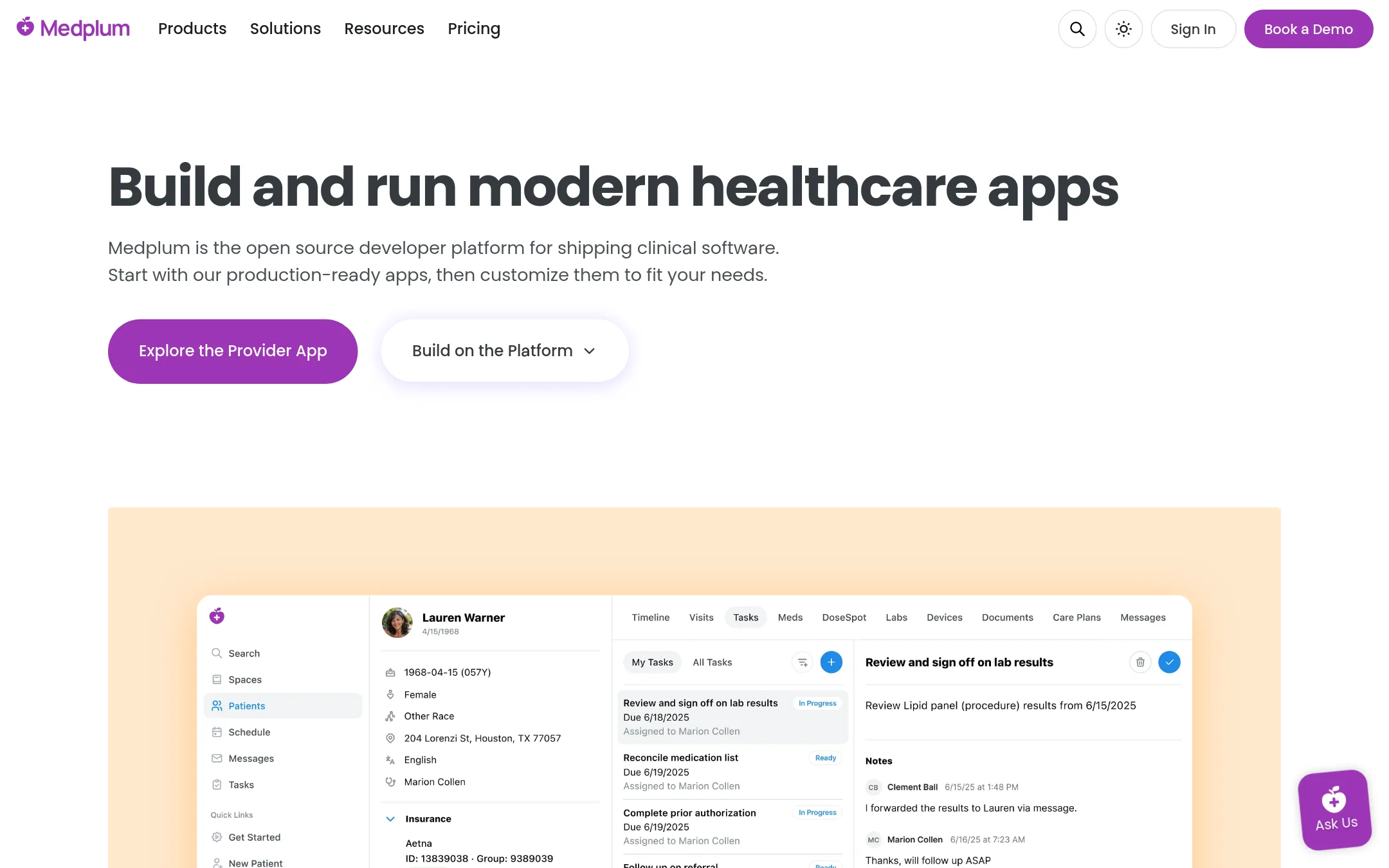
Medplum is an open source, API-first EHR platform built on the FHIR standard. It lets developers build and run healthcare apps with automation, lab integrations, and compliance support. The free tier and self-hosting option make it a credible pick for teams that want control and flexibility.
Where it is strong
- Open source and self-hostable for full control
- FHIR-native API design simplifies interoperability
- Free tier for prototyping and learning
Where it falls short
- Production and Premium tiers are pricey for small practices
- Advanced features like data warehouse and dedicated infrastructure only at enterprise level
- Pricing:
- Cloud plans start free, then $2,000/mo for Production and $6,000/mo for Premium. Self-hosted is free or custom enterprise pricing.
- Not published
8.Orchid
Best for: Independent mental health professionals who want an EHR that also brings in clients through referrals and marketing.
- Pricing
- Not published
- Category
- Healthcare
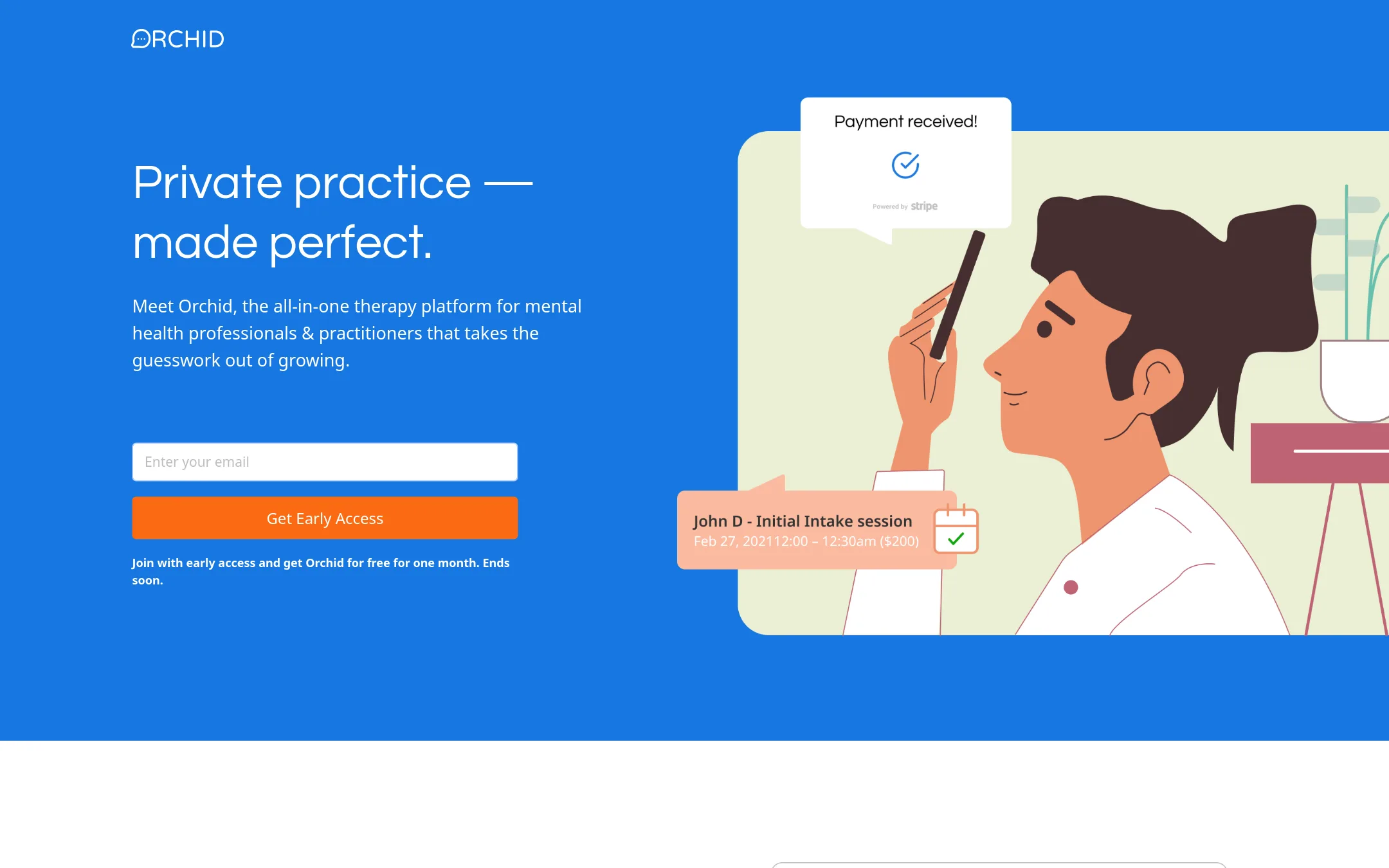
Orchid is an AI-powered EHR built specifically for independent mental health professionals. It combines practice management with patient referral and marketing tools, and it offers a one-month free trial for the first 100 users. The platform includes automated superbills and a built-in community for cross-specialty referrals.
Where it is strong
- Integrated scheduling and intake forms
- Automated superbill generation
- Built-in patient referral program
Where it falls short
- No insurance integration yet, only private-pay
- E-labs and e-prescriptions are still planned, not available
- Pricing:
- Pricing is not published on the site.
- Not published
9.OpenEMR
Best for: Clinics and practices that want full data ownership and are comfortable managing their own hosting, whether on-premises or in the cloud.
- Pricing
- Not published
- Category
- Healthcare
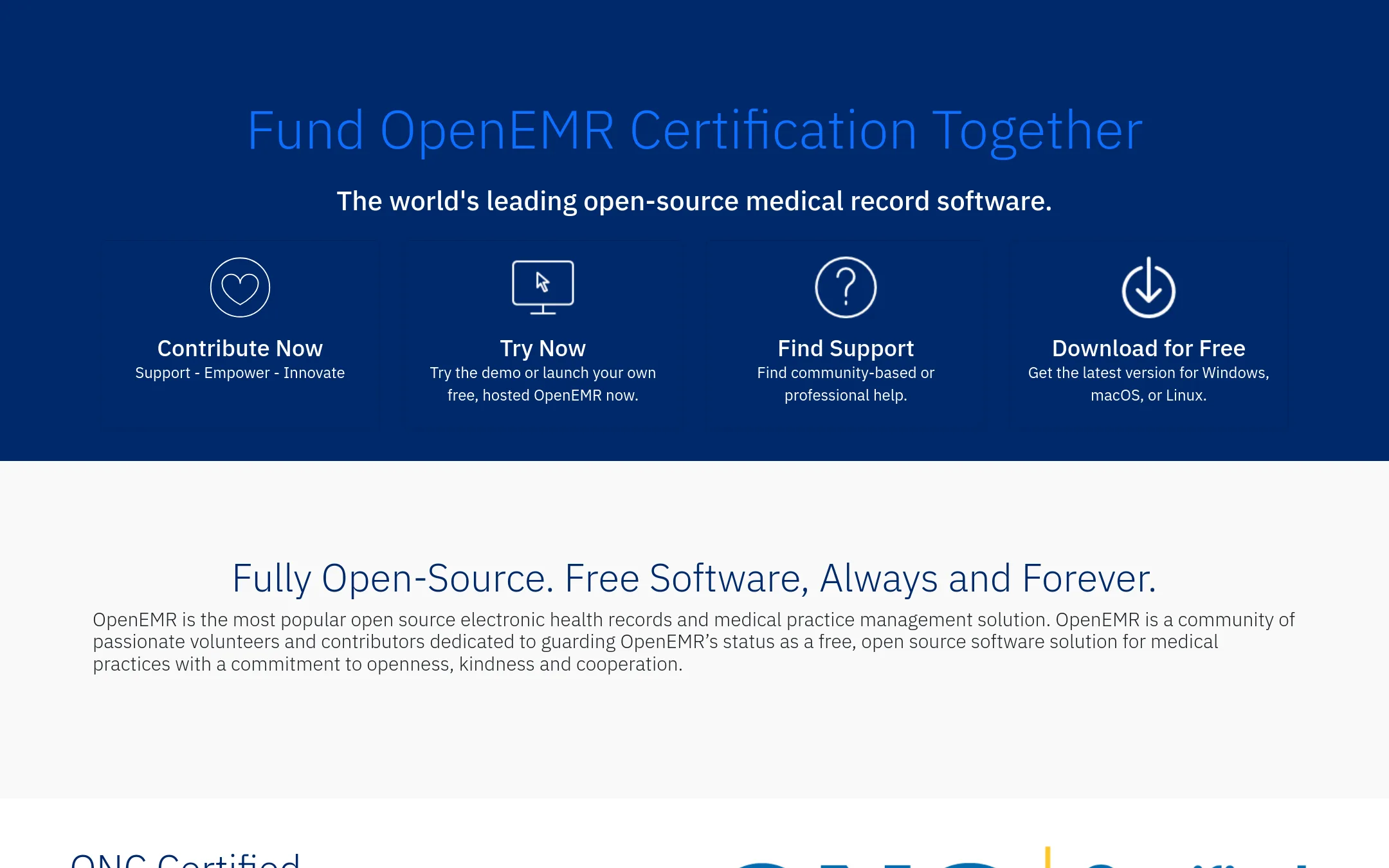
OpenEMR is a free, open-source electronic health records and practice management system. It is ONC certified, which is a concrete credibility marker for U.S. providers. The software includes scheduling, e-prescribing, billing, lab integration, and clinical decision rules, all maintained by a volunteer community.
Where it is strong
- ONC certified, so it meets federal standards for EHRs.
- Free and open source, with no licensing fees.
- Supports over 30 languages and offers fine-grained access controls.
Where it falls short
- Requires technical expertise for installation and maintenance.
- No official support. You rely on community forums or third-party vendors.
- Pricing:
- Pricing is not published on the site.
- From $24.50/mo
10.SimplePractice
Best for: Therapists, speech-language pathologists, occupational therapists, and psychiatrists in solo or group practices who need an integrated EHR with telehealth and insurance tools.
- Pricing
- From $24.50/mo
- Category
- Healthcare
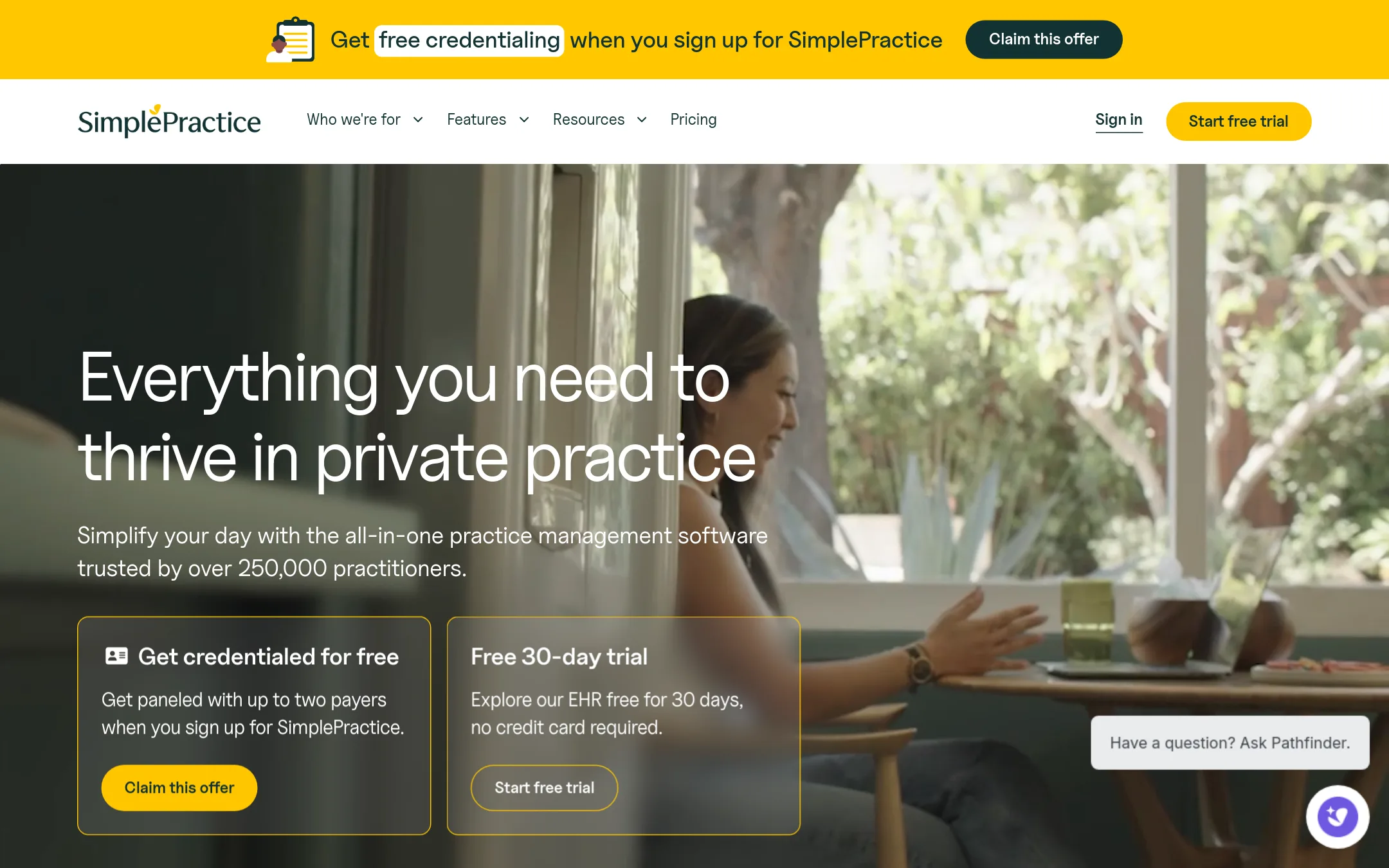
SimplePractice is a HIPAA-compliant EHR and practice management platform built for therapists and wellness professionals. It combines scheduling, telehealth, billing, and clinical notes in one place, and includes free credentialing with up to two payers. With over 250,000 practitioners and 20 million clients, it's a widely adopted choice.
Where it is strong
- Free 30-day trial with no credit card required
- Integrated telehealth and ePrescribe add-ons
- AI note-taking tools (Note Taker, Care Aide) available as add-ons
Where it falls short
- Add-on costs can add up (ePrescribe $49/mo, Care Aide $59/mo)
- Group practices with 6+ practitioners require custom pricing, not listed publicly
- Pricing:
- Starter is $24.50/month for 3 months then $49/month. Essential is $39.50/month for 3 months then $79/month. Plus is $49.50/month for 3 months then $99/month. Group practice pricing starts at $74/practitioner per month.
- Not published
11.TherapyNotes
Best for: Behavioral health practices of any size, from solo therapists to large groups, that need scheduling, billing, and documentation in one place.

- Pricing
- Not published
- Category
- Healthcare
TherapyNotes is practice management software built specifically for behavioral health professionals. It covers scheduling, billing, clinical documentation, telehealth, and client communication in one system. The AI-powered TherapyFuel generates progress notes and treatment plans, and the included TherapyPortal gives clients a branded portal for intakes and payments.
Where it is strong
- Built-in AI note generation for progress notes and treatment plans
- Includes telehealth and a client portal with paperless intakes
- 24/7 phone and email support
Where it falls short
- Pricing details are not listed on the website
- Designed for behavioral health, so not suited for general medical practices
- Pricing:
- Pricing is not published on the site. A 30-day free trial is available without a credit card.
How to choose EHR Software
Pricing structure varies widely. Some products like Akute Health list per-clinician and per-patient rates, while others like Epic and MEDITECH require contacting sales. Consider your budget and whether you need add-ons like lab integration or AI features, which often cost extra.
Who the software is built for matters. DrChrono suits independent practices, while TherapyNotes and Orchid target behavioral health professionals. NextGen Office is designed for specialty practices. Choose a product that matches your practice type to avoid paying for irrelevant features.
Integrations affect workflow. Medplum offers an open API for custom integrations, while Akute Health integrates with Spruce and Hint for billing. Check if the EHR connects with your labs, e-prescribing services, and telehealth tools. Some products like Orchid lack insurance integration, which may be a dealbreaker.
Data and compliance are critical. OpenEMR is ONC certified, and SimplePractice is HIPAA compliant. Verify that the product meets your regulatory requirements. For startups, Medplum provides compliance support. For large systems, Epic and MEDITECH emphasize interoperability with TEFCA and Consolidated Patient Summary.
Support and contract terms vary. OpenEMR relies on community forums, while TherapyNotes offers 24/7 phone and email support. Some products like SimplePractice offer free trials without a credit card. Review contract length, cancellation terms, and whether support is included in the price.
FAQ
Questions about EHR Software
What does EHR software cost?
Pricing varies widely. SimplePractice starts at $49 per month, while Akute Health starts at $300 per month. Enterprise products like Epic and MEDITECH do not publish pricing and likely require a custom quote.
Can I use EHR software for billing and telehealth?
Many products include these features. DrChrono has integrated billing and telehealth, and SimplePractice offers billing and telehealth as part of its plans. Check each product's feature list, as some like Orchid do not have insurance integration yet.
Is open source EHR software reliable?
OpenEMR is ONC certified and free, but it requires technical expertise to install and maintain. Medplum offers a free tier and self-hosting, with paid cloud plans for production. Support comes from community forums or third-party vendors.
How do I choose between a general and a specialty EHR?
General EHRs like DrChrono work for many practice types. Specialty EHRs like TherapyNotes and Orchid are built for behavioral health, with features like AI note generation and referral tools. NextGen Office offers specialty-specific workflows for practices like dermatology or cardiology.
What should I know about data compliance?
Ensure the EHR meets HIPAA and ONC standards. OpenEMR is ONC certified, and SimplePractice is HIPAA compliant. For large systems, Epic and MEDITECH support interoperability standards like TEFCA and Consolidated Patient Summary for data sharing.
Last updated October 15, 2026.