6 Best Revenue Cycle Management Software in 2026
Updated November 7, 2026
The short answer
The strongest revenue cycle management software picks on this list are Waystar, Change Healthcare and Ember. Waystar suits health systems and physician groups that want one platform for eligibility, claims, denials and patient payments. Change Healthcare suits hospitals and health systems that need EHR-connected tools, prior authorization and claims support at scale. Ember suits specialty physician practices and health systems that lose revenue to denials and manual chart audits.
The shortlist, at a glance
Read the comparisons ↓ Candid HealthNot publishedFast-growing healthcare providers that bill insurers and want claim errors caught and fixed without adding billing staff.
 Change HealthcareNot publishedHospitals and health systems that need EHR-connected revenue cycle tools, prior authorization, and claims support at scale.
 WaystarNot publishedHealth systems and physician groups that want one platform to handle eligibility, claims, denials, and patient payments
 CombineHealthNot publishedHospitals and physician groups with high coding volume and recurring denials that want AI to handle upstream claim quality.
 EmberCustom quoteSpecialty physician practices and health systems that lose revenue to denials and manual chart audits, such as dermatology, orthopedics or cardiology groups with procedure-heavy billing.
 Claim HealthNot publishedHome health and home-based care agencies that handle referrals, prior authorizations, and claims and want them tracked in one place
About Revenue Cycle Management Software
Revenue cycle management software handles the billing work that sits between a patient visit and a paid claim. That work includes checking insurance eligibility, capturing charges, coding, submitting claims, following up on denials, drafting appeals, collecting patient payments and reporting on the results. Good software reduces lost revenue and cuts the manual work that billing teams spend time on.
The products on this list differ in approach, scale and pricing model. Some cover the full cycle in one platform, such as Waystar and Change Healthcare. Others focus on a narrower part of the work, such as Ember's pre-submission review of encounters or Candid Health's automated claim fixes. Claim Health targets home-based and post-acute care, while CombineHealth uses AI agents across coding and denial follow-up. None of the vendors on this list publish pricing, so cost comparisons require a sales conversation.
The 6 best Revenue Cycle Management Software, compared
- Not published
1.Candid Health
Best for: Fast-growing healthcare providers that bill insurers and want claim errors caught and fixed without adding billing staff.
- Pricing
- Not published
- Category
- Finance & Accounting
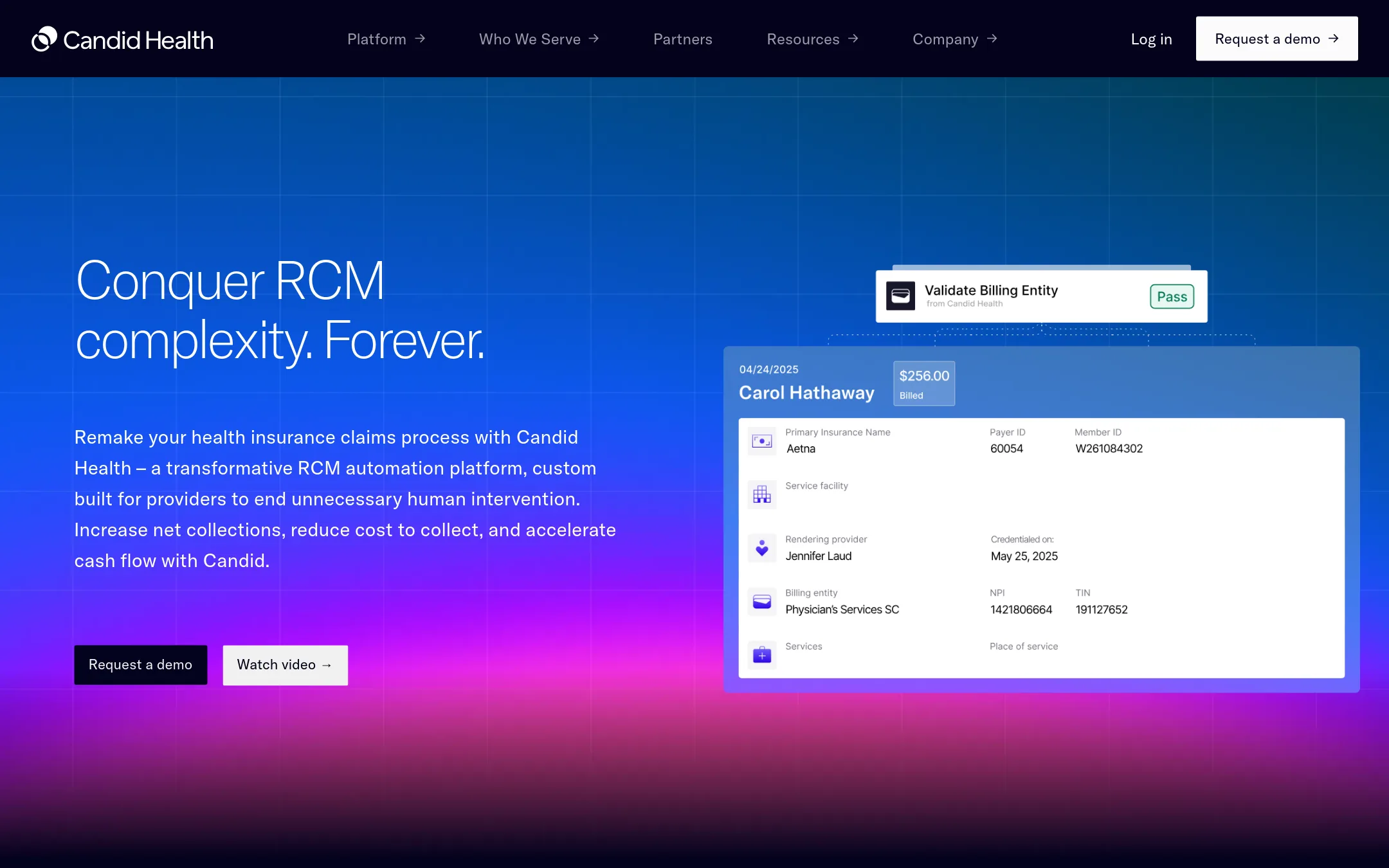
Candid Health is a revenue cycle automation platform for healthcare providers. It detects claim issues and fixes many of them automatically, so the same billing mistake does not repeat. Its modern APIs and out-of-the-box connections let it plug into existing EMRs and billing infrastructure.
Where it is strong
- Fixes flagged claim issues automatically, not just reports them
- Flexible APIs for custom integrations with existing systems
- Real-time reporting that points to revenue opportunities
Where it falls short
- Pricing is not published, so cost comparison needs a direct conversation
- Built for healthcare providers, so it is not a fit for other industries
- Pricing:
- Pricing is not published on the site.
- Not published
2.Change Healthcare
Best for: Hospitals and health systems that need EHR-connected revenue cycle tools, prior authorization, and claims support at scale.
- Pricing
- Not published
- Category
- Healthcare
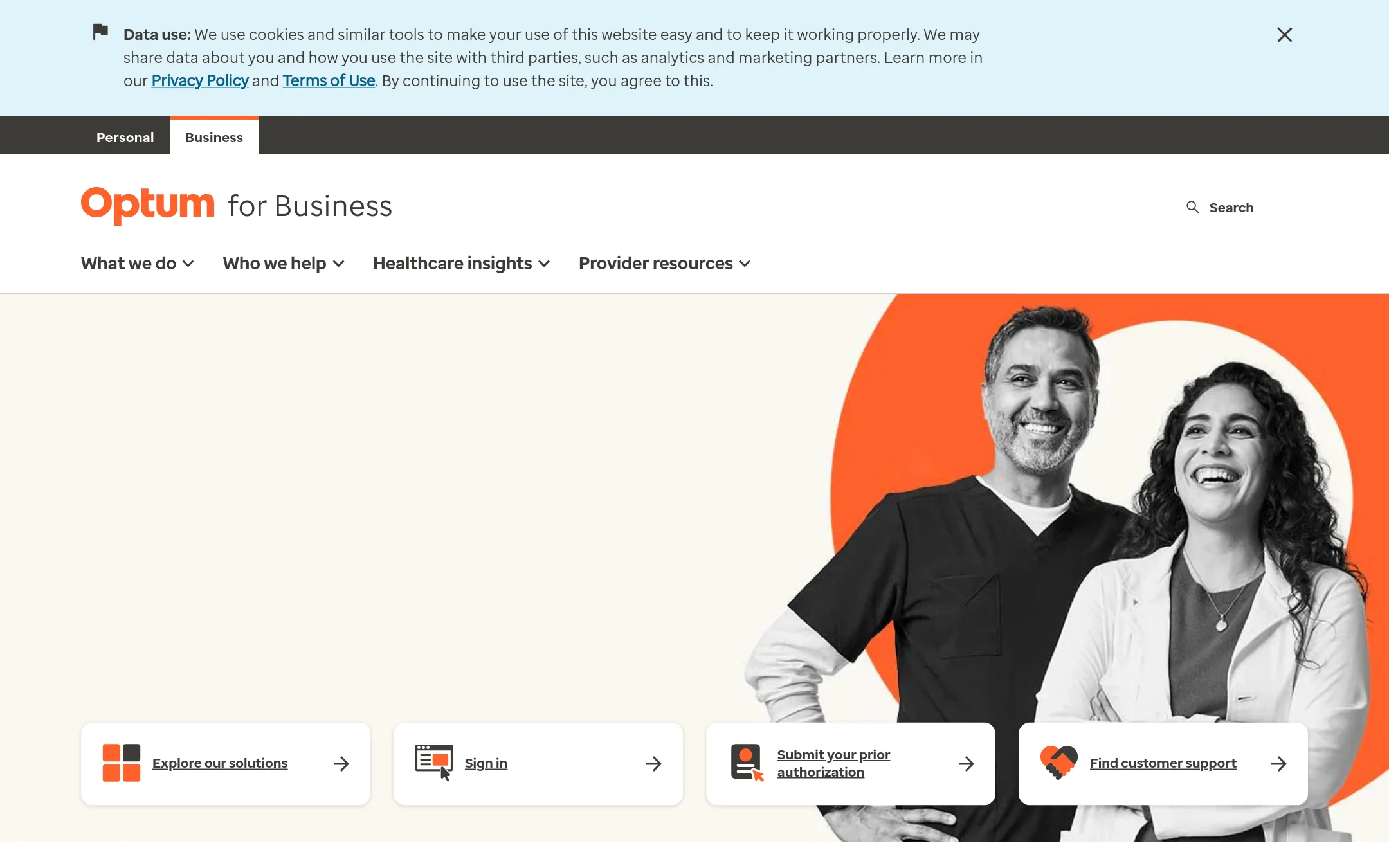
Change Healthcare, now part of Optum Business, combines advanced data and technology with clinical and industry expertise to handle complex healthcare operations. The site says it supports eight of ten U.S. hospitals with EHR-ready tools that lower documentation burden, and it offers prior authorization and claims support. Its scale in healthcare payments and operations is the main reason it is a credible pick for revenue cycle work.
Where it is strong
- Built around EHR-ready workflows that fit existing clinical systems
- Covers prior authorization and claims support in one vendor
- Backed by Optum's analytics and clinical expertise and multiple accreditations
Where it falls short
- Pricing is not published, so budgeting requires a sales conversation
- The site is broad across payers, pharmacy and life sciences, so small providers may find the revenue cycle offering hard to isolate
- Pricing:
- Pricing is not published on the site.
- Not published
3.Waystar
Best for: Health systems and physician groups that want one platform to handle eligibility, claims, denials, and patient payments

- Pricing
- Not published
- Category
- Healthcare
Waystar is a cloud-based revenue cycle platform for healthcare providers, covering financial clearance, charge capture, claims, denial recovery, and analytics in one system. It is a credible pick because its Altitude AI layer automates work such as prior authorizations and denial appeals, and its homepage cites a provider net promoter score from a third-party survey run in September 2023.
Where it is strong
- Covers the full revenue cycle, from insurance verification through denial recovery and patient payments
- Altitude AI automates tasks like prior authorizations and claim monitoring
- Includes analytics and reporting alongside the billing workflows
Where it falls short
- Pricing is not published, so budgeting requires a sales conversation
- Its breadth suggests it fits larger organizations better than very small practices, though the site does not state a size threshold
- Pricing:
- Pricing is not published on the site.
- Not published
4.CombineHealth
Best for: Hospitals and physician groups with high coding volume and recurring denials that want AI to handle upstream claim quality.
- Pricing
- Not published
- Category
- Healthcare
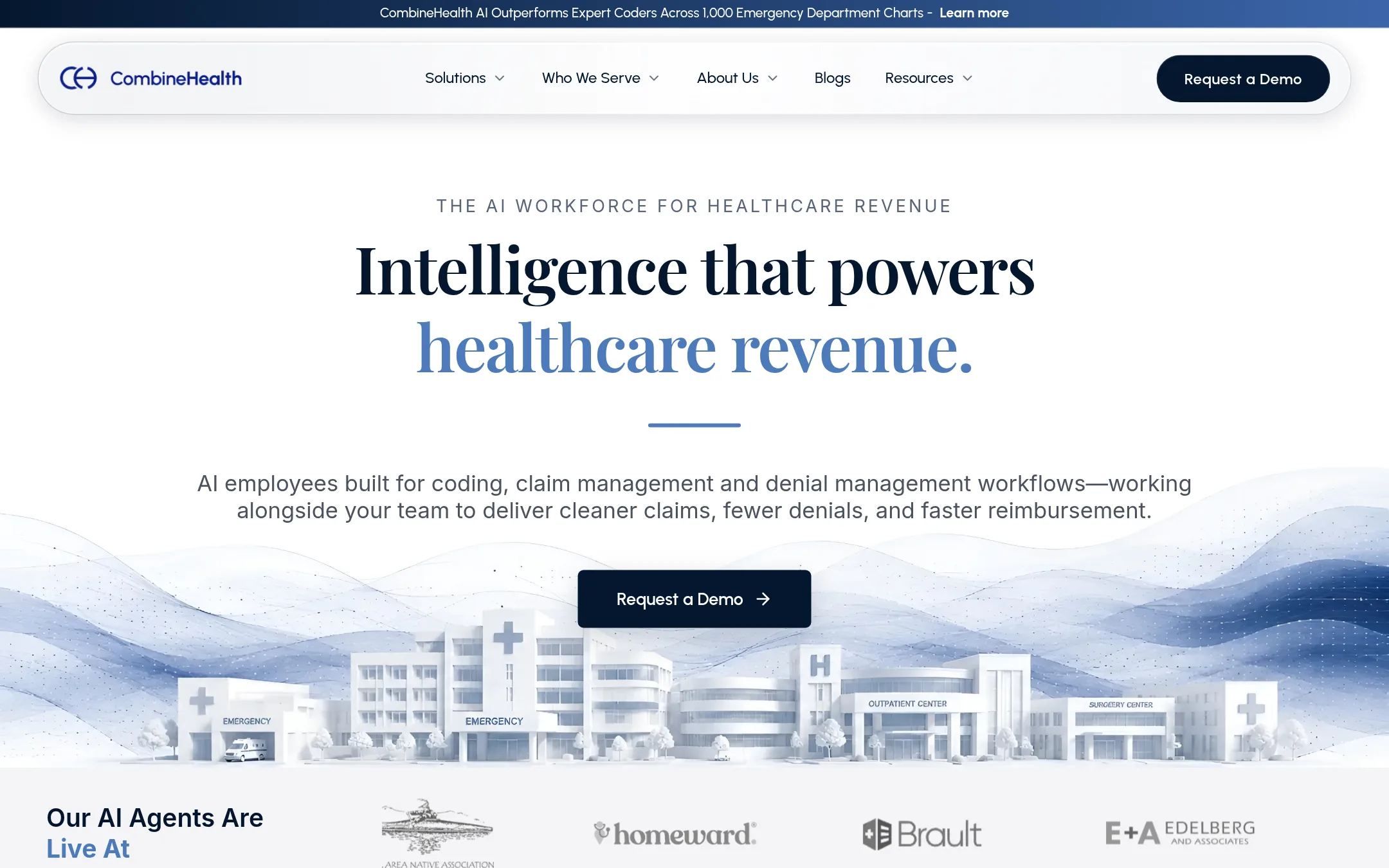
CombineHealth uses AI agents to handle coding, eligibility checks, claim submission, denial follow-up, and appeal drafting. It feeds payer outcomes back into upstream steps like coding and claims so the same denials stop repeating. Its coding agent Amy reports 97.2% accuracy, which is one concrete detail buyers can test against their own charts.
Where it is strong
- Coding agent reports 97.2%+ accuracy and up to 85% less manual coding work
- Shows the rationale behind AI actions and lets staff review, approve, or override
- Covers the full cycle from eligibility and CDI through denials and appeals
Where it falls short
- No public pricing, so you need a sales conversation to compare costs
- Results cited on the site come from vendor case studies, so verify with a pilot on your own claims
- Pricing:
- Pricing is not published on the site.
- Custom quote
5.Ember
Best for: Specialty physician practices and health systems that lose revenue to denials and manual chart audits, such as dermatology, orthopedics or cardiology groups with procedure-heavy billing.
- Pricing
- Custom quote
- Category
- Healthcare
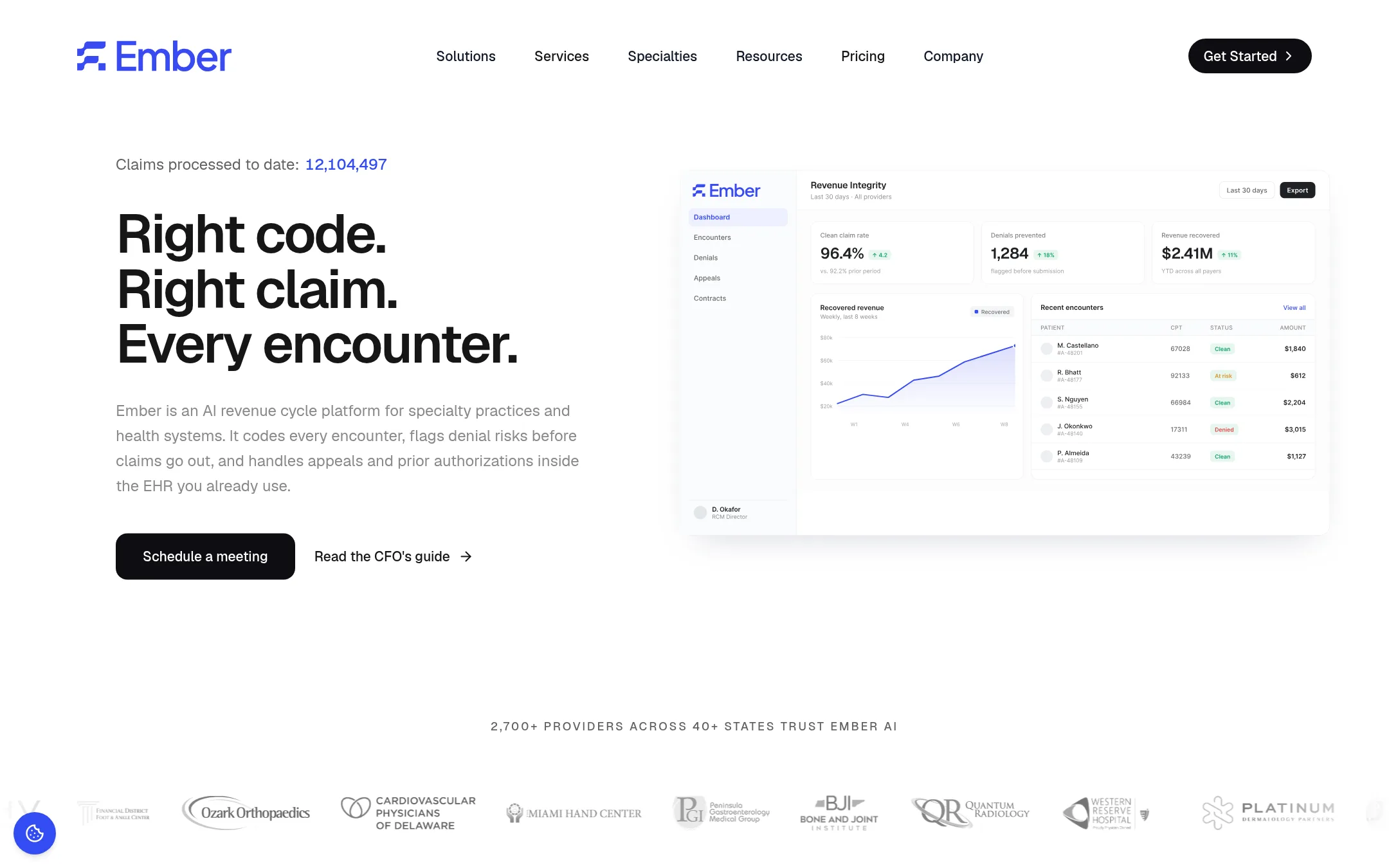
Ember reviews every encounter for coding accuracy and denial risk before claims go out, then drafts appeals and tracks them through adjudication. It sits on top of the EHR a practice already uses and connects clinical documentation, payer policy and contract terms. The company reports 2,700+ providers across 40+ states and a 57% reduction in denials in customer deployments.
Where it is strong
- Reviews 100% of encounters before claims are submitted, instead of sampling 5-10%
- Every flag carries a rule citation from CMS, NCCI, LCD/NCD or payer policy
- Integrates with major EHRs including Epic, athenahealth and eClinicalWorks
Where it falls short
- Built for specialty practices and health systems, so it is a poor fit for general primary care or very small billers without a volume of cla
- No public price list, so you need a sales call to learn the cost before committing
- Pricing:
- Pricing is not published on the site. Plans are scoped to encounter volume, specialties and workflows, with annual agreements and monthly billing available.
- Not published
6.Claim Health
Best for: Home health and home-based care agencies that handle referrals, prior authorizations, and claims and want them tracked in one place
- Pricing
- Not published
- Category
- Healthcare
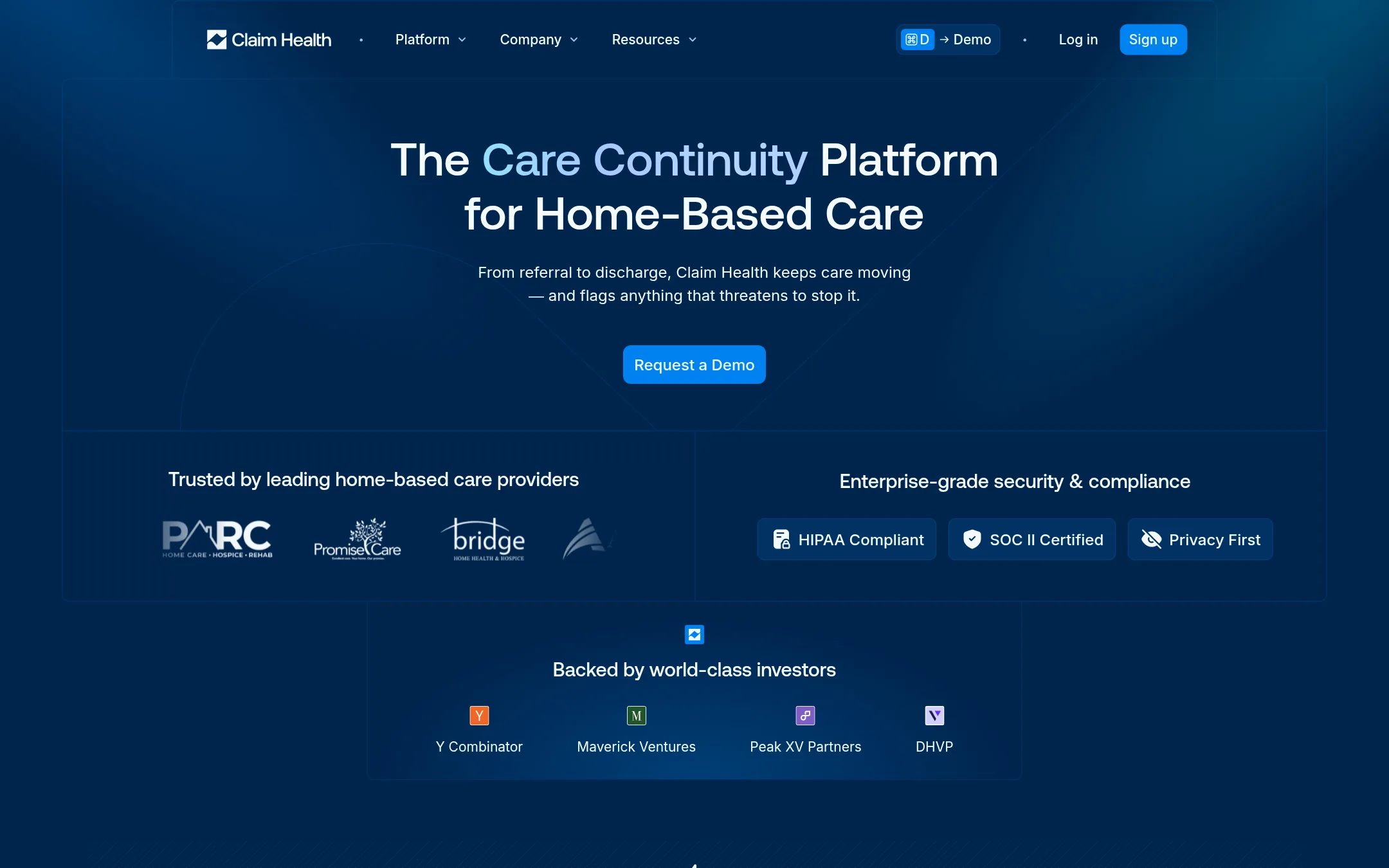
Claim Health is a care continuity platform built for home-based care providers. It covers coverage verification, prior authorizations, and claims through to payment, all in one system, so teams are not juggling faxes and portals. It is a credible pick for post-acute revenue cycle work because it tracks each patient from referral to paid claim with a single source of truth.
Where it is strong
- Covers coverage checks, prior auths, and claims in one system
- Tracks each patient from referral through payment
- Built specifically for home-based care rather than general billing
Where it falls short
- Pricing is not published, so cost must be confirmed directly with the vendor
- Its focus on home-based and post-acute care makes it a weaker fit for hospital or physician billing
- Pricing:
- Pricing is not published on the site.
How to choose Revenue Cycle Management Software
Pricing structure is the first thing to weigh. None of the products on this list publish prices, so ask each vendor how it charges and what a comparable setup would cost for your claim volume. Ember scopes plans to encounter volume, specialties and workflows, which makes its cost depend on how much you bill.
Check who the product is built for. Ember and CombineHealth are aimed at specialty practices, health systems and high-volume coding environments. Claim Health is built for home-based and post-acute care. Waystar and Change Healthcare are built for larger organizations. A product designed for a different type of provider may leave gaps in your workflow.
Consider integrations with your existing systems. Ember works on top of the EHR a practice already uses and lists Epic, athenahealth and eClinicalWorks. Candid Health offers flexible APIs for custom connections. Change Healthcare emphasizes EHR-ready workflows. Confirm that the product connects to your EHR and billing system before you commit.
Ask how the software handles data and compliance. Ember ties every flag to a rule citation from CMS, NCCI, LCD/NCD or payer policy, which helps teams audit decisions. CombineHealth shows the rationale behind AI actions and lets staff review, approve or override them. Ask each vendor how it documents decisions and protects patient data.
Finally, review support and contract terms. Ember offers annual agreements with monthly billing. Test any vendor's claims with a pilot on your own claims. CombineHealth's accuracy figures come from vendor case studies, so a pilot on your own charts is the way to check them.
FAQ
Questions about Revenue Cycle Management Software
What does revenue cycle management software do?
It manages the billing process from patient registration and insurance checks through claim submission, denial follow-up and payment collection. Products on this list cover some or all of those steps. Some focus on automation, while others focus on review before claims go out.
Which revenue cycle management software suits a small practice?
Claim Health is built for home-based and post-acute care agencies that handle referrals, prior authorizations and claims. Ember focuses on specialty practices with a meaningful volume of claims. Very small billers should confirm the product's minimum volume with the vendor before committing.
How much does revenue cycle management software cost?
None of the products on this list publish pricing on their sites. Ember scopes plans to encounter volume, specialties and workflows, and offers annual agreements with monthly billing. You will need a sales conversation with each vendor to compare costs.
Can revenue cycle management software connect to my EHR?
Several products on this list say they do. Ember integrates with Epic, athenahealth and eClinicalWorks, and Candid Health offers APIs for custom connections. Change Healthcare emphasizes EHR-ready workflows. Confirm the integration for your specific EHR before buying.
How can I check a vendor's claims about accuracy or savings?
Some vendors cite results such as CombineHealth's 97.2% coding accuracy or Ember's 57% reduction in denials. These come from vendor sources, so run a pilot on your own claims or charts to test them. Ask the vendor for the methodology behind any figures they publish.
Last updated November 7, 2026.