7 Best Patient Engagement Platforms in 2026
Updated November 8, 2026
The short answer
The strongest patient engagement platforms on this list are Relatient, CareMessage and OhMD. Relatient suits health systems and multi-site provider groups that need to cut call center volume and manage scheduling across practices. CareMessage suits safety-net clinics, FQHCs and free clinics that need EHR-connected patient outreach, and OhMD suits physician practices that want AI-handled routine calls and HIPAA-compliant texting.
The shortlist, at a glance
Read the comparisons ↓ RelatientNot publishedHealth systems and multi-site provider groups that need to cut call center volume and manage scheduling across several practices.
 CareMessageNot publishedSafety-net clinics, FQHCs and free or charitable clinics that need patient outreach tied to the EHR and built around low-income patient populations.
OhMDFrom $300/moPhysician practices that spend too much staff time answering routine patient calls and want AI-handled calls with HIPAA-compliant texting.
 Gradia HealthNot publishedHealthcare providers and health systems that want to deliver concierge-style care to high-need patients and improve their financial results.
TennrNot publishedHealthcare providers with heavy referral and fax volume that need to cut intake backlogs and prior authorization delays.
 Copper HealthNot publishedPhysical therapy practices that want a new recurring revenue stream from remote therapeutic monitoring without adding admin work for their clinicians.
 Patientdesk.aiFrom A$350/location/moDental practices in Australia that miss calls during clinic hours and want patients booked straight into their practice management system.
About Patient Engagement Platforms
Patient engagement platforms are software tools that help healthcare providers communicate with patients outside the exam room. They typically handle appointment scheduling, reminders, secure messaging, call handling and follow-up outreach, and many connect to the electronic health record so that patient data stays in sync.
The products on this list differ mainly in who they are built for and how they charge. Relatient and CareMessage target large organizations and safety-net providers, and neither publishes pricing. OhMD and Patientdesk.ai publish their plan prices, while Copper Health is paid based on the remote monitoring volume it generates.
The 7 best Patient Engagement Platforms, compared
- Not published
1.Relatient
Best for: Health systems and multi-site provider groups that need to cut call center volume and manage scheduling across several practices.
- Pricing
- Not published
- Category
- Healthcare
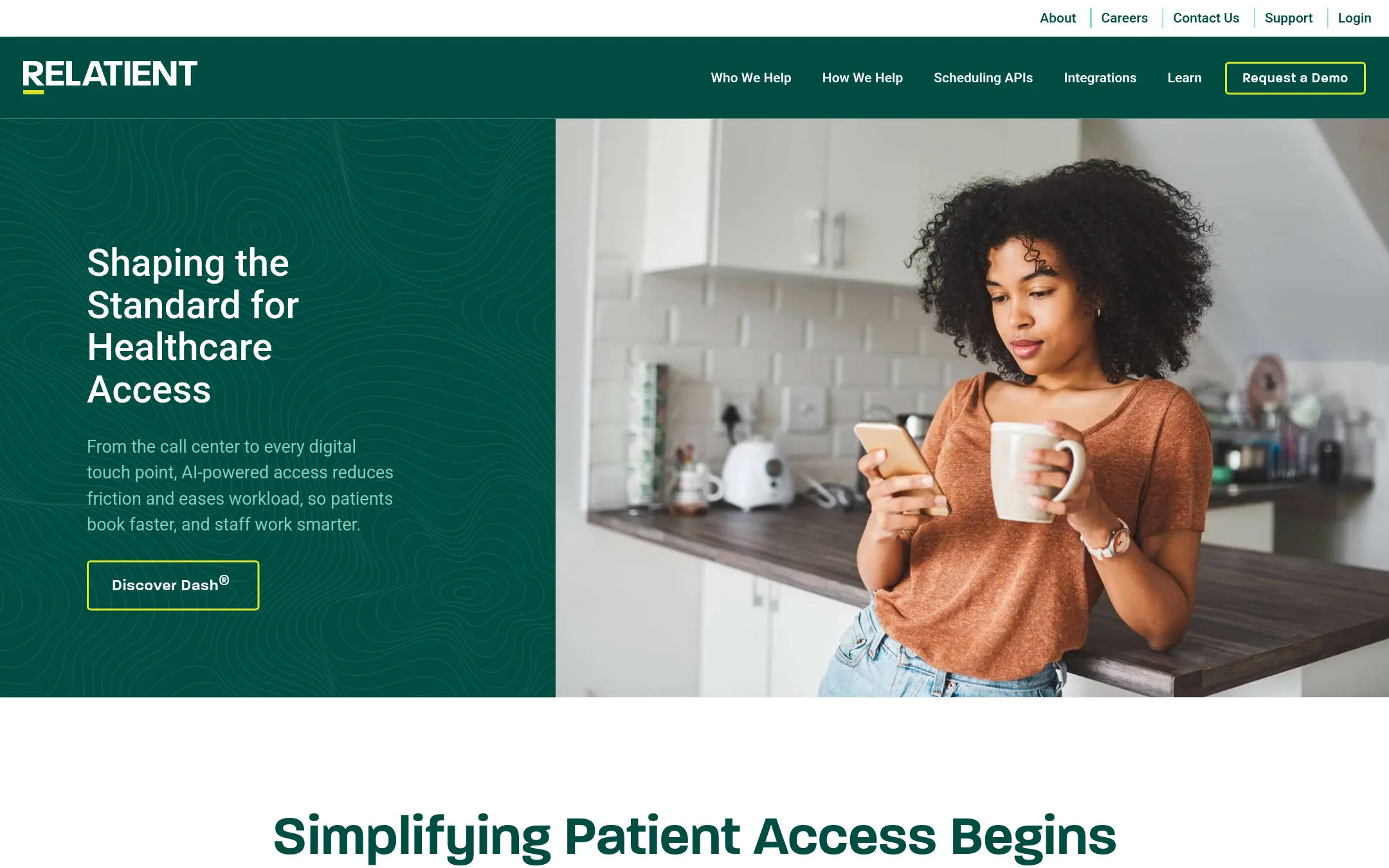
Relatient is a patient engagement platform for hospitals, health systems, specialty groups and FQHCs, covering scheduling, self-scheduling, communications and registration. Its strongest case is the Dash Voice AI agent, which one customer says handled 56% of calls autonomously. The company also reports it integrates with Epic, athenahealth and Oracle Health.
Where it is strong
- Dash Voice AI handles complex scheduling calls, freeing staff for harder questions.
- Integrates with major EHRs including Epic, athenahealth and Oracle Health.
- Covers scheduling, self-scheduling, communications and digital registration in one platform.
Where it falls short
- Pricing is not published, so you will need to request a quote to compare costs.
- Built for healthcare organizations, so it is not a fit for independent practices or non-clinical teams.
- Pricing:
- Pricing is not published on the site.
- Not published
2.CareMessage
Best for: Safety-net clinics, FQHCs and free or charitable clinics that need patient outreach tied to the EHR and built around low-income patient populations.
- Pricing
- Not published
- Category
- Healthcare
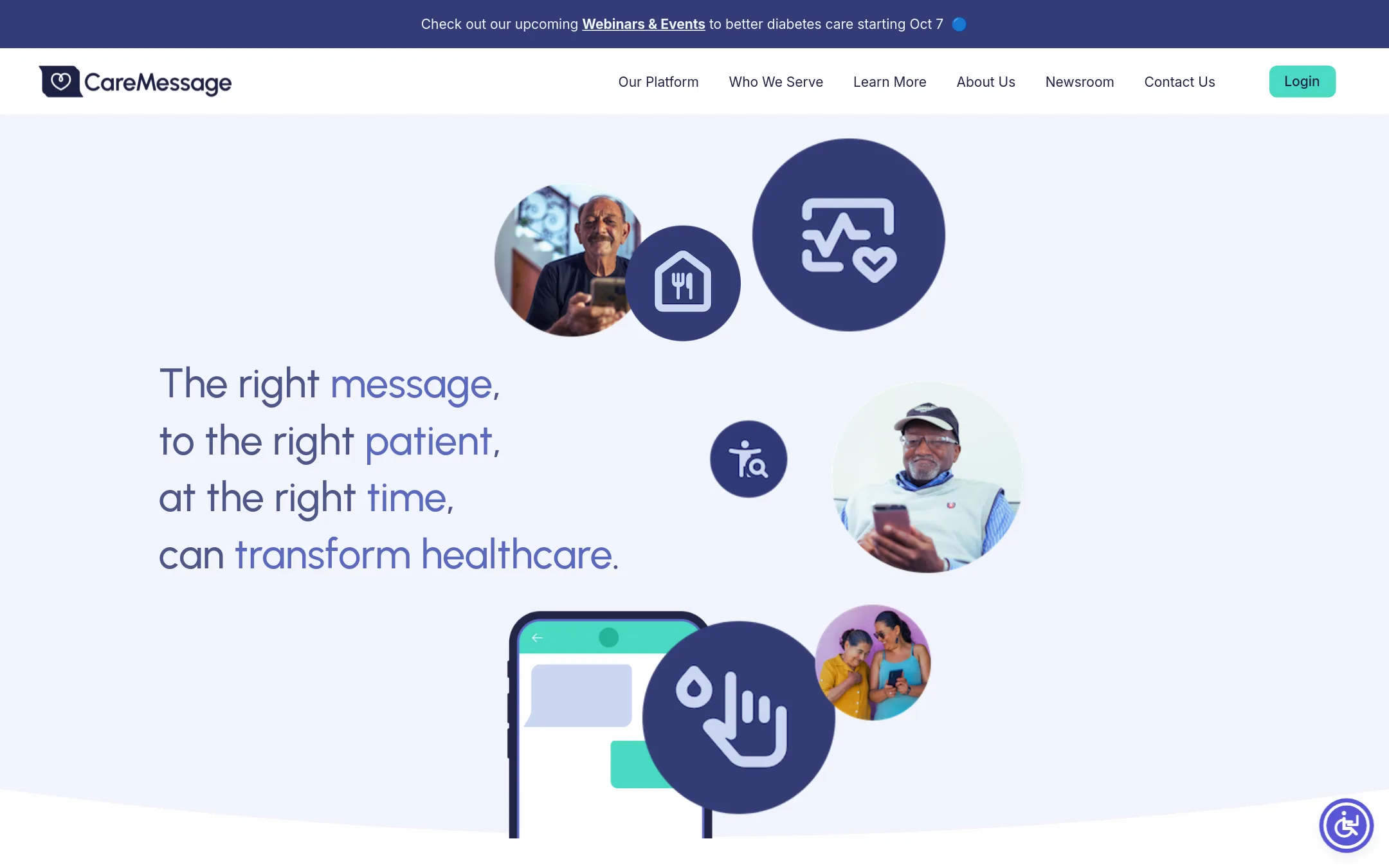
CareMessage is a nonprofit patient engagement platform built for safety-net providers such as FQHCs, free clinics and tribal health organizations. It covers 1:1 messaging, appointment reminders, health coaching and closed loop referrals, and connects to major EHRs through HL7, FHIR, API and SFTP. Its credibility rests on scale: the site says it has reached 20 million patients since 2013 and works with 1 in 7 FQHCs nationwide.
Where it is strong
- Connects to major EHRs through HL7, FHIR, API and SFTP.
- Covers appointment lifecycle messaging, SDOH workflows and closed loop referrals in one platform.
- Built for the safety-net, with a nonprofit model that reinvests revenue into impact.
Where it falls short
- Pricing is not published, so cost comparison requires a direct conversation with the vendor.
- The product is tailored to safety-net organizations, so it is a weaker fit for commercial or specialty practices outside that segment.
- Pricing:
- Pricing is not published on the site.
- From $300/mo
3.OhMD
Best for: Physician practices that spend too much staff time answering routine patient calls and want AI-handled calls with HIPAA-compliant texting.
- Pricing
- From $300/mo
- Category
- Healthcare
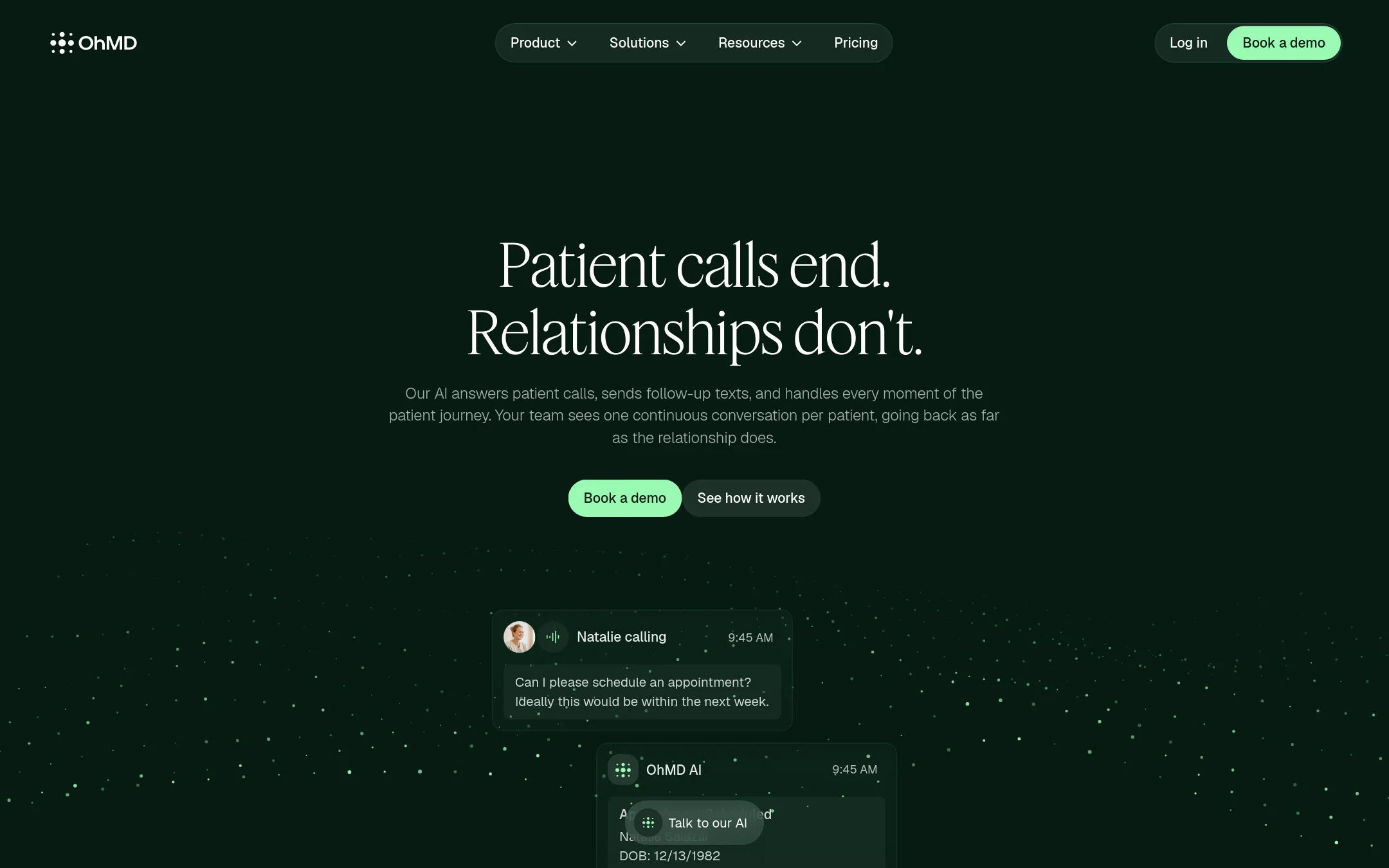
OhMD is patient communication software for physician practices. It handles two-way SMS and secure texting, uses the Nia voice AI to answer routine patient calls and route complex ones to staff, and connects to 85+ EHRs. Its listing claims practices see 68% fewer staff-answered calls, though that figure is not independently verified.
Where it is strong
- Nia voice AI answers routine patient calls and hands complex issues to staff
- Integrates with 85+ EHRs, according to the listing
- Offers a Business Associate Agreement and HIPAA-compliant SMS
Where it falls short
- Calling usage is billed on top of the monthly plan price, so total cost is harder to predict
- Enterprise features like SSO and multi-location support require custom pricing and minimums
- Pricing:
- Plans start at $300 per month for the Core tier, $500 per month for the Automate tier with AI and scheduling, and custom pricing for Enterprise, with calling usage billed separately.
- Not published
4.Gradia Health
Best for: Healthcare providers and health systems that want to deliver concierge-style care to high-need patients and improve their financial results.
- Pricing
- Not published
- Category
- Healthcare
Gradia Health offers integrated, concierge-style care aimed at delivering high-touch attention to the patients who need it most. The company says the model is built to scale that personal attention across large patient populations, and it claims the approach can improve a provider's bottom line. The listing does not publish customer names or detailed platform features, so buyers should ask for specifics.
Where it is strong
- Built around high-touch care for high-need patients
- Combines integrated care with a concierge model
- Targets scale, not just one-off personal attention
Where it falls short
- The listing does not name customers, integrations, or specific platform features
- Pricing is not public, so you must contact the company to compare costs
- Pricing:
- Pricing is not published on the site.
- Not published
5.Tennr
Best for: Healthcare providers with heavy referral and fax volume that need to cut intake backlogs and prior authorization delays.
- Pricing
- Not published
- Category
- Healthcare
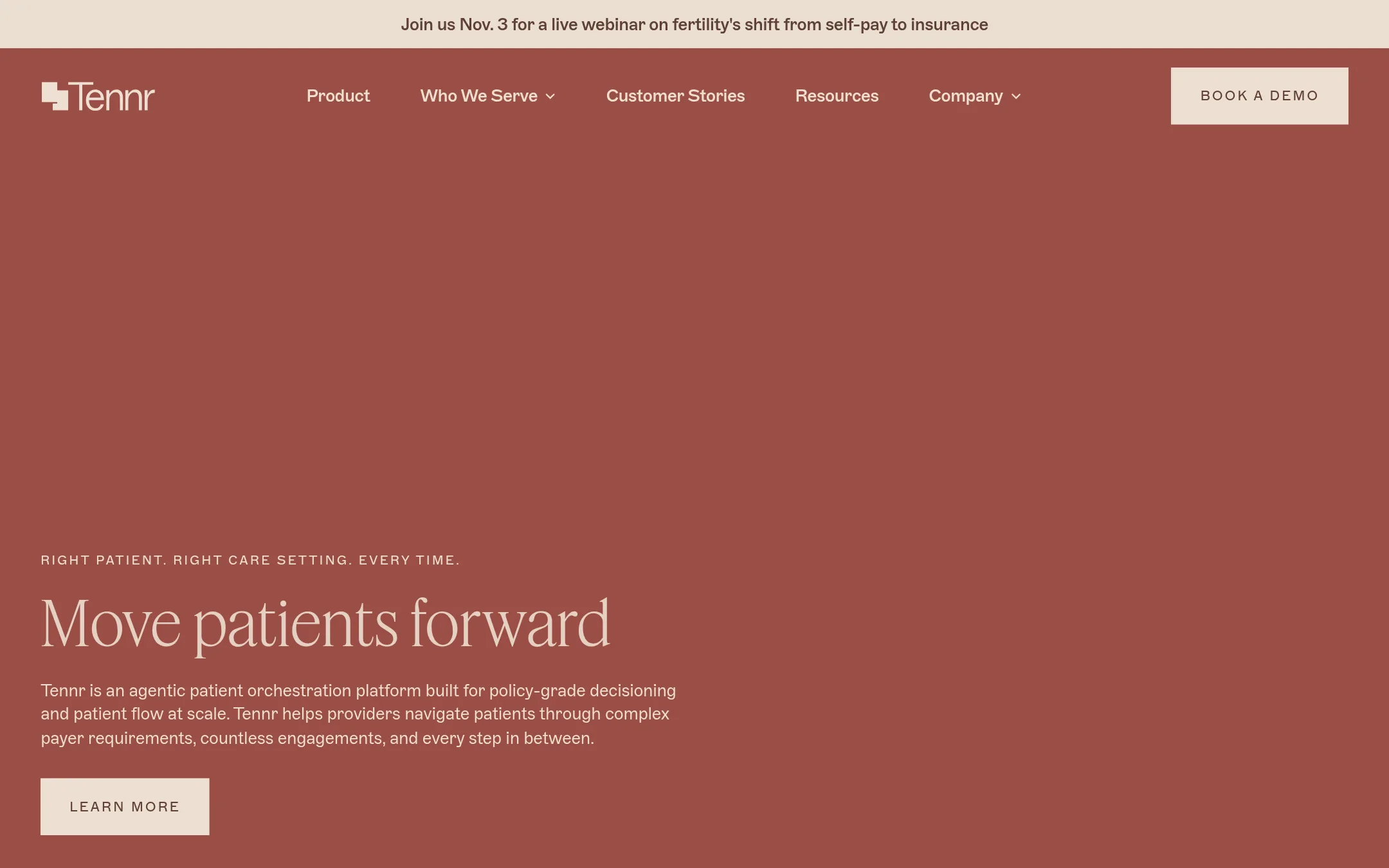
Tennr is an agentic patient orchestration platform that moves patients through payer requirements, consults, diagnostics, authorizations, and scheduling. It pulls data from faxes, portals, and internal orders, then routes it into the right workflow, and it handles eligibility checks and prior authorizations. Its customer evidence is specific: NEB Medical reports faster patient outreach, and King Drug says it handled 260 faxes in one day.
Where it is strong
- Automates intake from faxes, portals, and internal orders
- Handles eligibility checks and prior authorization submissions and tracking
- Makes inbound and outbound phone calls to patients, providers, and payers
Where it falls short
- Pricing is not published, so you will need to request a quote to compare costs
- The site describes a healthcare operations platform, so it is not a fit for teams outside provider organizations
- Pricing:
- Pricing is not published on the site.
- Not published
6.Copper Health
Best for: Physical therapy practices that want a new recurring revenue stream from remote therapeutic monitoring without adding admin work for their clinicians.
- Pricing
- Not published
- Category
- Healthcare
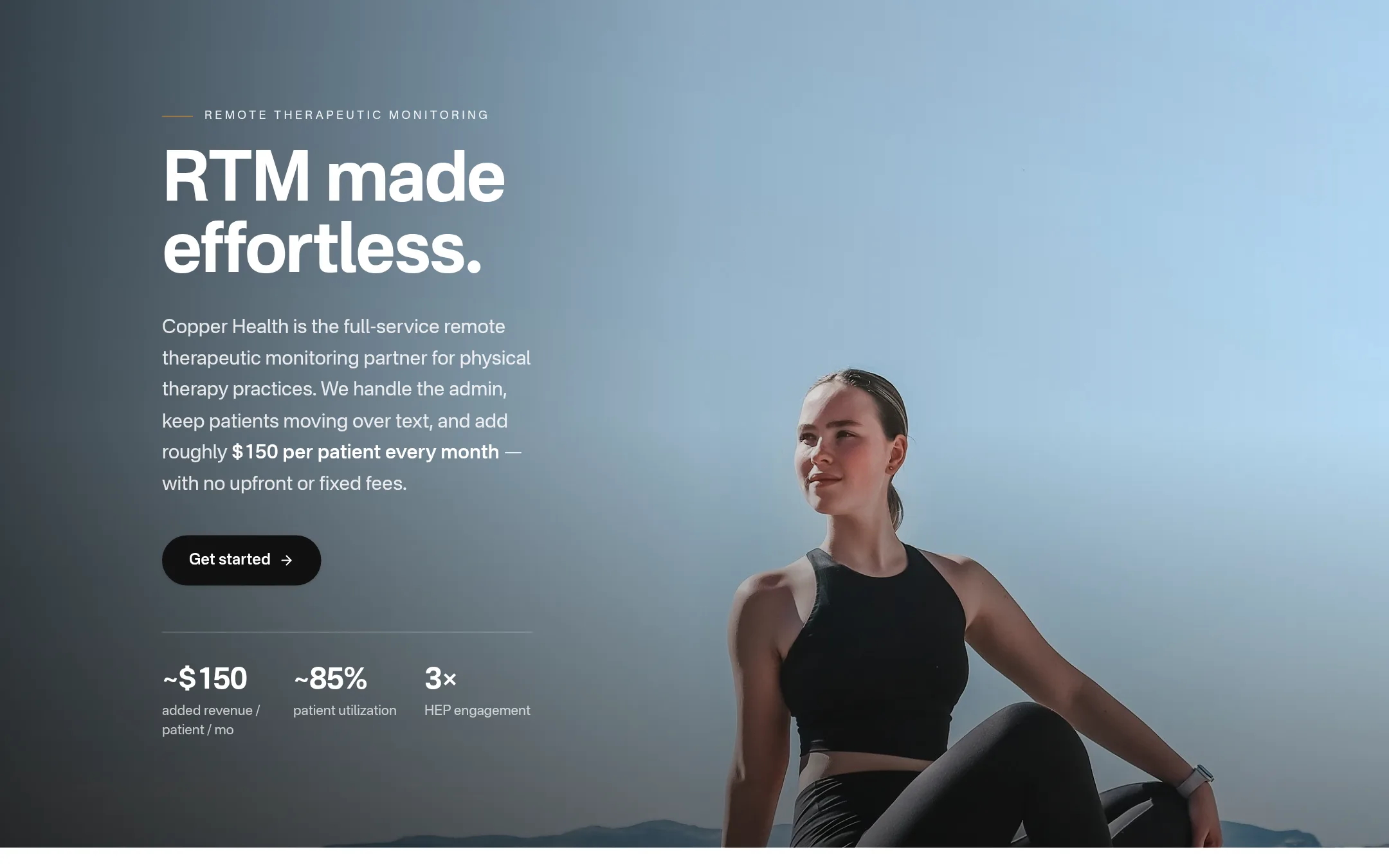
Copper Health is a full-service remote therapeutic monitoring partner built for physical therapy practices, handling enrollment, monitoring, documentation and billing support. Patients keep their home programs going through simple SMS check-ins and reminders, with no app to download. The practice-level figure it cites is roughly $150 in added revenue per patient per month, and the site reports about 85% patient utilization.
Where it is strong
- Runs RTM end to end, including enrollment, monitoring, documentation and billing support
- Patients engage over text with no app or account needed
- No upfront or fixed fees, so the cost scales with RTM volume
Where it falls short
- It is built for physical therapy practices, so it is not a general patient engagement tool for other specialties
- Pricing is not published, so the revenue share has to be confirmed in a sales conversation
- Pricing:
- Pricing is not published on the site. Copper Health states there are no upfront or fixed fees and that it is compensated based on the RTM volume it helps generate.
- From A$350/location/mo
7.Patientdesk.ai
Best for: Dental practices in Australia that miss calls during clinic hours and want patients booked straight into their practice management system.
- Pricing
- From A$350/location/mo
- Category
- Healthcare
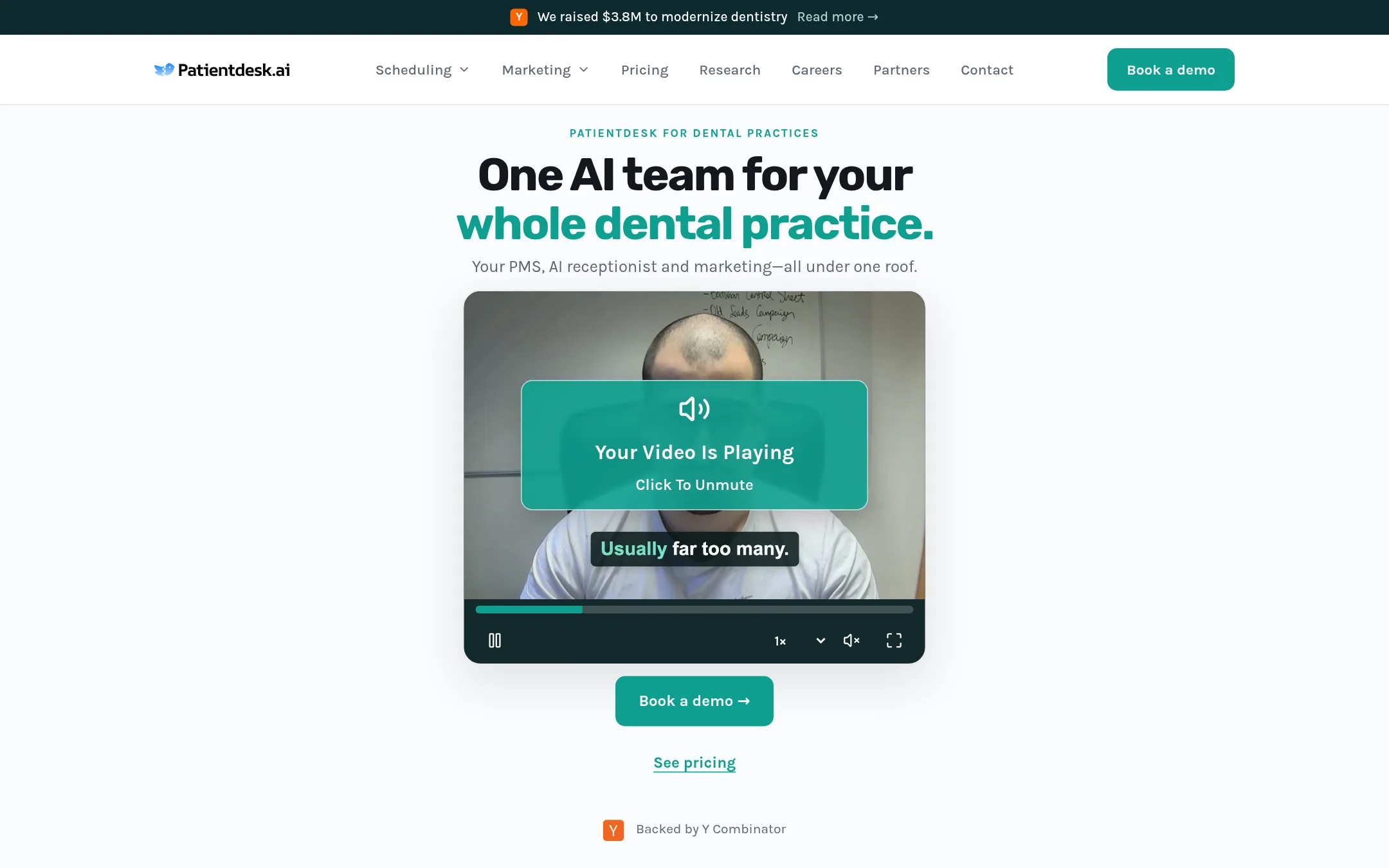
Patientdesk.ai is an AI voice agent built for dental practices. It answers patient calls around the clock and books appointments directly into the practice's management system, with an AI receptionist, online booking, Google review requests and ads measured in booked patients. It is a credible pick for dental teams in Australia because the pricing and booking flow are published in detail and the product targets one specific workflow.
Where it is strong
- Answers calls 24/7 with unlimited inbound minutes and unlimited concurrent calls.
- Books appointments directly into the practice management system rather than a separate calendar.
- Pricing is published openly, including multi-location discounts and what each plan includes.
Where it falls short
- Built specifically for dental practices, so it is not a fit for other healthcare or general patient engagement needs.
- Outbound patient follow-ups are priced separately with per-case packages and outcome fees, which adds cost to model.
- Pricing:
- Inbound plans start at A$350 per location per month for a single-chair practice, A$500 for two chairs and A$750 for three or more chairs, with 50% off each additional location.
How to choose Patient Engagement Platforms
Pricing structure varies widely. Some products publish monthly plan prices, such as OhMD and Patientdesk.ai, where calling usage or outbound follow-ups may be billed separately. Others, including Relatient, CareMessage, Tennr and Gradia Health, do not publish pricing, so you will need a quote to compare costs. Copper Health ties its fees to the volume of remote therapeutic monitoring it helps generate.
Fit matters as much as features. Several products on this list are built for one segment: CareMessage for safety-net clinics, Copper Health for physical therapy practices, Patientdesk.ai for dental practices and OhMD for physician practices. Confirm the product serves your type of organization before comparing features.
Integration with your existing systems is a key check. OhMD lists connections to 85+ EHRs, CareMessage supports HL7, FHIR, API and SFTP, and Relatient reports integrations with Epic, athenahealth and Oracle Health. Ask each vendor to confirm the integration you need, since the listings do not describe the depth of each connection.
Data handling and compliance should be verified directly. OhMD states it offers a Business Associate Agreement and HIPAA-compliant SMS. Ask any vendor you shortlist for its BAA and its security documentation before you share patient data.
Finally, review support and contract terms. The listings do not describe contract length, onboarding or support levels for most products, so ask about these during sales conversations and get the terms in writing.
FAQ
Questions about Patient Engagement Platforms
What is a patient engagement platform?
A patient engagement platform is software that helps healthcare providers communicate with patients between visits. Common functions include appointment scheduling, reminders, secure messaging, call handling and follow-up outreach. Many connect to the electronic health record to keep patient information current.
How much do patient engagement platforms cost?
Costs vary. OhMD lists plans starting at $300 per month, and Patientdesk.ai lists plans from A$350 per location per month, but calling usage or outbound follow-ups may be charged separately. Relatient, CareMessage, Tennr and Gradia Health do not publish pricing, so you will need to request a quote.
Which patient engagement platform is best for small practices?
OhMD targets physician practices with published plans, starting at $300 per month for its Core tier. Patientdesk.ai targets single-chair and multi-chair dental practices in Australia with plans from A$350 per location per month. Both are narrower in scope than the enterprise options on this list.
Do these platforms work with electronic health records?
Several do. OhMD lists connections to 85+ EHRs, CareMessage supports HL7, FHIR, API and SFTP, and Relatient reports integrations with Epic, athenahealth and Oracle Health. Confirm the specific integration you need with each vendor, since the listings do not detail how deep each connection goes.
Are these platforms HIPAA compliant?
OhMD states it offers a Business Associate Agreement and HIPAA-compliant SMS. For the other products, the listings do not make the same claim in detail, so ask each vendor for its BAA and security documentation before sharing any patient data.
Last updated November 8, 2026.